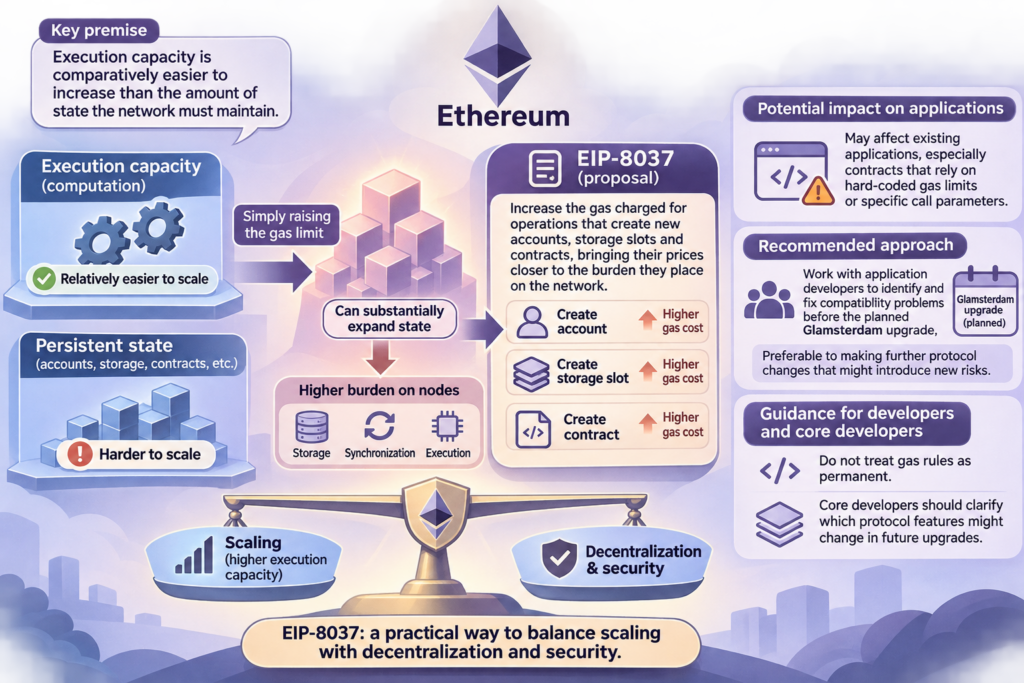
In a November 16, 2026 report, Odaily summarized Vitalik Buterin’s explanation of EIP-8037, an Ethereum proposal intended to address a scaling constraint: execution capacity is comparatively easier to increase than the amount of state the network must maintain.
Buterin argued that simply raising the gas limit could substantially expand state and add to nodes’ storage, synchronization and execution burdens. EIP-8037 would increase the gas charged for operations that create new accounts, storage slots and contracts, bringing their prices closer to the burden they place on the network. He described this as a practical way to balance scaling with decentralization and security—not as a change already in effect.
The proposed pricing could affect existing applications, particularly contracts that rely on hard-coded gas limits or specific call parameters. Buterin said working with application developers to identify and fix compatibility problems before the planned Glamsterdam upgrade was preferable to making further protocol changes that might introduce new risks. He also urged developers not to treat gas rules as permanent and called on core developers to clarify which protocol features might change in future upgrades.
The report describes the proposal’s rationale and a potential compatibility risk; it does not provide measurements of state growth or quantify the impact on applications.