
On November 11, 2026, MSCI listed Strategy’s Class A shares for removal from its MSCI USA index, effective after the close on November 30. As reported on November 12, the immediate question was how much index-tracking funds might need to sell—not whether Strategy would have to sell its bitcoin. MSTR fell roughly 1.5%–2.6% in after-hours trading following the announcement.
Why the stock is being removed
MSCI’s non-operating-company screen is intended to keep fund-like issuers out of equity benchmarks. According to the reported criteria, MSCI examines companies whose operating assets account for less than half of total assets, then applies financial-ratio tests. An existing constituent must fail across two consecutive annual reporting periods before removal.
Bitcoin represented more than 90% of Strategy’s assets under the account in the report, while its software business was small relative to its treasury holdings. The report also identified Metaplanet and the uranium-holding company Yellow Cake among names on related removal lists. Yellow Cake’s inclusion matters to the interpretation: the screen concerns asset-heavy issuers, rather than a rule written solely for bitcoin companies. MSCI did not publish a company-by-company explanation of how it applied the tests, so the precise reasoning for Strategy must be inferred from the rules and removal list.
Strategy disputed the approach in its consultation response, calling it discriminatory toward digital-asset treasury companies. It argued that its bitcoin treasury is reported as an operating segment under US accounting standards and said exclusion would not meaningfully affect its business. Its quarterly report also warned that index removal could weigh on its share price, liquidity and financing capacity. Those are different claims about different kinds of impact.
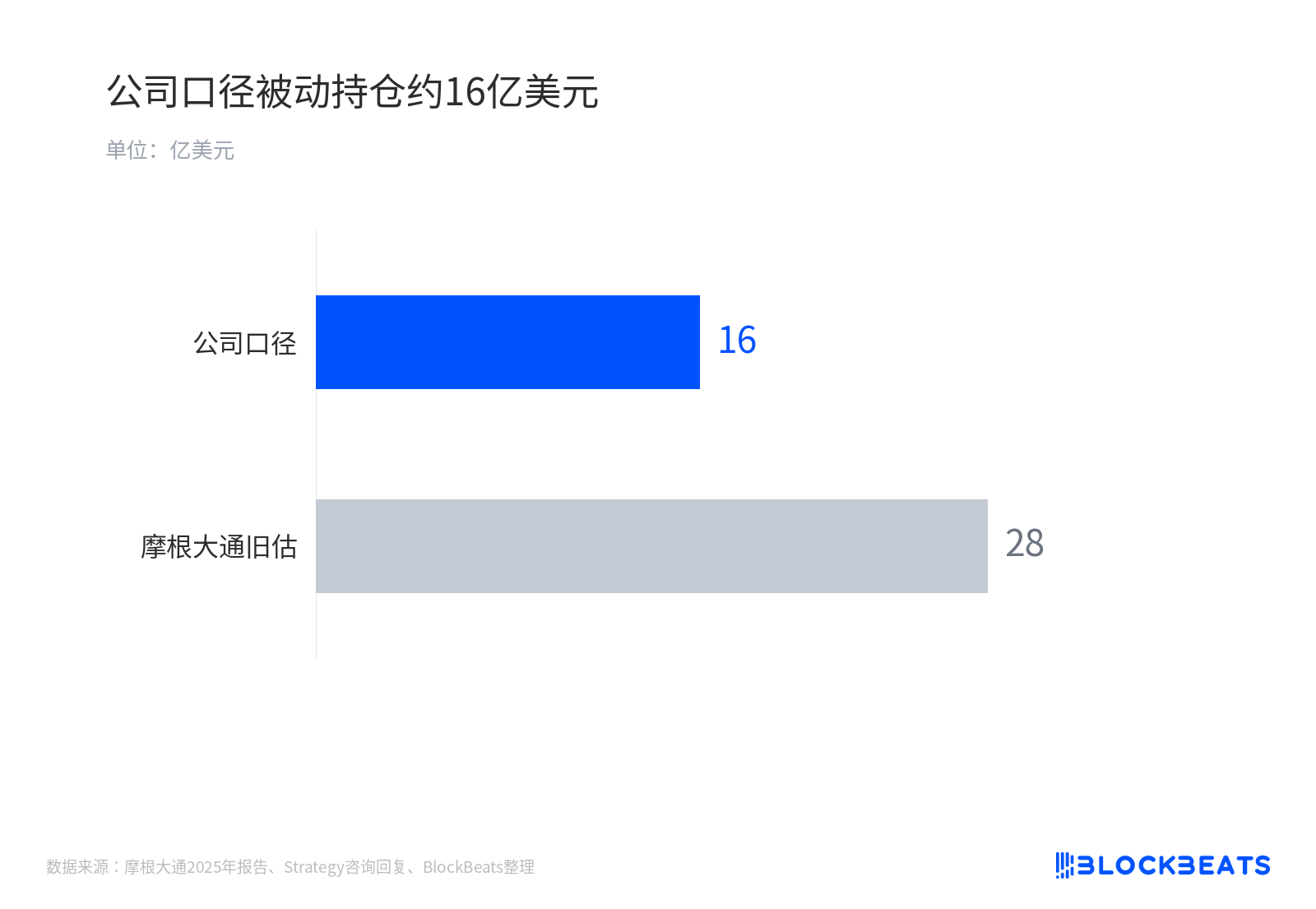
What do the flow estimates measure?
The widely circulated $2.8 billion passive-selling estimate came from a November 2025 JPMorgan report by Nikolaos Panigirtzoglou’s team. It addressed an earlier proposal that would have excluded companies when digital assets exceeded half of total assets. The same report estimated another $8.8 billion if other index providers followed. Neither figure measures sales caused by the November 2026 decision.
Strategy offered a different reference point in its consultation response: funds tracking MSCI global indexes held about 13 million shares, or 3.1% of basic shares outstanding, which it described as less than one day’s trading volume. Valued at $122 per share, that position is approximately $1.6 billion. Strategy supplied the share count and percentage; the dollar value is a calculation using that share price, not a figure the company supplied.
Funds required to track affected MSCI indexes would need to adjust their MSTR holdings for the November 30 close; active managers have no equivalent mechanical obligation. Early trading could also change the amount left to sell at the rebalance. As of the November 12 report, MSTR remained in the Nasdaq-100 and had not entered the S&P 500 because it had not met that index’s GAAP profitability requirement. Neither S&P Dow Jones Indices nor FTSE Russell had publicly said it would follow MSCI.
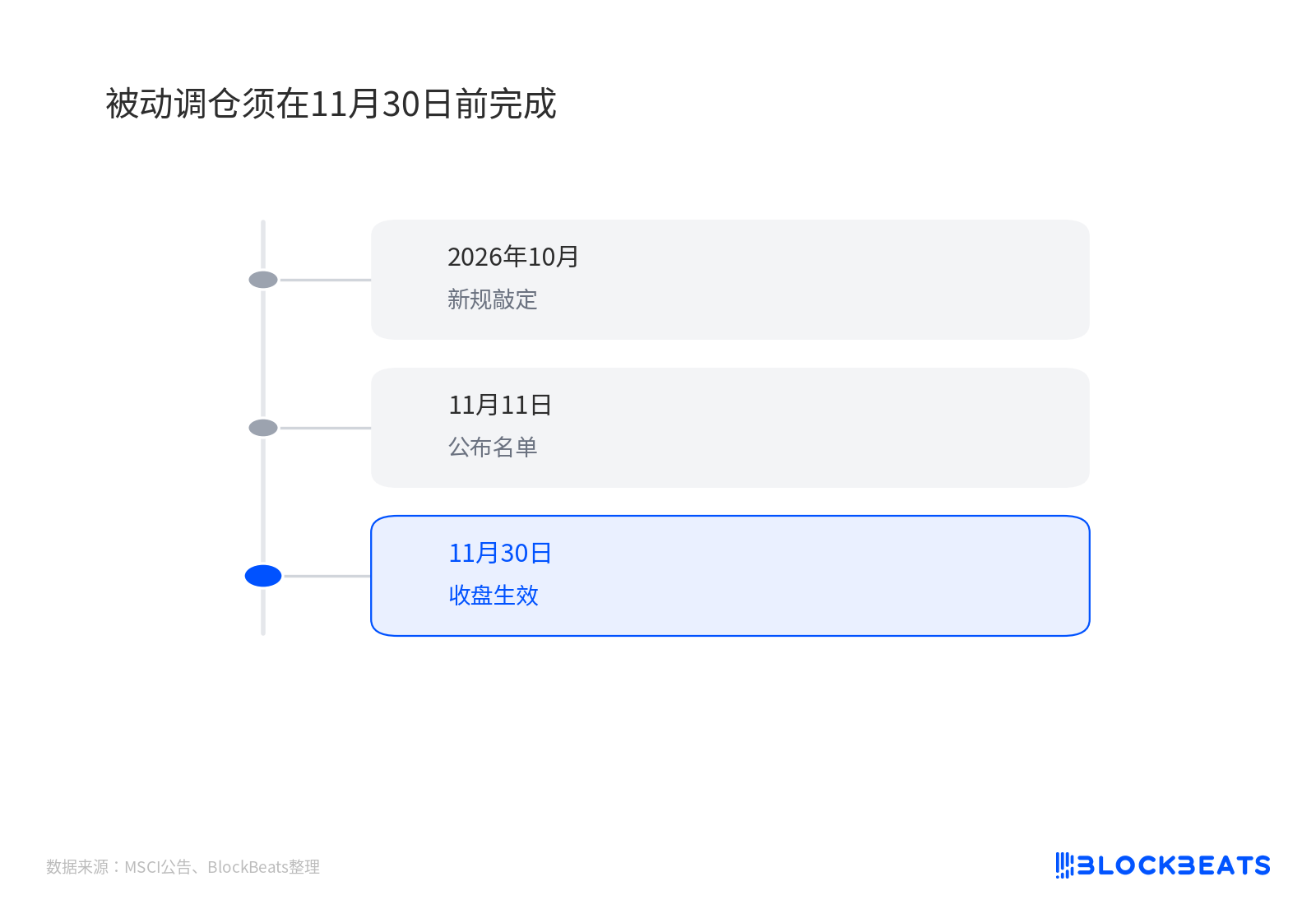
The financing question is separate
At the report’s writing-time prices, Strategy’s market capitalization was roughly 0.82 times the market value of its bitcoin holdings—a crude comparison that does not subtract debt. Its most recently disclosed holdings were 850,364 BTC, acquired for about $64.16 billion at an average $75,456 per coin. With bitcoin near $74,000 at the time, the holdings were below aggregate cost and worth roughly $62.9 billion at that price. These are dated estimates, not a current valuation.
A wider share-price discount could make issuing stock to buy more bitcoin less attractive to existing shareholders. Index removal could therefore matter indirectly through equity liquidity and financing conditions. It does not require Strategy to sell bitcoin: the mechanical rebalance concerns MSTR shares held by index funds. As of November 12, the November 30 rebalance, any decision by other index providers, and any lasting effect on Strategy’s financing remained unresolved.