
In a proposal reported on November 20, 2026, Babylon co-founder Fisher Yu asked the community to shut down the protocol’s Bitcoin staking service by year-end and concentrate on Trustless Bitcoin Vaults (TBV). This was a governance proposal, not a completed shutdown.
At the time of the proposal, the staking pool held approximately 41,556 BTC, valued in the report at more than $2.5 billion. The proposed transition would set staking and co-staking rewards to zero, disable finality verification, and stop new staking registrations. Existing stakers would remain subject to the established timelocks and unstaking rules. The report describes withdrawals as governed by Bitcoin scripts, but its assurances of no principal loss should not be treated as an independently established outcome.
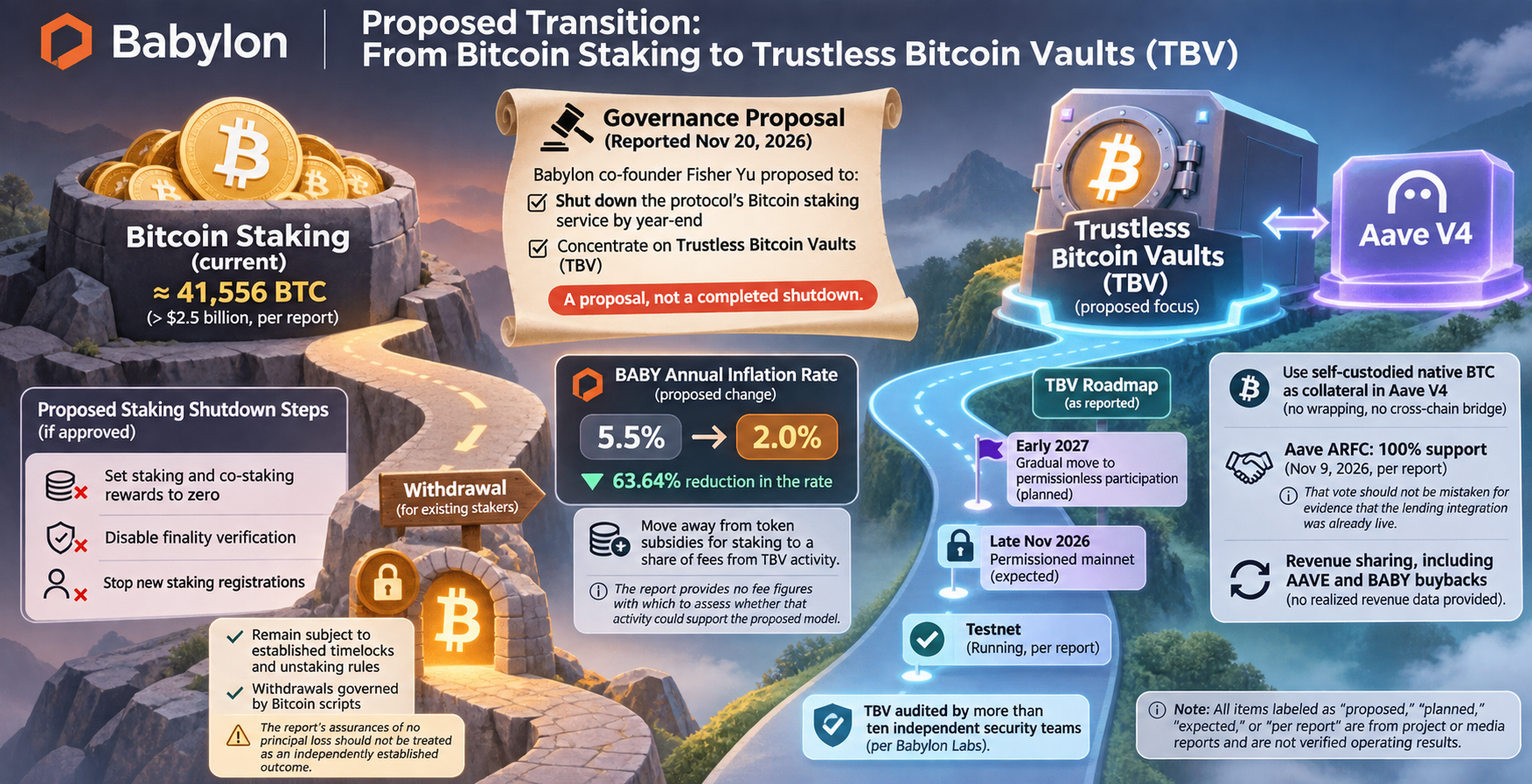
The proposal would also cut BABY’s annual inflation rate from 5.5% to 2.0%—a 63.64% reduction in the rate—as Babylon moves away from token subsidies for staking. Its intended replacement is a share of fees from TBV activity. The report provides no fee figures with which to assess whether that activity could support the proposed model.
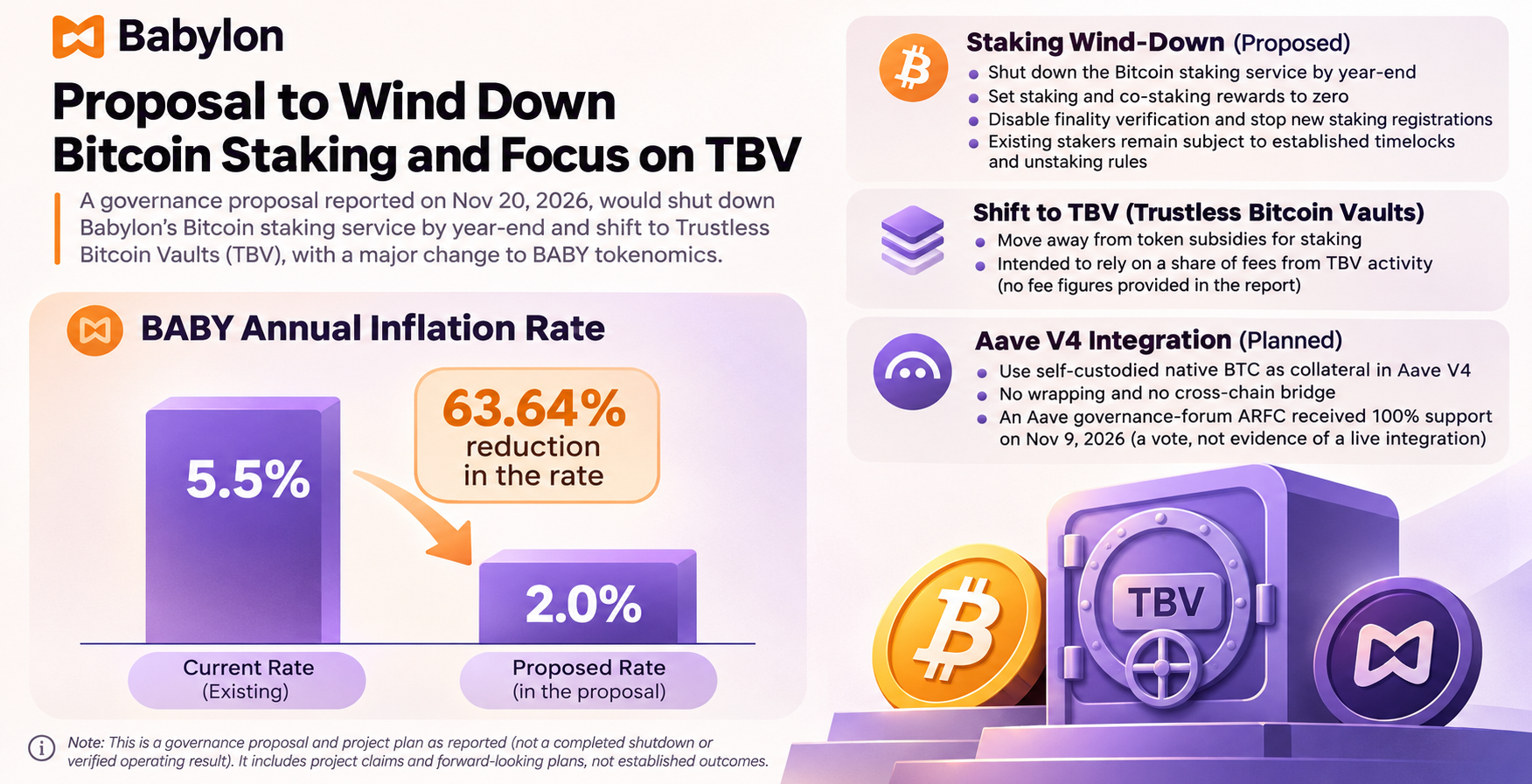
The reported TBV plan includes using self-custodied native BTC as collateral in Aave V4 without wrapping it or using a cross-chain bridge. An Aave governance-forum ARFC received 100% support on November 9, 2026, according to the report; that vote should not be mistaken for evidence that the lending integration was already live. The report also describes a revenue-sharing arrangement involving AAVE and BABY buybacks, without providing realized revenue data.
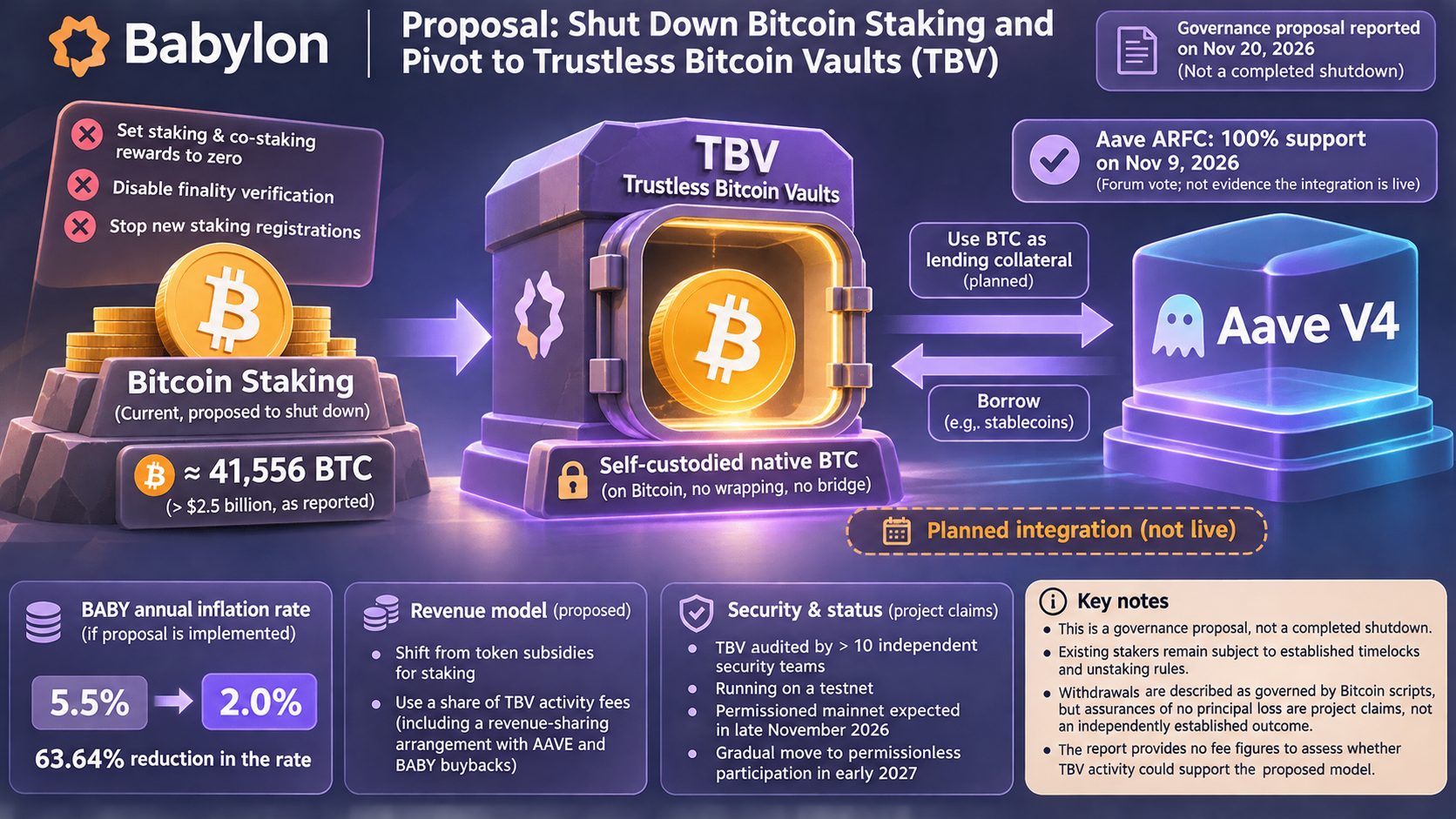
Babylon Labs said TBV had been audited by more than ten independent security teams and was running on a testnet. As reported on November 20, a permissioned mainnet was expected in late November, with a gradual move toward permissionless participation planned for early 2027. Those were stated plans and project claims, not verified operating results.