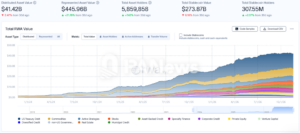
As reported on November 6, 2026, Kinetiq’s Elysium was scheduled to launch on November 9. The proposed Hyperliquid-connected chain was attracting launchpads and trading interfaces, but its central question was whether activity on a new execution layer could develop into sustained liquidity and, eventually, markets on HyperCore. The launch had not occurred at the time of the report.
Why a separate execution layer?
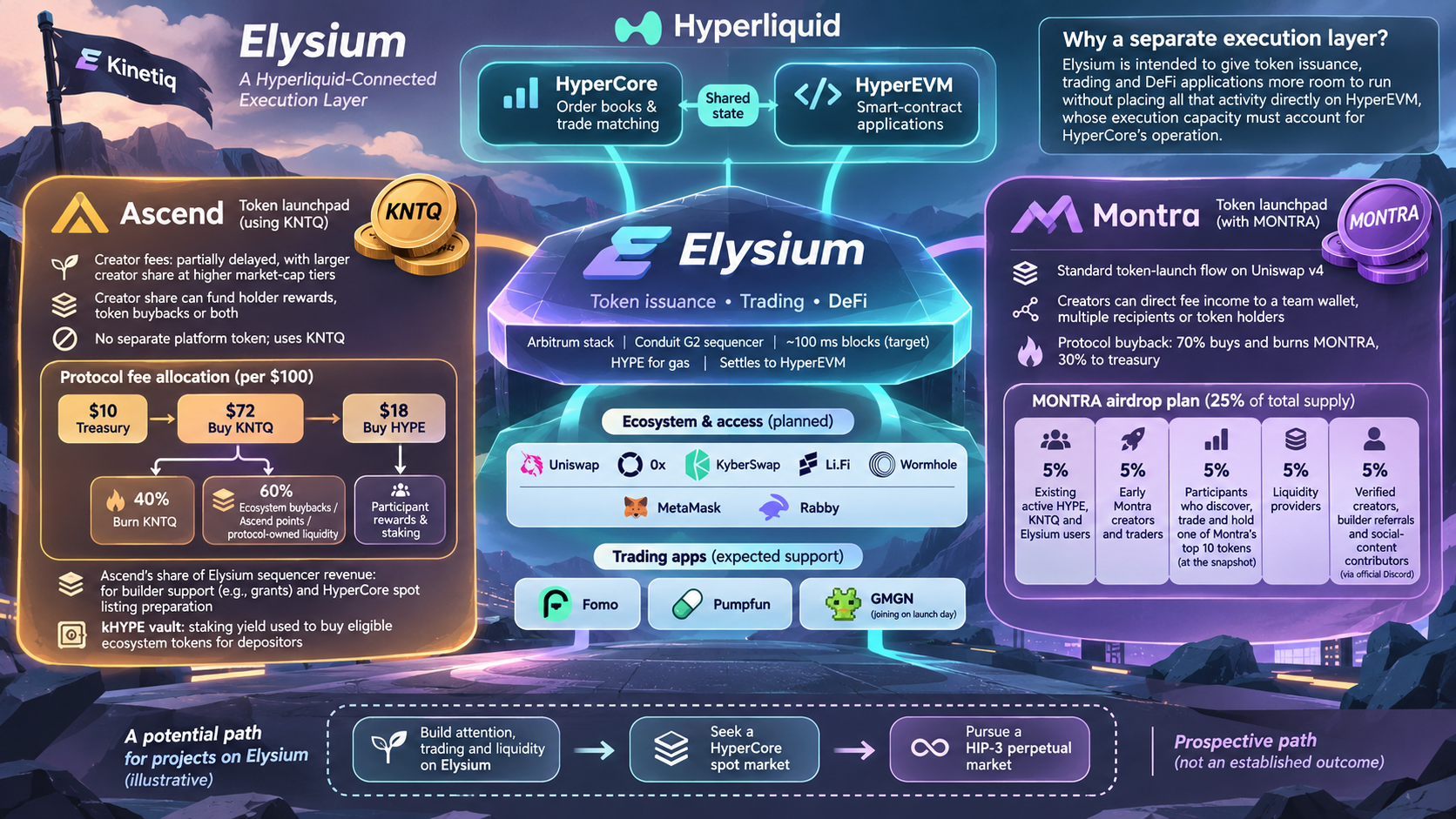
HyperCore handles Hyperliquid’s order books and trade matching, while HyperEVM supports smart-contract applications. They share underlying state, and HyperEVM’s execution capacity must account for HyperCore’s operation. Elysium is intended to give token issuance, trading and DeFi applications more room to run without placing all that activity directly on HyperEVM.

In an interview cited in the report, Kinetiq co-founder Omnia said Elysium uses the Arbitrum technology stack and Conduit’s G2 sequencer, targets 100-millisecond blocks, uses HYPE for gas and settles to HyperEVM. The block interval is a target, not a measured production result in the supplied material.
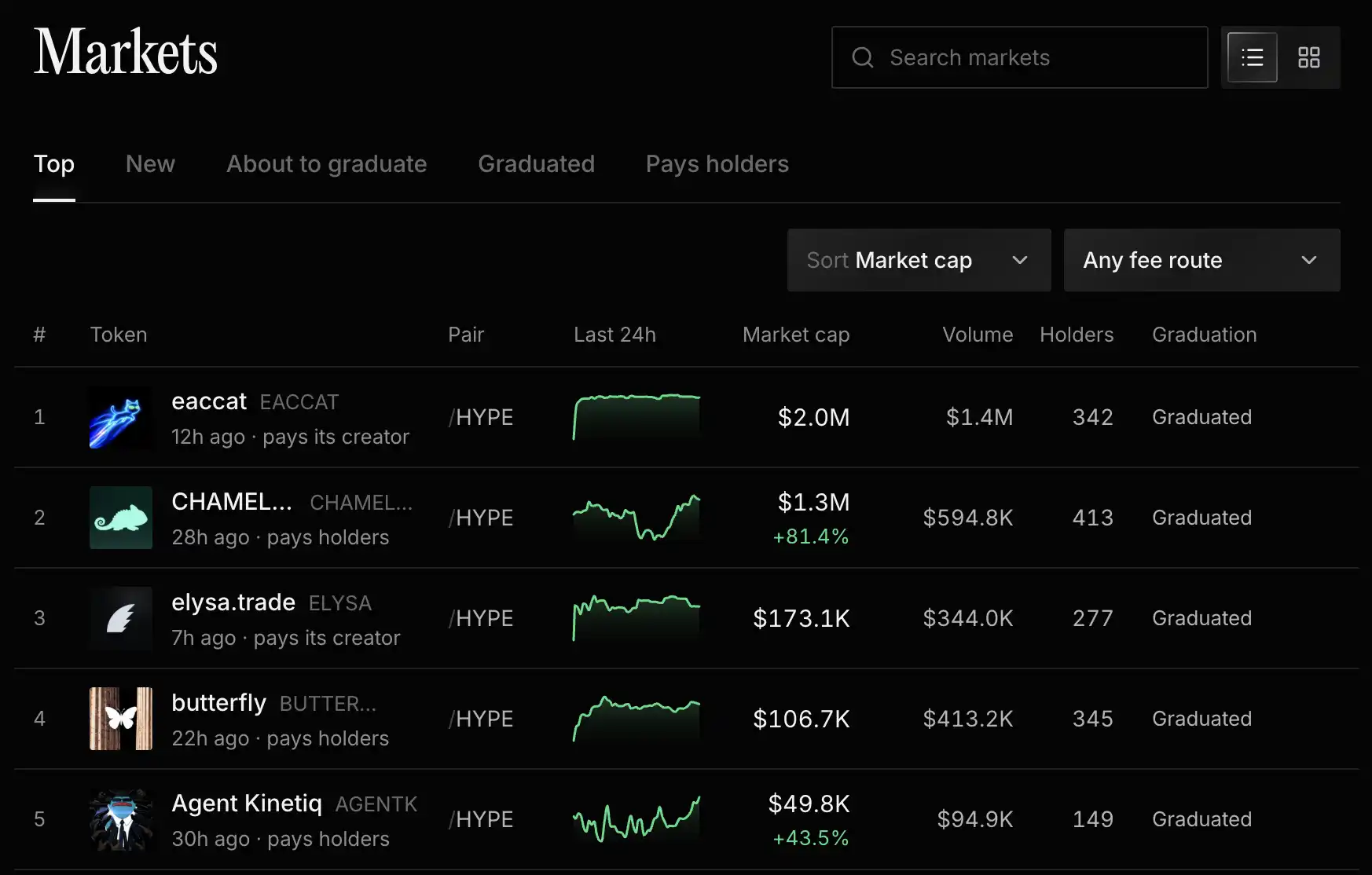
Fomo and Pumpfun trading applications were expected to support Elysium, while GMGN had announced plans to join on launch day. Omnia also named Uniswap, 0x, KyberSwap, Li.Fi, Wormhole, MetaMask and Rabby among the planned ecosystem integrations. Nest planned to build pools on Uniswap v4. These plans described potential access and liquidity routes; the report did not establish their post-launch usage.
Two launchpads, different token designs
Ascend’s reported first-day test figures were approximately $5.97 million in trading volume, 47,254 transactions, 873 tokens deployed and $34,808 in protocol fees. The report did not give a more precise measurement date or present those figures as Elysium mainnet results.
Ascend’s design delays part of early creator-fee payouts until projects meet specified conditions. At higher market-cap tiers, creators can receive a larger share of base trading fees while the protocol’s share declines. Creators can also direct their share toward holder rewards, token buybacks or a combination. These are incentive rules intended to favor continued development; the test figures alone cannot show that they succeed.
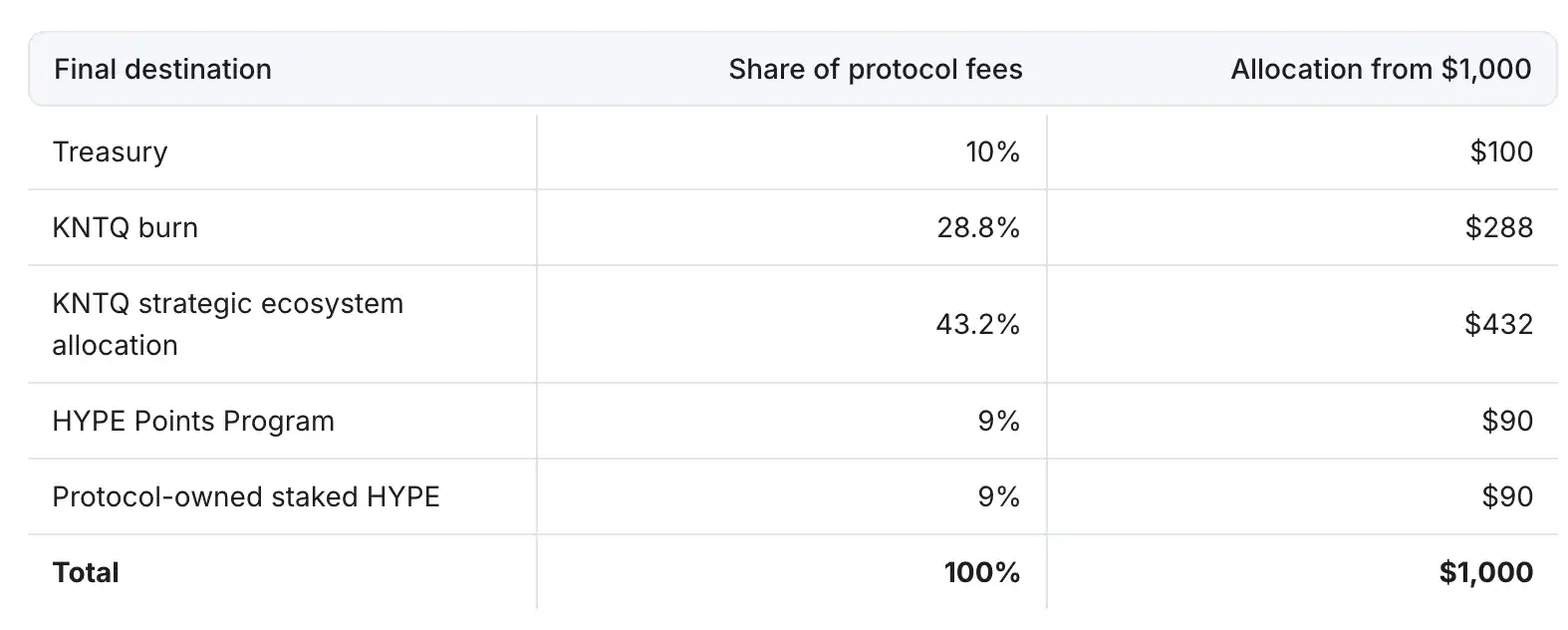
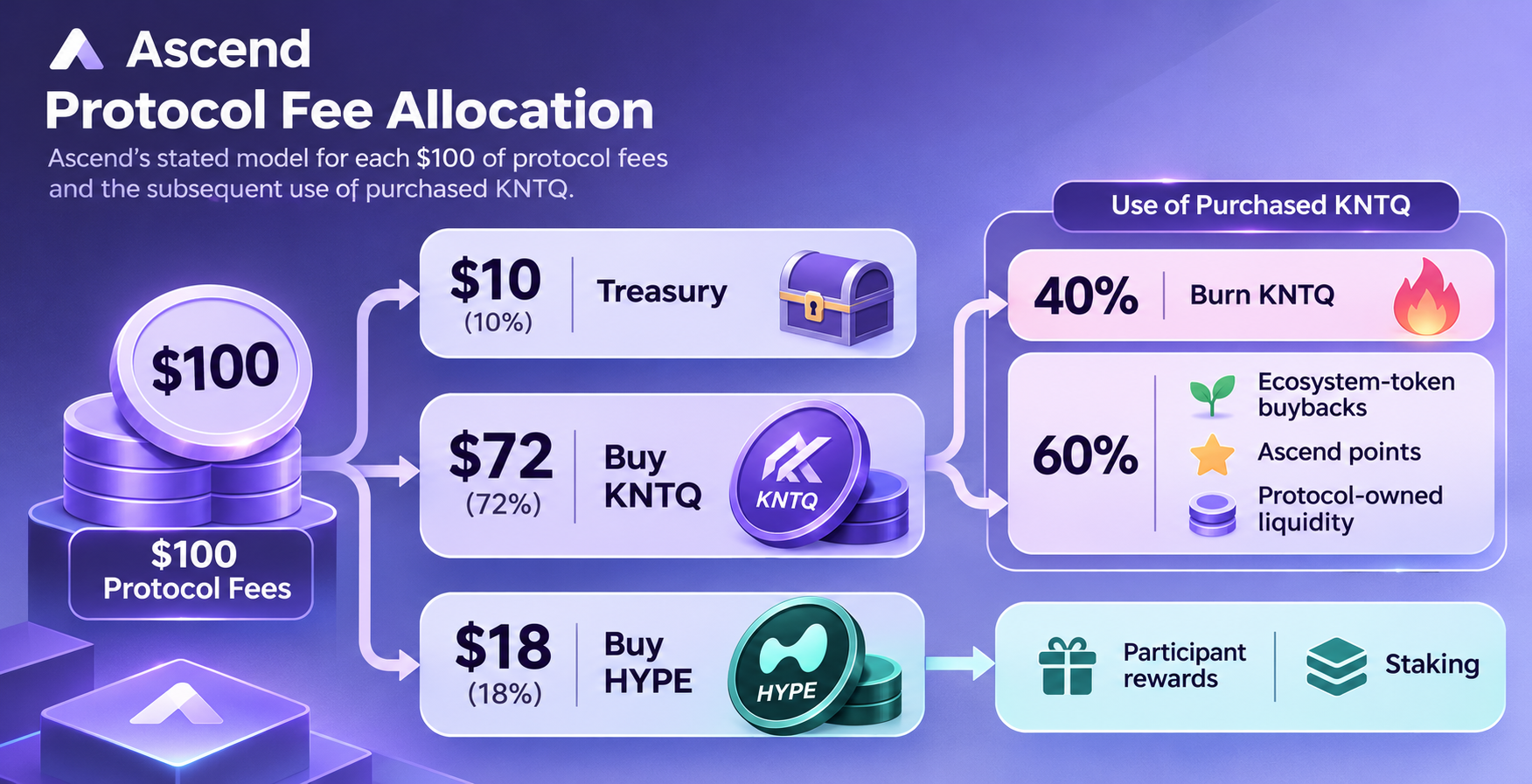
Rather than issue a separate platform token, Ascend uses KNTQ as its protocol token. Its documented allocation model directs each $100 of protocol fees to $10 for the treasury, $72 to buy KNTQ and $18 to buy HYPE. Of the KNTQ purchased, 40% is designated for burning; the remaining 60% supports ecosystem-token buybacks, Ascend points and protocol-owned liquidity. Purchased HYPE is designated for participant rewards and staking.
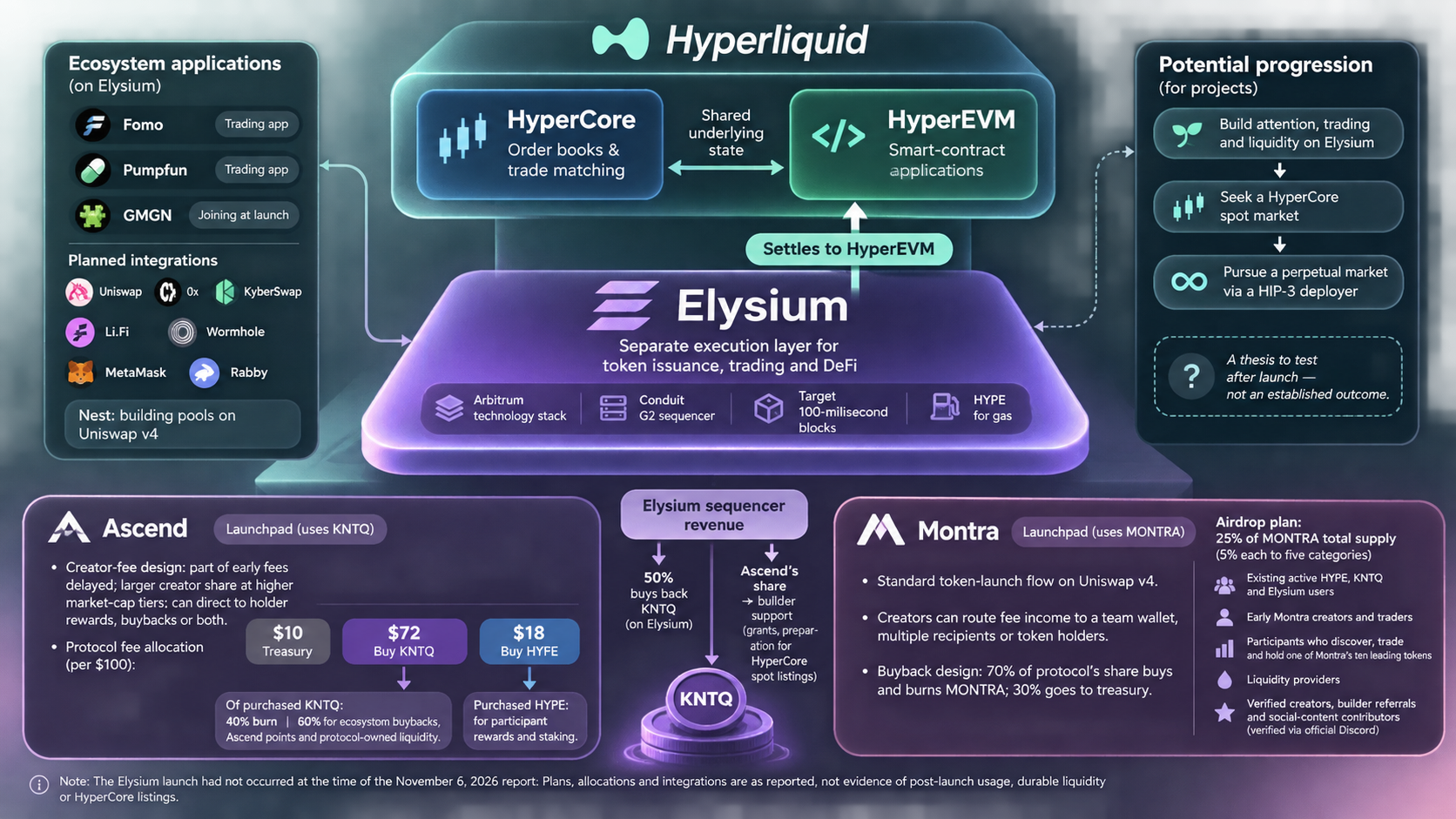
According to Omnia, Elysium would use 50% of sequencer revenue to buy back KNTQ, while Ascend would direct its share of Elysium sequencer revenue toward builder support, including grants and preparation for HyperCore spot listings. Ascend also describes a vault in which deposited kHYPE generates staking yield used to buy eligible ecosystem tokens for depositors. These are described mechanisms and intended allocations, not evidence of realized revenue or returns.
Montra takes a different approach: it retains its own MONTRA token and builds its standard token-launch flow on Uniswap v4. Creators can route their fee income to a team wallet, multiple recipients or token holders. Under its stated buyback design, 70% of the protocol’s allocated share buys and burns MONTRA, with 30% going to its treasury.
Montra planned to allocate 25% of MONTRA’s total supply to five airdrop categories, each representing 5% of supply: existing active HYPE, KNTQ and Elysium users; early Montra creators and traders; participants who discover, trade and hold one of Montra’s ten leading tokens at the snapshot; liquidity providers; and verified creators, builder referrals and social-content contributors. The last category was to be verified through its official Discord. As of the November 6 report, Montra had opened pre-trading and had two tokens valued above $1 million in market capitalization; no valuation method or measurement timestamp was supplied.
The unproven HyperCore connection
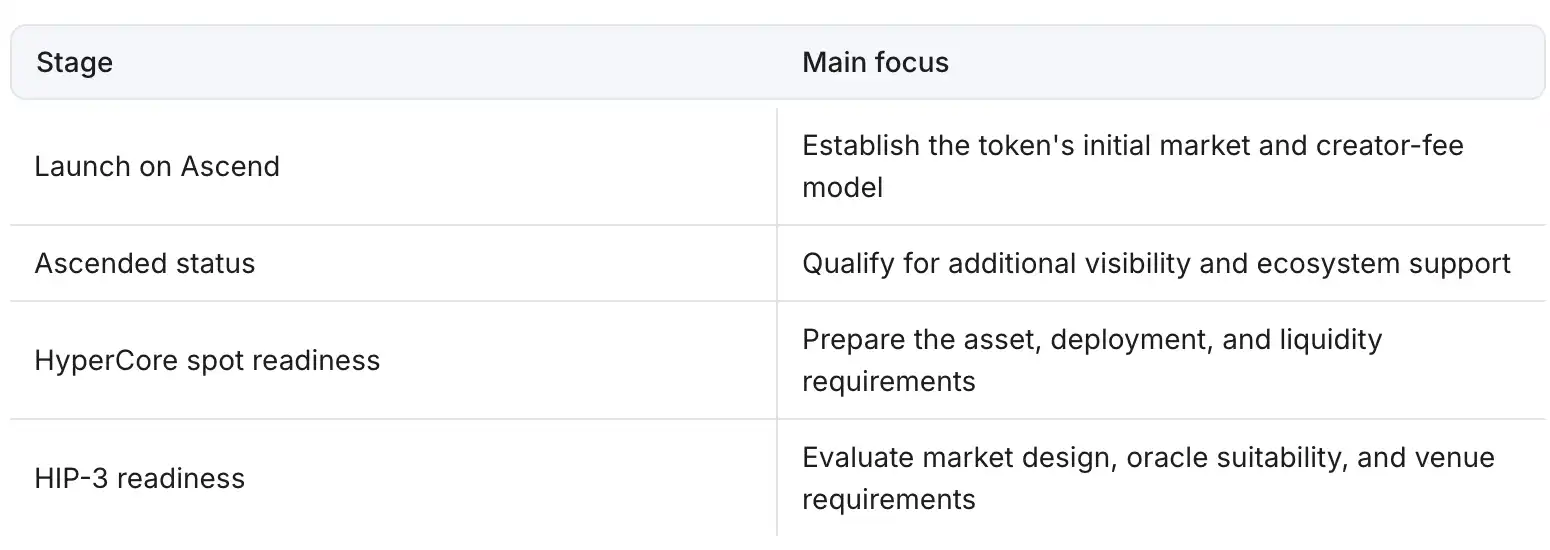
Omnia outlined a possible progression in which projects build attention, trading and liquidity on Elysium, seek a HyperCore spot market, and later pursue a perpetual market through a HIP-3 deployer. Ascend’s Ascended designation is intended to prepare eligible projects for that path. Elysium also proposes interfaces built around HyperCore prices and order-book depth so market makers could quote spot trades on Elysium and hedge on HyperCore.
That connection is the thesis to test after launch—not an established outcome. The report supplies plans, allocation rules and limited launchpad test activity, but no post-launch dataset showing durable liquidity, successful listings or market-maker adoption.