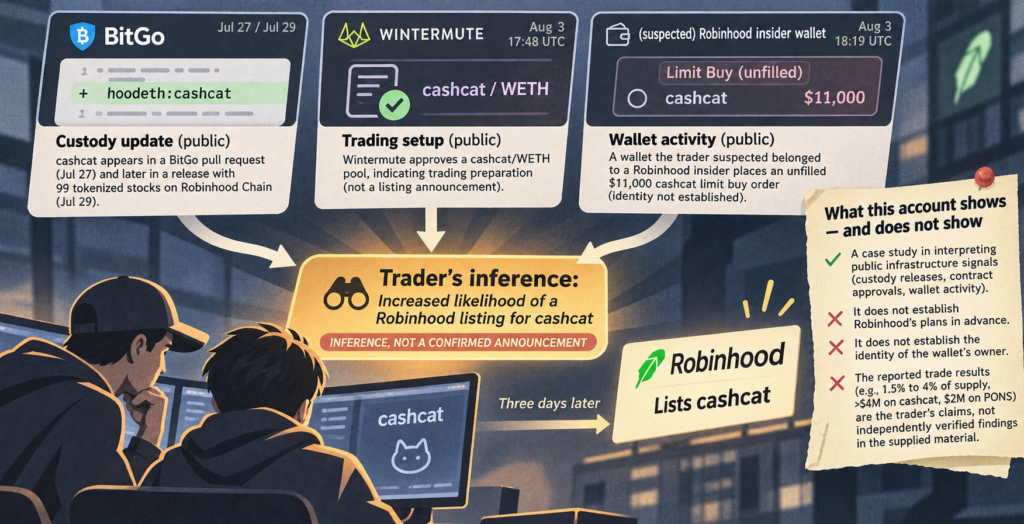
In an account published on November 16, 2026, a trader described how they and a partner used public infrastructure signals to build a position in cashcat before Robinhood listed it. The account offers a case study in interpreting pre-listing activity, but its trade results and some wallet identifications are the trader’s claims, not independently established findings in the supplied material.
From a custody update to a trading signal
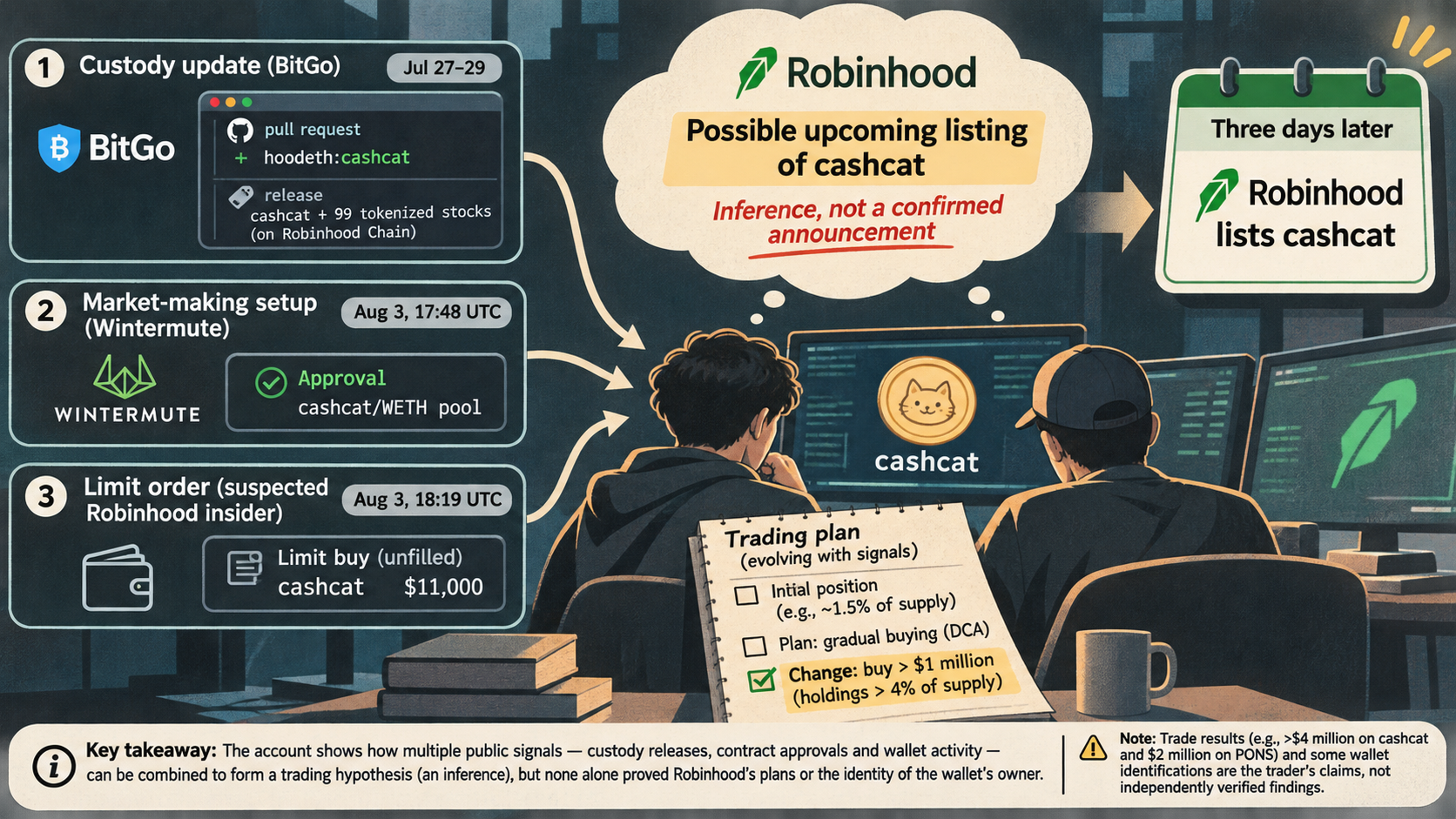
The trader said an earlier review of Robinhood listings showed Wintermute transferring tokens to a Robinhood hot wallet roughly an hour before announcements. They subsequently monitored Wintermute wallets and trading contracts on Robinhood Chain, along with public updates from custody partner BitGo.
On July 27, a BitGo pull request included hoodeth:cashcat. The trader cautioned that this alone did not identify which BitGo customer had requested support. A July 29 BitGo release included cashcat alongside 99 tokenized stocks on Robinhood Chain, strengthening their inference that the update related to Robinhood. By then, the trader said, they and their partner held 1.5% of cashcat’s supply.
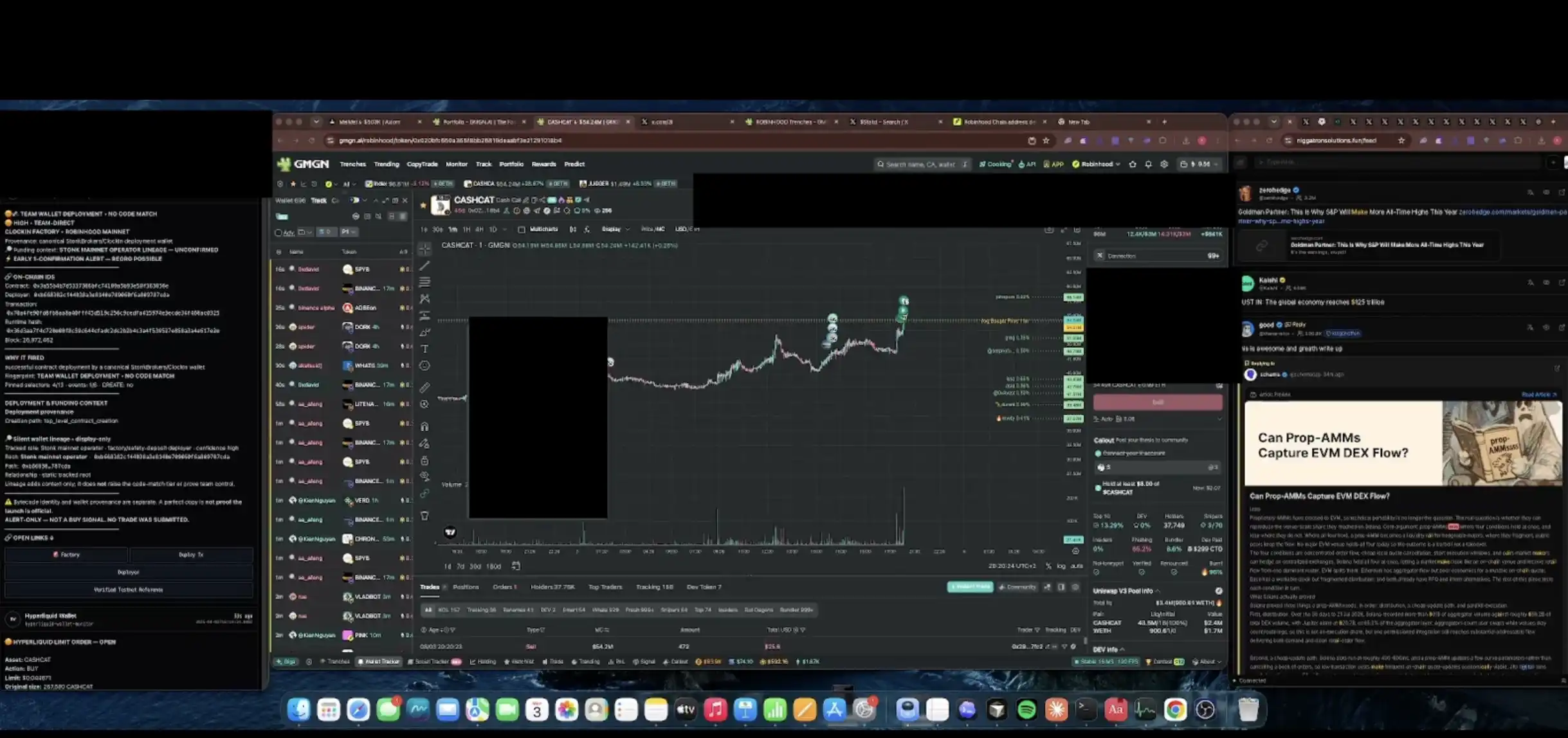
Their next condition for a substantial increase was either a Wintermute approval involving cashcat or a cashcat transfer between Wintermute and Robinhood. At 17:48 UTC on August 3, their tracker detected Wintermute’s approval of a cashcat/WETH pool. An approval indicated trading preparation; it was not itself a listing announcement.
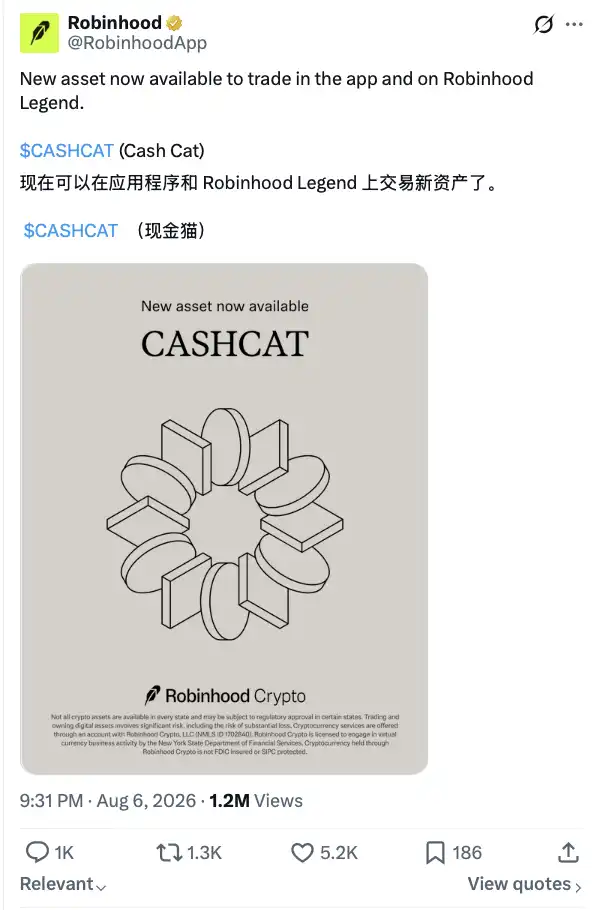
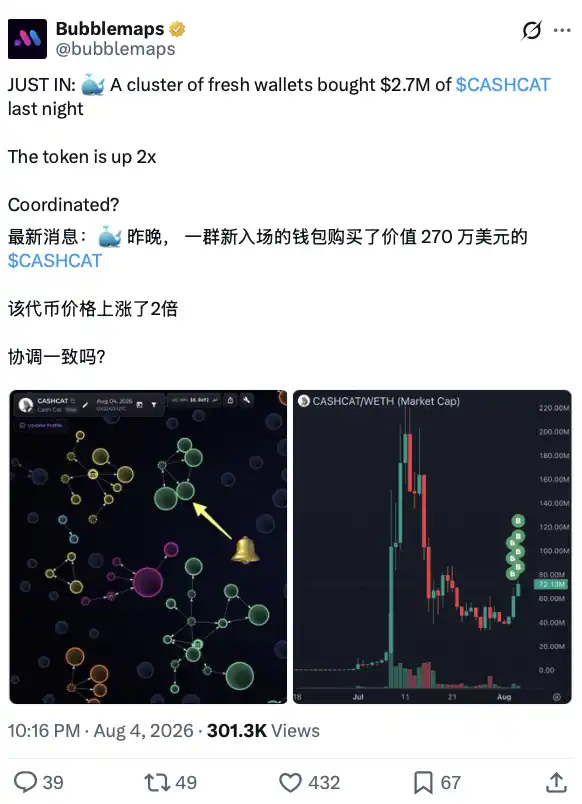
At 18:19 UTC, a wallet the trader suspected belonged to a Robinhood insider placed an unfilled $11,000 cashcat limit buy order. The account does not establish who controlled that wallet. Concerned that other observers would see its intended purchase, the two abandoned a gradual buying plan. The trader said they bought more than $1 million of cashcat, taking their combined holdings to slightly over 4% of supply. Robinhood listed cashcat three days later; the trader reported combined profit of more than $4 million.
What the account does—and does not—show
The trader also reported that they and friends made $2 million on PONS after beginning to buy it on August 28. They did not disclose the upstream signals behind that decision. Their suggestion that PONS’s September 2 “listing” was a Robinhood trap to identify an insider remains speculation.
The sequence illustrates why custody releases, contract approvals and wallet activity need to be assessed separately. Each narrowed the trader’s interpretation of a possible listing, but none alone proved Robinhood’s plans or the identity of another wallet’s owner. The supplied account provides no independently verified trade record or complete dataset from which to test the reported profits or generalize the method.