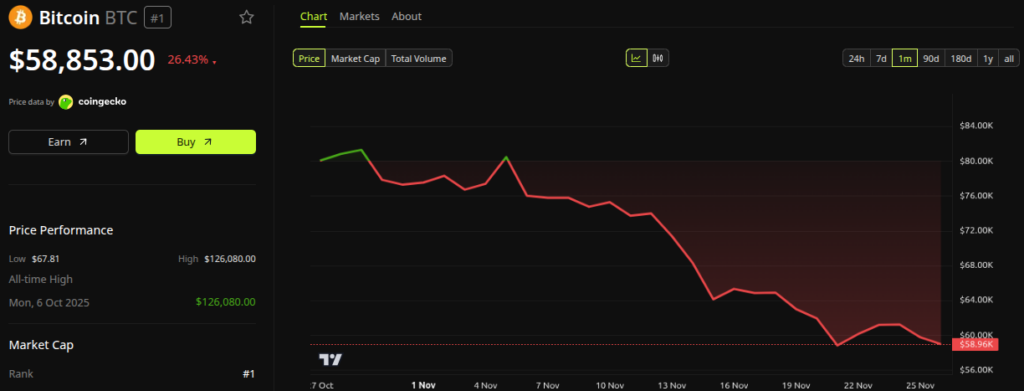
When BeInCrypto reported at 21:00 (UTC+08:00) on November 25, 2026, Bitcoin was down about 29.3% since the start of the quarter. In the quarterly returns shared by Crypto Rover, only Q4 2018 posted a steeper fourth-quarter loss, at 43.51%. The comparison is provisional: the 2018 figure covers a full quarter, while the 2026 figure does not.
The sell-off followed a strong third quarter and left Bitcoin down about 32.5% for the year to date. BeInCrypto price data put Bitcoin near $58,800, more than 53% below its October 2025 record of $126,080.
What the options data show
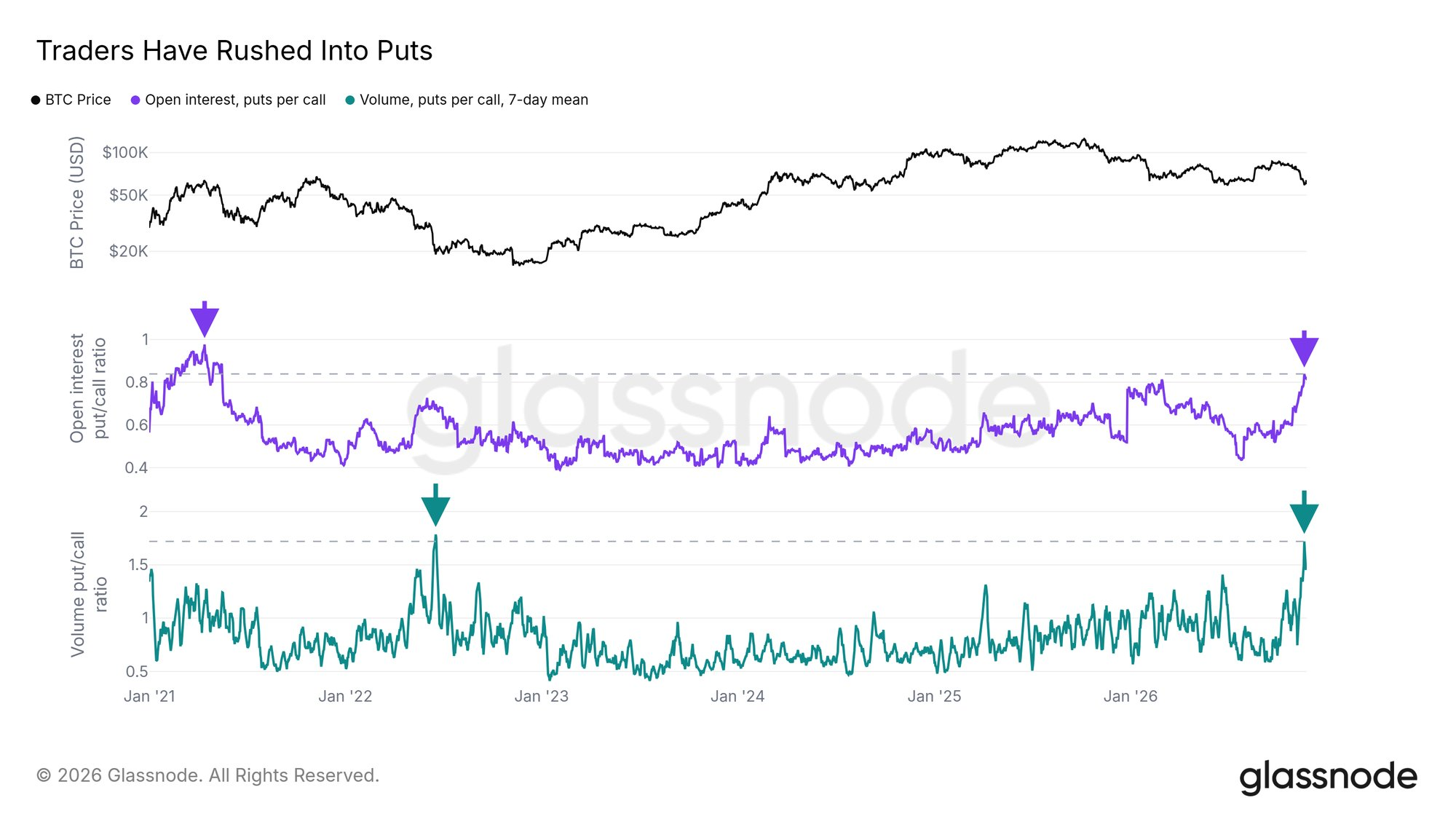
Glassnode analyst AntiFragile highlighted elevated Bitcoin options put/call ratios. The historical comparison depends on the measure. For trading volume, which counts contracts traded, Glassnode’s chart points to June 2022, when Bitcoin traded near $20,000. For open interest, which counts contracts still outstanding, the chart highlights an early-2021 peak.
Glassnode also noted that Bitcoin did not reach its 2022 low until five months after the June reading. The volume ratio showed how heavily trading favored puts over calls; it did not establish when the price would bottom.

The assumptions behind the 2027 scenarios
In his November 24 presentation, Bitcoin: The Weight of History, Benjamin Cowen examined the correction against past drawdowns and long-term price models. Separately, TedPillows identified a timing pattern across the previous three halving cycles: buying 500 days before each halving and selling 500 days afterward would have captured substantial gains. With the next halving expected in April 2028, the corresponding starting point would fall around early December 2026.
Analysts outlined a recovery toward $120,000–$150,000 in 2027 if that historical pattern holds. Their alternative scenario was a period of consolidation or a retest of the mid-$40,000s if the sell-off took longer to run its course. Neither price range is an observed result, and the three-cycle comparison does not establish which outcome is more likely.