
Originally reported by 0xJaehaerys for 白话区块链; published by TechFlow on November 13, 2026, at 14:05 UTC+8. The implementation details and measurements below are claims reported in that article, not independently verified here.
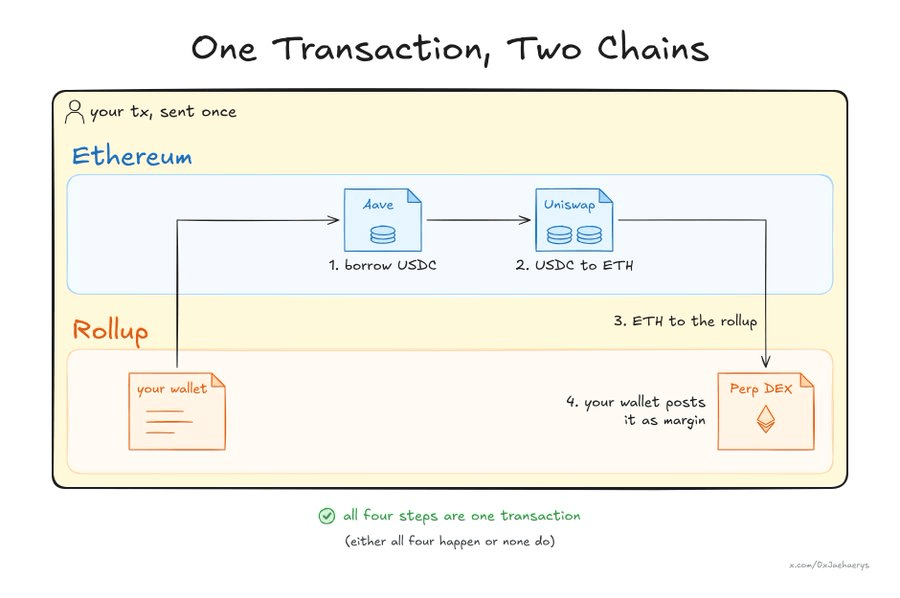
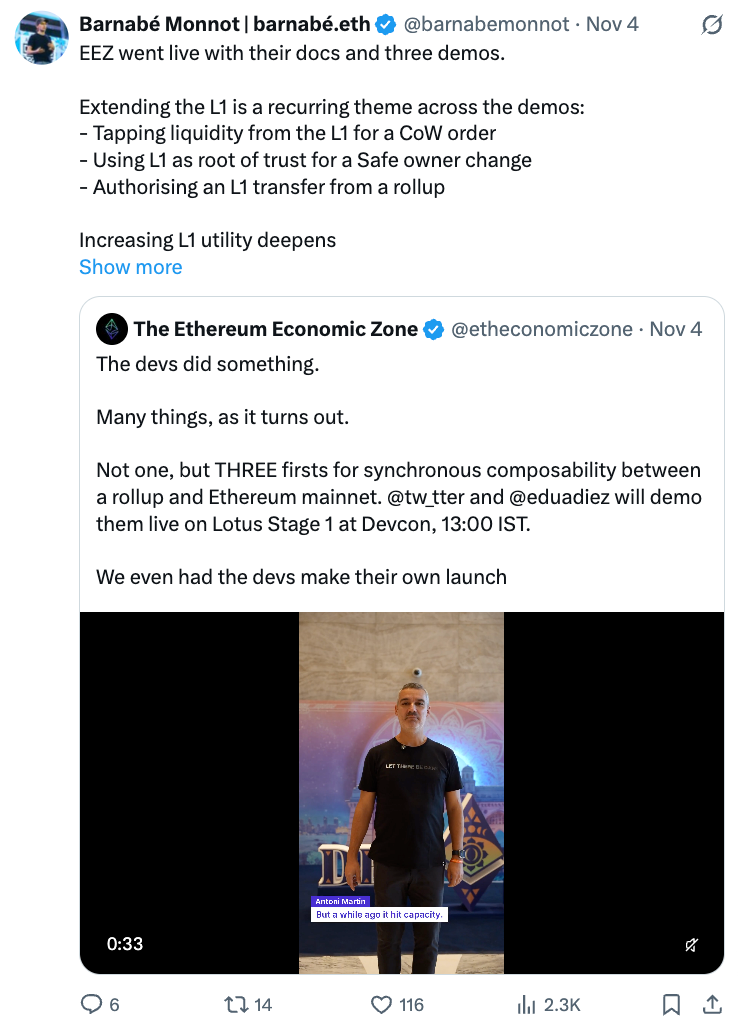
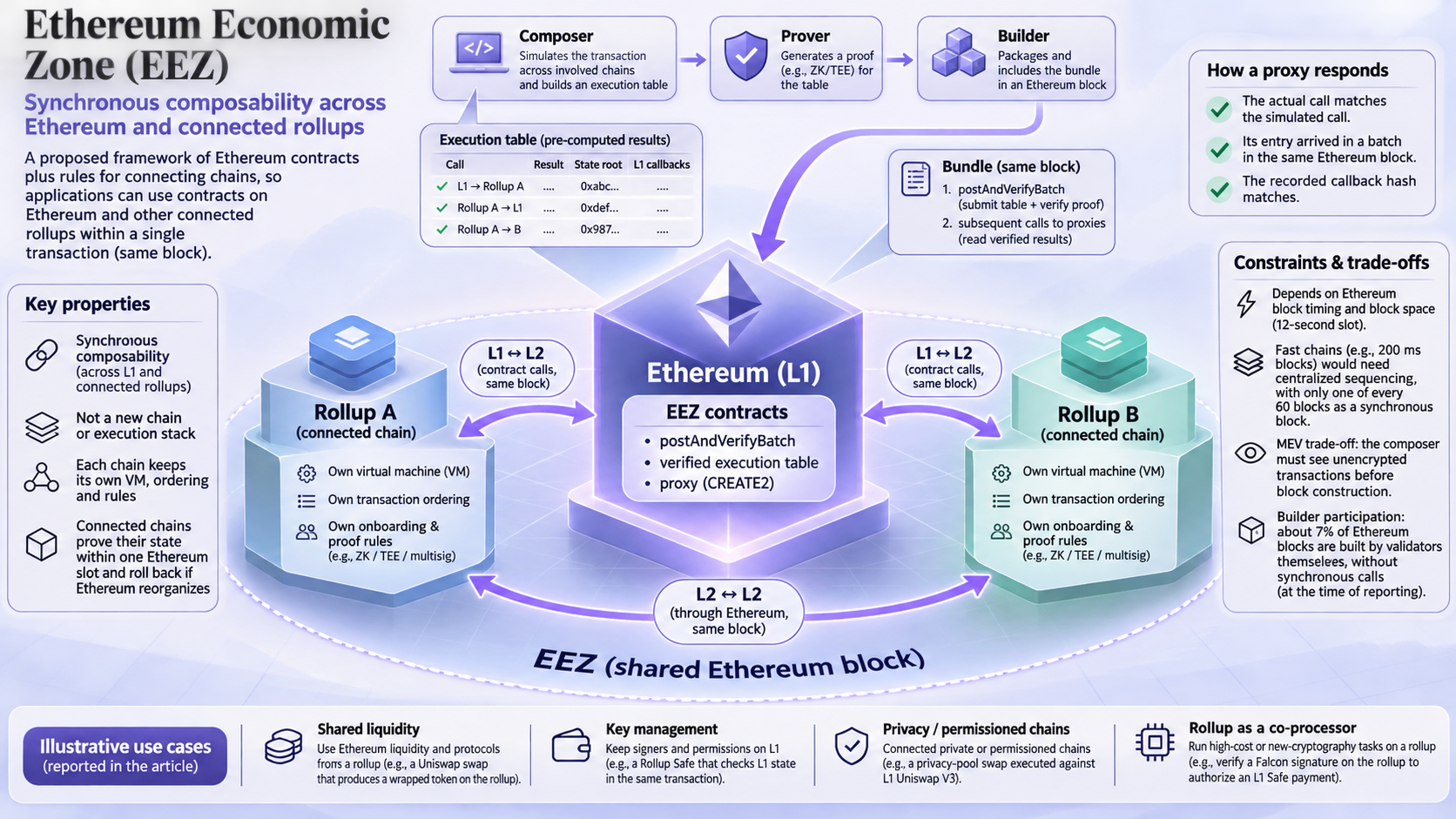
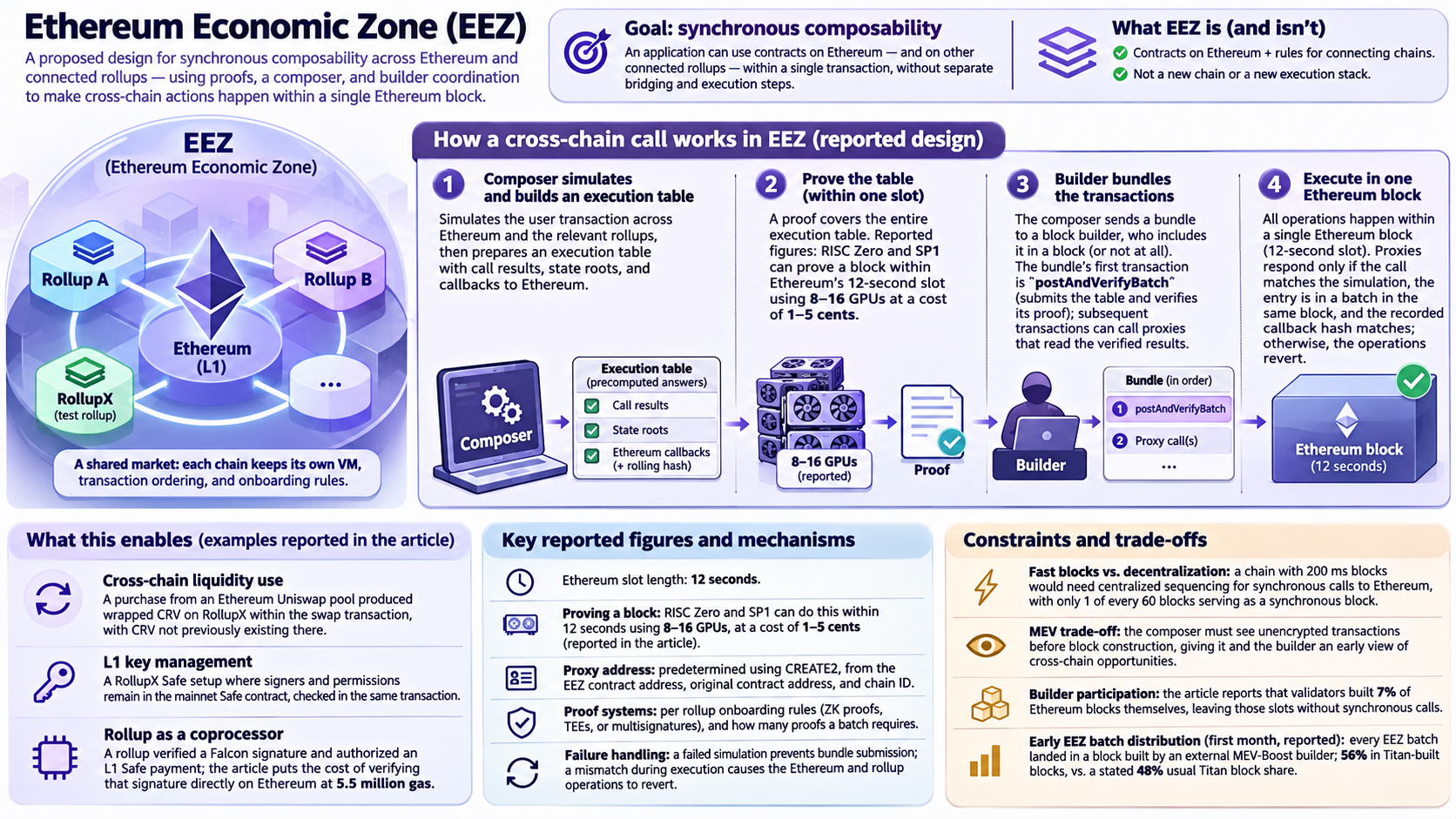
The Ethereum Economic Zone (EEZ) proposes a way for connected rollups to use Ethereum contracts—and contracts on other connected rollups—within a single transaction. Its aim is synchronous composability: an application could cross chain boundaries without making a user complete separate bridging and execution steps. EEZ is described as contracts on Ethereum plus rules for connecting chains, not a new chain or execution stack.
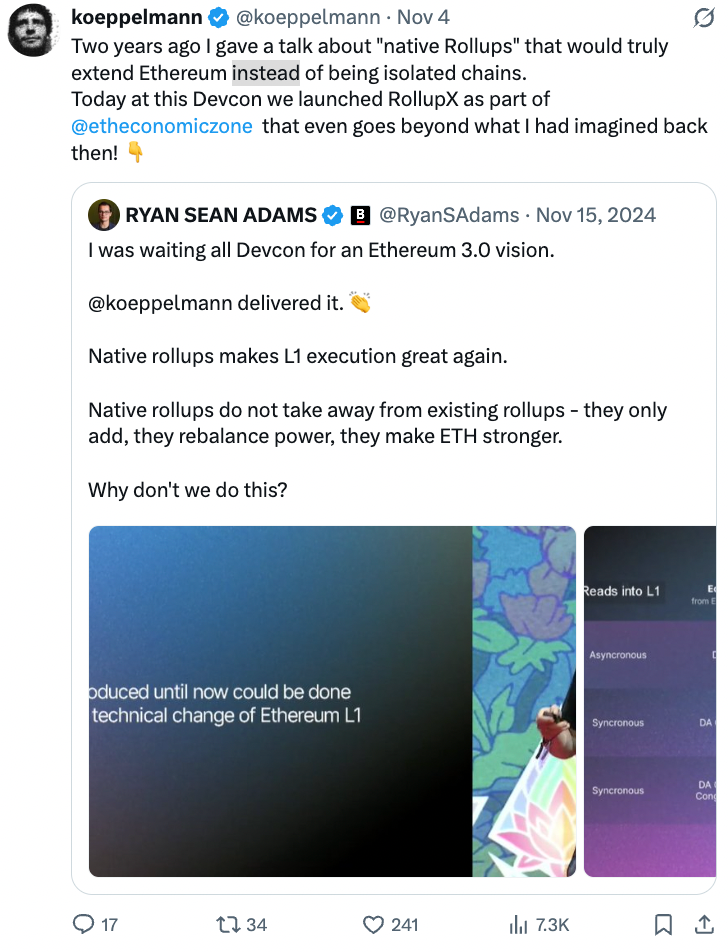
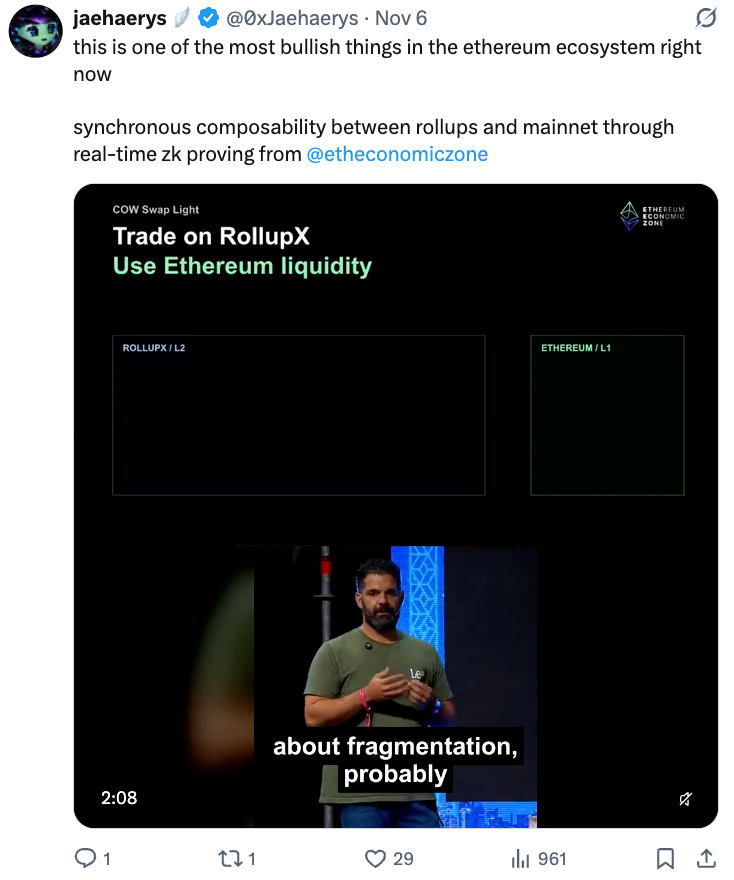
The mechanism: prove the answer before the block
Under the described design, each connected chain retains its own virtual machine, transaction ordering and onboarding rules. To participate, it must prove its state within one Ethereum slot and roll back if Ethereum reorganizes. Ethereum’s slot length is 12 seconds. The article reports that RISC Zero and SP1 can prove a block within that window using 8–16 GPUs at a cost of 1–5 cents; it does not provide a dated benchmark methodology for those figures.
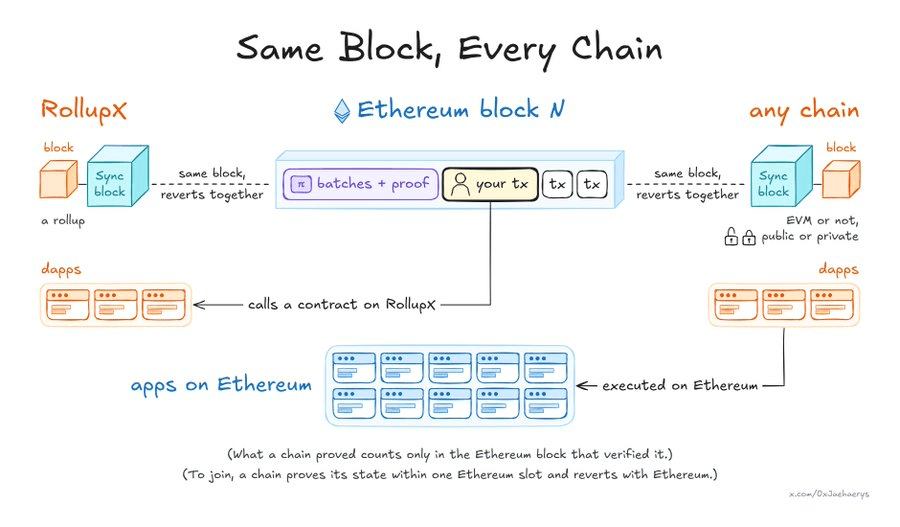
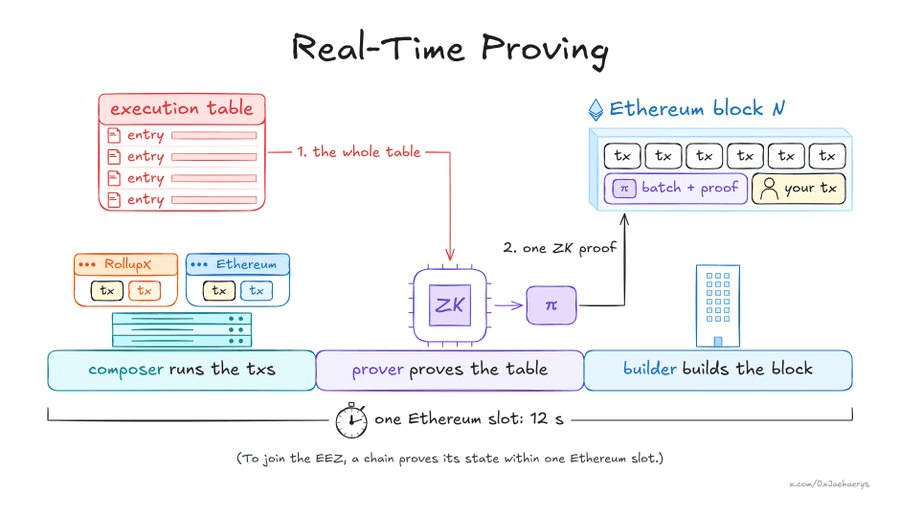
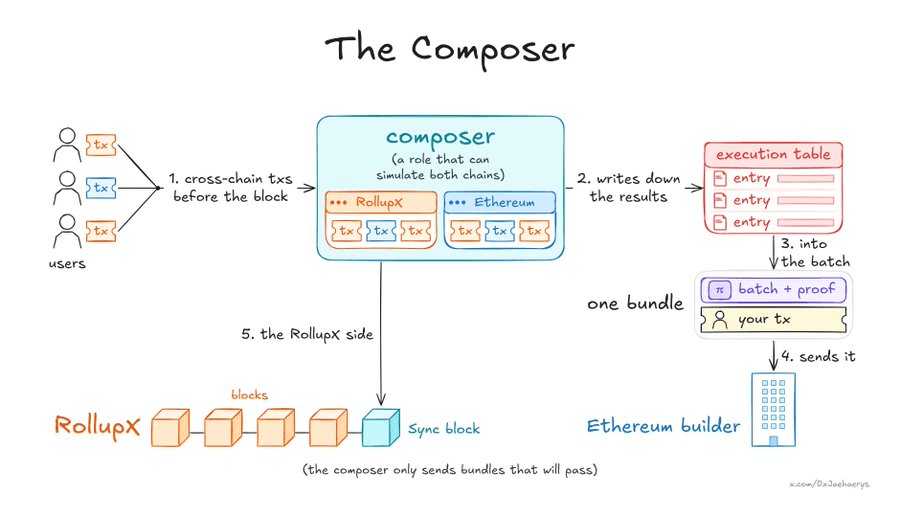
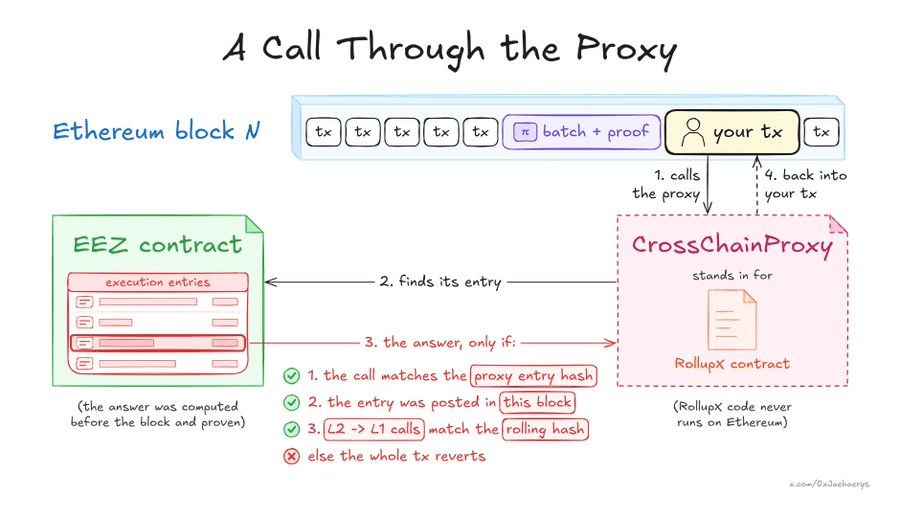
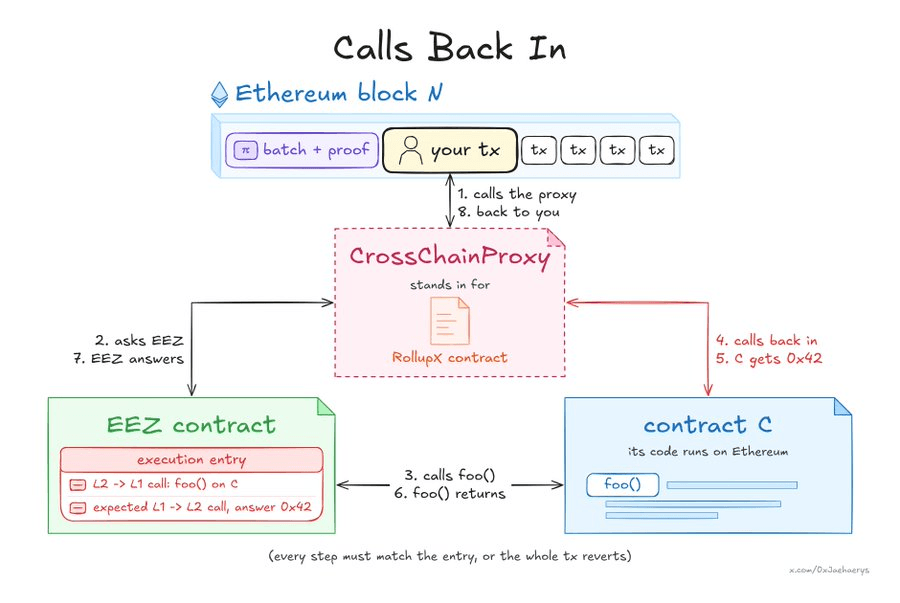
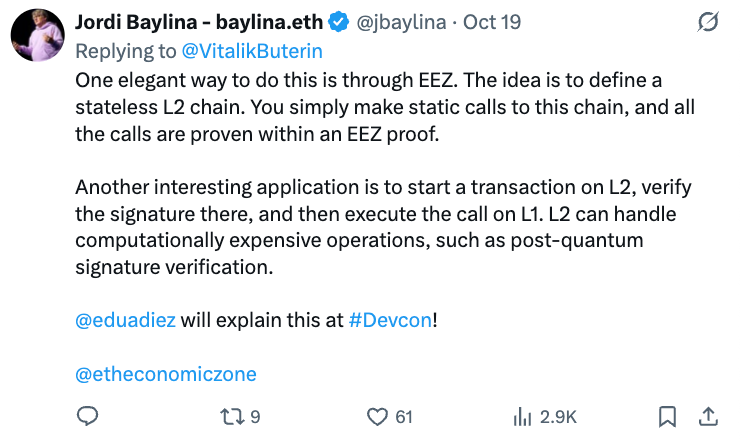
A cross-chain call goes through a proxy whose address is predetermined using CREATE2, the EEZ contract address, the original contract address and the chain ID. Before block construction, a composer simulates the transaction across the relevant chains and prepares an execution table containing call results, state roots and records of callbacks to Ethereum. A proof covers the table.
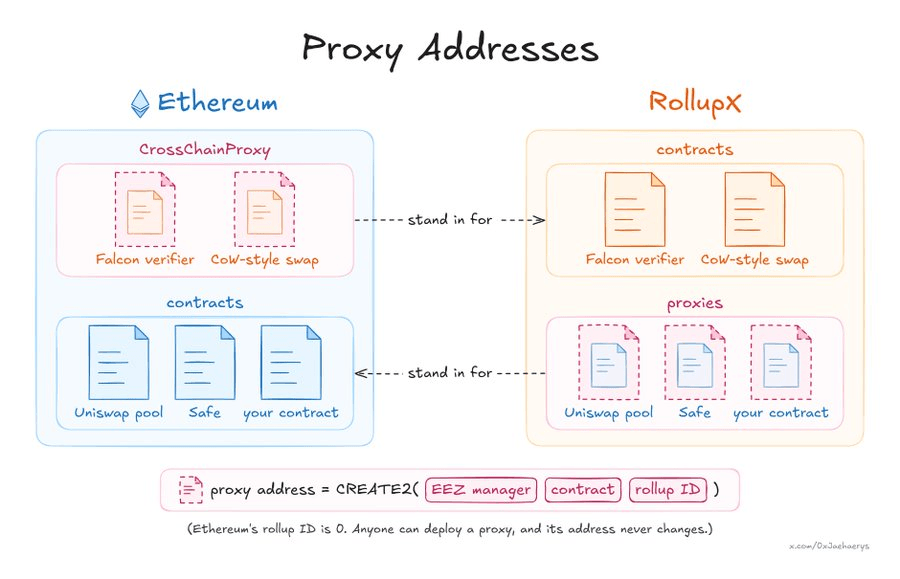
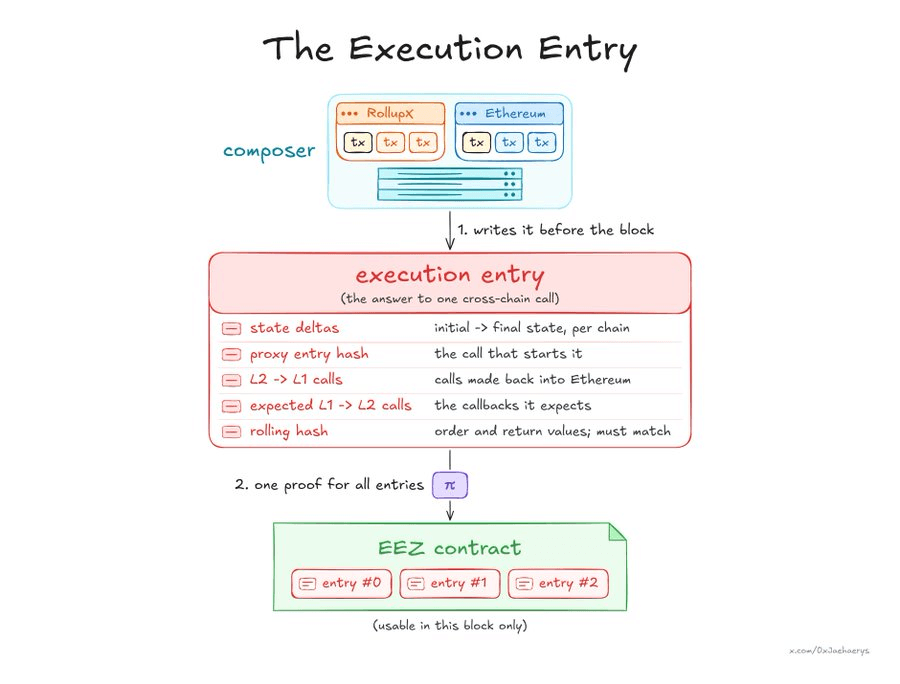
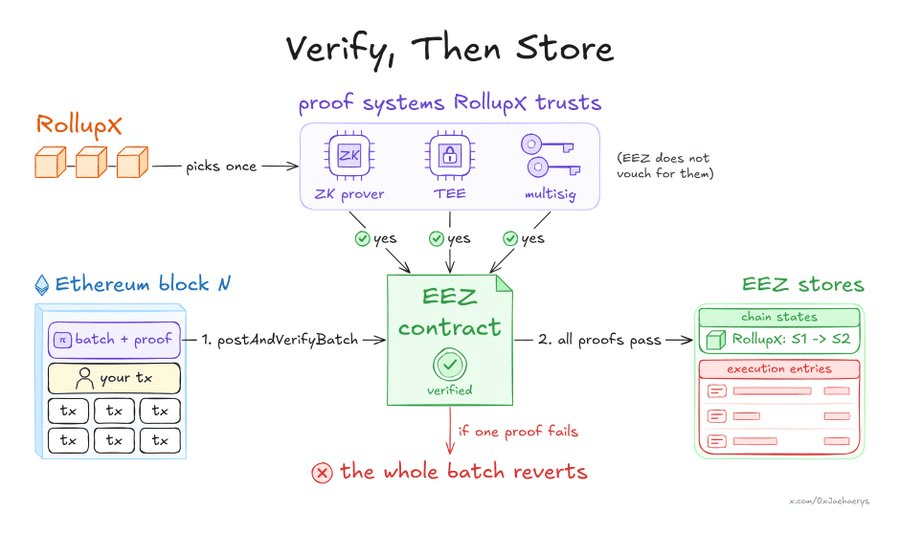
The composer sends a bundle to a block builder. Its first transaction, postAndVerifyBatch, submits the table and verifies its proof; subsequent transactions can call proxies that read the verified results. According to the article, a proxy responds only when the actual call matches the simulated call, its entry arrived in a batch in the same block, and the recorded callback hash matches. A rollup’s onboarding rules determine which proof systems it accepts—including ZK proofs, trusted execution environments or multisignatures—and how many proofs a batch requires. The article says a failed simulation prevents bundle submission, while a mismatch during execution causes the Ethereum and rollup operations to revert.
What has been demonstrated—and what remains illustrative
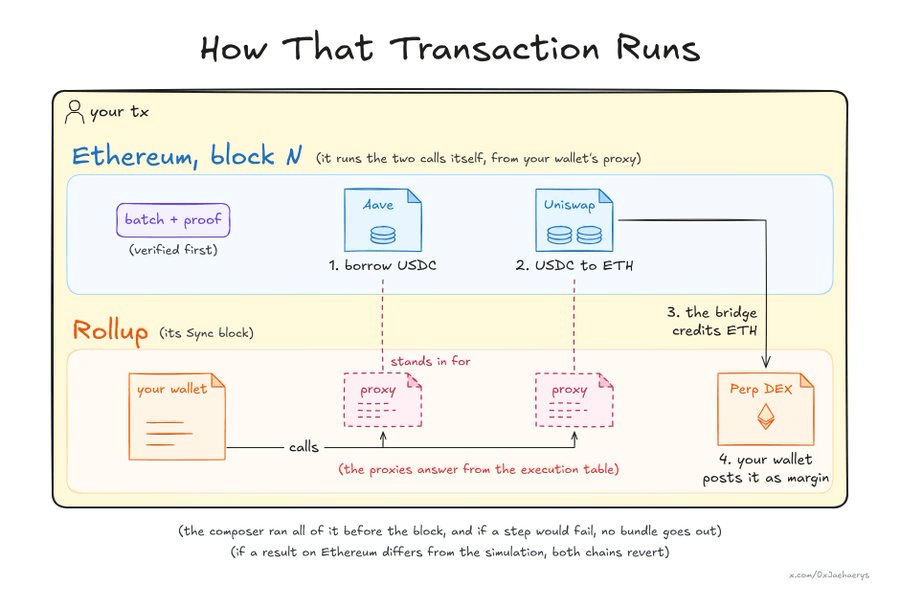
The article’s opening sequence—borrowing USDC on Ethereum, swapping it for ETH and depositing it as margin from a rollup transaction—explains the intended user experience. It should not be mistaken for a documented execution of that entire sequence.
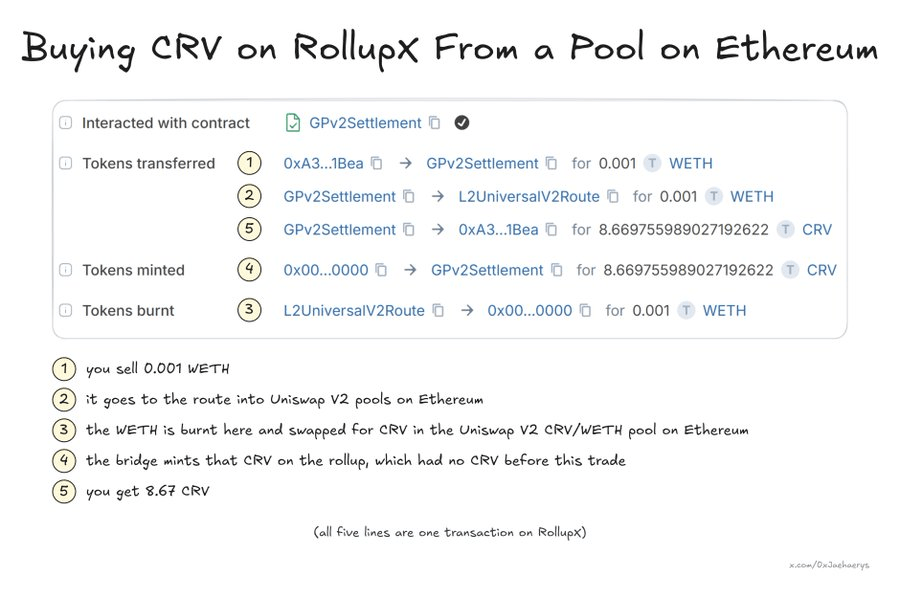
The article separately reports activity on RollupX, described as a test rollup on Ethereum mainnet: a purchase from an Ethereum Uniswap pool produced wrapped CRV on the rollup within the swap transaction, despite CRV not previously existing there. It also describes a RollupX Safe arrangement in which signers and permissions remain in the mainnet Safe contract, a Bermuda Bay privacy-pool swap executed against L1 Uniswap V3, and a demonstration in which rollup verification of a Falcon signature authorized an L1 Safe payment. The article puts the cost of verifying that signature directly on Ethereum at 5.5 million gas. These examples illustrate distinct uses of the proposed call path; the supplied text does not establish broader adoption or economic savings.
Constraints on the shared-block model
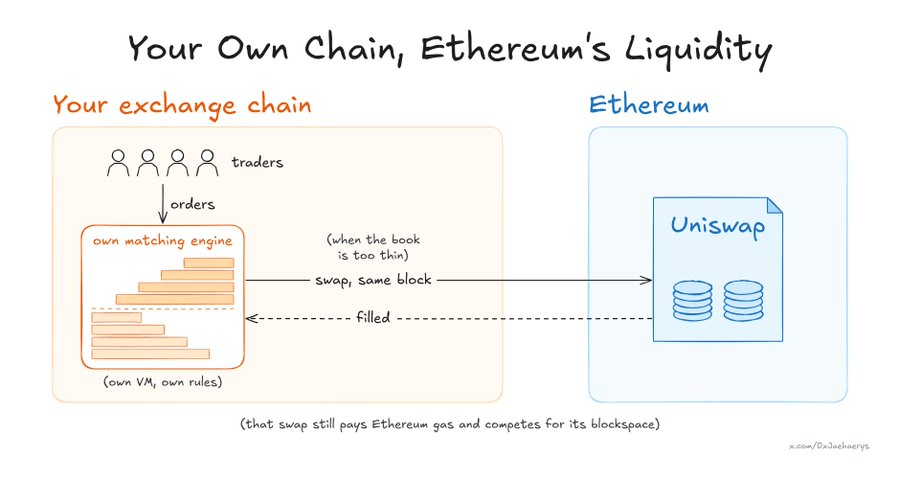
Synchronous calls depend on Ethereum block timing and block space. The article says a chain with 200-millisecond blocks would need centralized sequencing to make synchronous calls to Ethereum, with only one of every 60 blocks serving as a synchronous block. It also identifies an MEV trade-off: the composer must see unencrypted transactions before block construction, giving it and the builder an early view of cross-chain opportunities.
Builder participation is another limitation. The article reports that validators built 7% of Ethereum blocks themselves at the time of reporting, leaving those slots without synchronous calls. It says every EEZ batch in its first month landed in a block built by an external MEV-Boost builder; 56% landed in Titan-built blocks, versus a stated 48% usual Titan block share. The supplied article does not specify the dates or underlying dataset for that first-month comparison, so those percentages should not be treated as a current network measurement.
EEZ’s central trade-off is therefore not simply whether a rollup can access L1 liquidity. It is whether same-block access, with proof generation and builder coordination inside a 12-second slot, justifies the associated timing, sequencing and MEV assumptions.
Source: techflowpost.com (originally published 2026-11-13 14:05 UTC+8)