Original reporting: November 10, 2026, 09:55 (UTC+8). A PANews report says two miners using CKPool’s solo-mining service found Bitcoin blocks 974893 and 974930 less than seven hours apart on November 7. It values their combined block rewards at approximately $476,000. The report does not establish that the two miners used the same hardware.
What the block details show
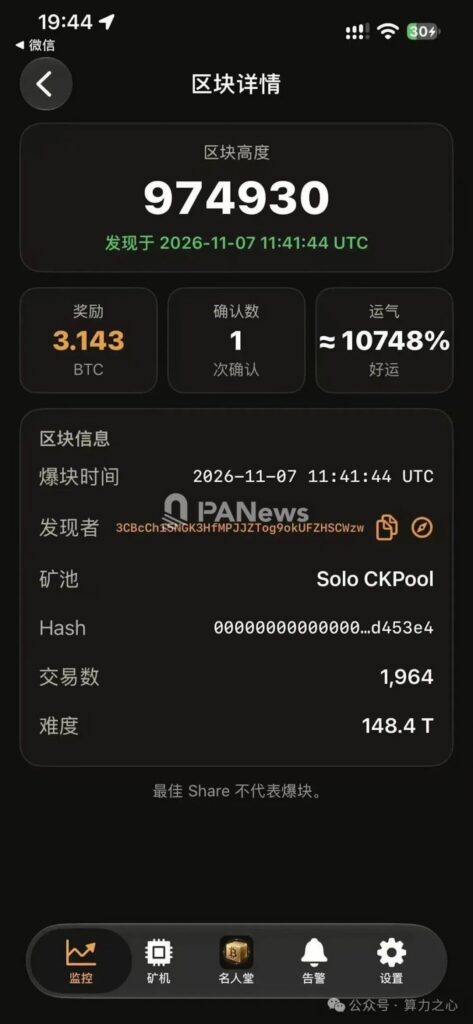
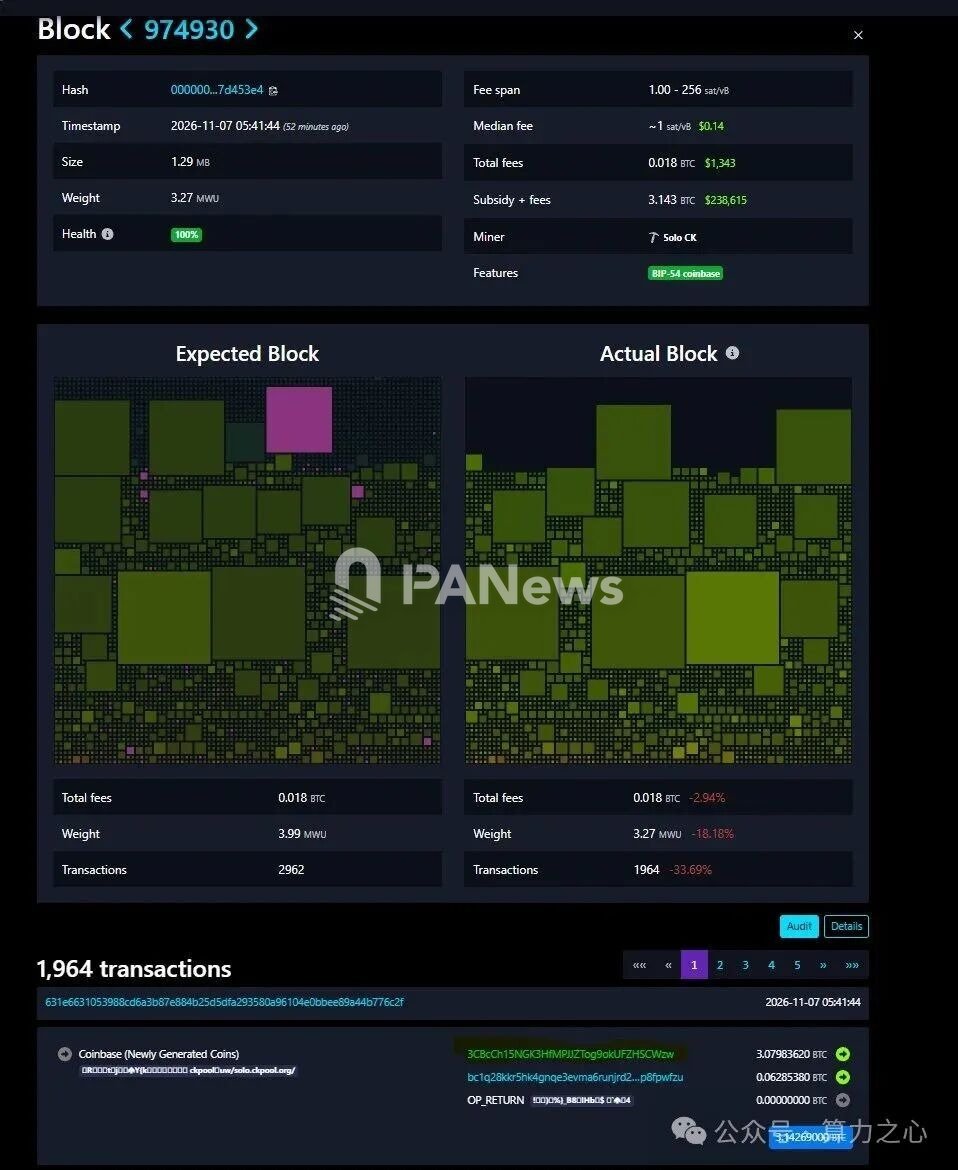
PANews values the reward for block 974893 at roughly $237,000. It says block 974930, found at 7:41 p.m. on November 7, included 1,964 transactions and awarded approximately 3.143 BTC, then worth about $239,000.
For block 974930, the report describes reward outputs of approximately 0.0629 BTC and 3.0798 BTC. It suggests the smaller output—about 2% of the total—was a CKPool service fee. The amounts indicate how the reward was divided, but the report does not independently establish who controlled either receiving address.
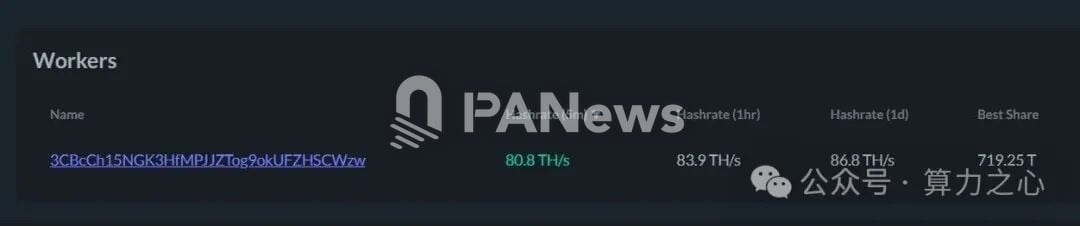
PANews identifies an AvalonQ home miner as the machine behind the later block. It cites reported hashrate readings of 80.8 TH/s over five minutes, 83.9 TH/s over one hour and 86.8 TH/s over one day. Those readings describe reported performance; by themselves, they do not prove the machine model or ownership.
Why a solo win is unusual
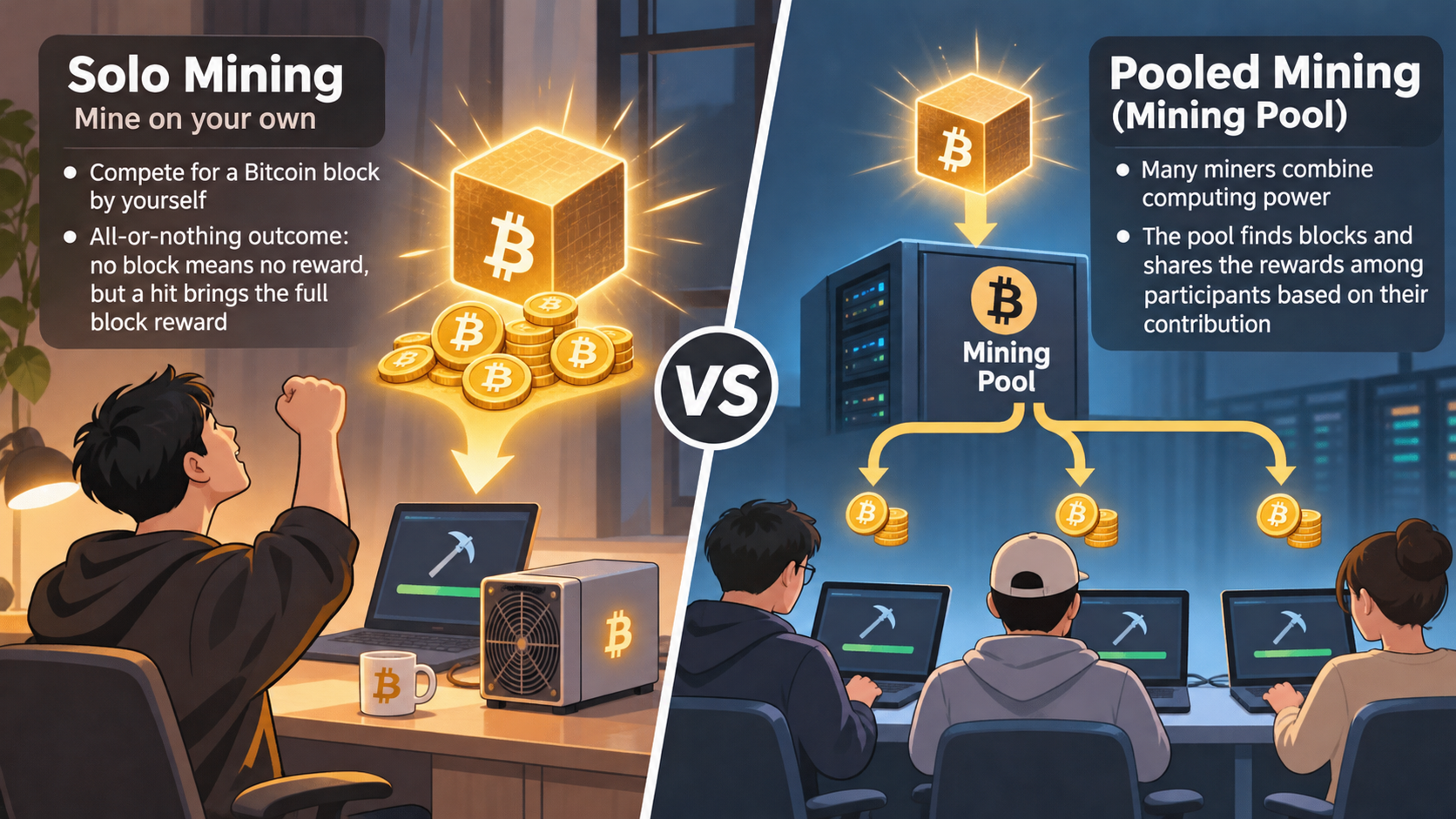
In solo mining, a miner receives a block reward if their work finds a valid block, rather than receiving regular shares of a mining pool’s payouts. That creates a sharply uneven outcome: long periods without a block can be followed by a full reward. PANews reports a network difficulty of 148.4 trillion and a mining-software “luck” reading of 10,748% for the later win. The luck figure describes how quickly that result arrived relative to an expectation; it does not make another win more likely.
As illustrations based on the difficulty used in its report, PANews gives an annual block-finding probability of about 1 in 16,000 for a 1.2 TH/s miner and 1 in 40 for 0.5 PH/s. These are estimates tied to the stated conditions, not enduring odds or profit forecasts. A miner’s outcome also depends on hardware and electricity costs; finding no block means receiving no solo block reward while those costs continue.
The report also cites a 6.5 TH/s solo-mining win on October 27 and says solo miners had found 36 blocks in 2026 through its reporting date. It does not specify a dataset or counting method for that year-to-date total. The November wins demonstrate that small miners can find blocks—not that buying a home miner has a predictable return.
Source: panewslab.com (originally published 2026-11-10 09:55 UTC+8)