This analysis reflects information reported on November 10, 2026. The plan’s proposed rules and product descriptions should not be read as independently verified outcomes.
NeoSoul’s Believe plan asks a specific tokenomics question: can a team’s token releases depend on what the project delivers rather than simply on the passage of time? The answer depends on details the project had not yet specified in the reported material—most importantly, the performance targets and how they will be checked.
What changes for team tokens
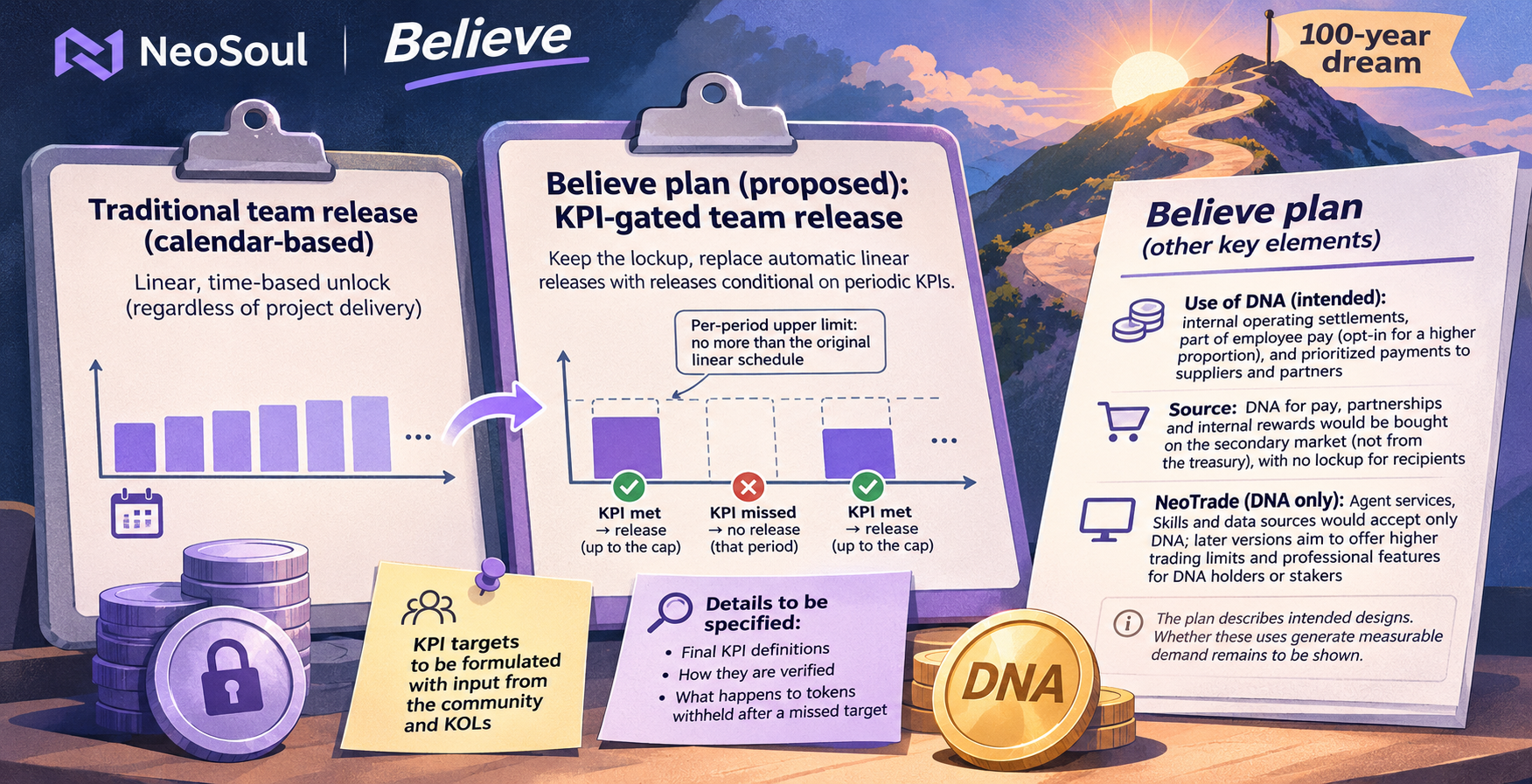
NeoSoul described the plan on November 5. Under its proposed arrangement, team tokens would retain a lockup period, but automatic linear releases would be replaced by releases conditional on periodic KPIs. A team allocation could release no more in any period than its original linear schedule allowed; missing that period’s KPI would mean no release for that period. NeoSoul invited community members and KOLs to help formulate the targets.
The treatment of tokens withheld after a missed target remains unclear. The report also says existing investor unlock schedules would continue, while early investors who voluntarily extend their lockups could receive an incentive. The team’s proposed KPI constraint therefore should not be mistaken for a change to every allocation.
Where DNA would be used
The plan would make DNA the default for internal operating settlements and denominate part of employees’ pay in DNA, with employees able to choose a higher proportion. NeoSoul also said it would prioritize DNA for supplier and partner payments. According to the plan, DNA used for pay, partnerships and internal rewards would be bought on the secondary market rather than drawn directly from the treasury, and recipients would not face a lockup on those payments. Purchases do not, by themselves, establish sustained net demand: recipients could sell.
NeoSoul says its NeoTrade Agent services, Skills and data sources would accept only DNA. Later versions are intended to give DNA holders or stakers access to higher trading limits and professional features, including institutional-grade data sources. Those later-version benefits are design intentions, not demonstrated usage.
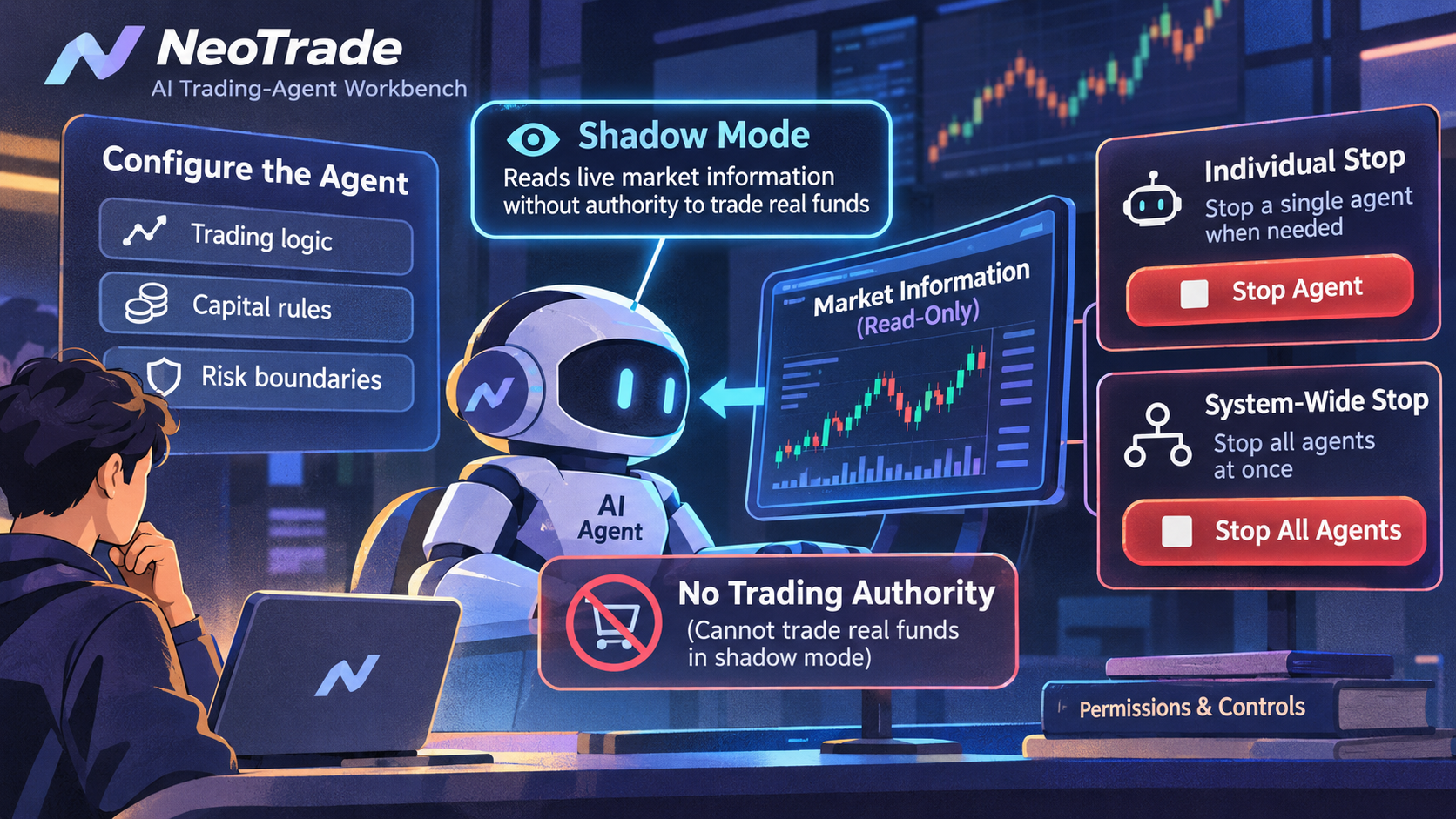
NeoTrade, described as an AI trading-agent workbench, lets users set trading logic, capital rules and risk boundaries. The reported product description also includes a shadow mode in which an agent reads live market information without authority to trade real funds, plus individual and system-wide stop controls. The source mentions a public wallet SDK with wallet derivation, encrypted key storage, order-signing policies and EVM interaction; it supplies no independent security assessment of the overall system.
What evidence would test the plan
NeoSoul’s disclosed tokenomics put DNA supply at 1 billion, with 13% circulating at TGE and monthly releases leading to full unlock in month 39. The supplied report does not provide a dated dataset of NeoTrade’s active agents, DNA service payments or trading results after fees and slippage. Nor does it set out final KPI definitions, who verifies them, or what ultimately happens to an allocation withheld after a missed target.
Those omissions limit the conclusion. Believe describes a proposed constraint on team releases and a set of intended uses for DNA. Whether those uses generate measurable demand—and whether the unlock conditions impose a meaningful, enforceable constraint—remains to be shown.