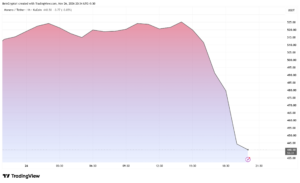
Bitcoin traded at roughly $60,400–$60,800 on November 26, 2026, according to TradingView data. The rebound from lows near $55,000–$57,000 left BTC down about 25% over 30 days. It also followed two days of net withdrawals from US spot Bitcoin exchange-traded funds.
In a separate policy development, Bitcoin News reported on November 26 that the House Financial Services Committee had cleared the American Reserve Modernization Act (H.R. 8957). The bill would codify President Trump’s Strategic Bitcoin Reserve. Committee approval made the proposal eligible for a full House vote; it did not make it law.
What the ETF flows show
CoinGlass figures showed net outflows of about $231 million on November 24 and $453 million on November 25. Multiple trackers put cumulative November withdrawals above roughly $5.3 billion to $5.4 billion, a record or near-record monthly total depending on the tracker. BlackRock’s IBIT accounted for the largest share of redemptions. The daily figures end on November 25, so they do not establish whether investors returned to the funds on the day Bitcoin traded back above $60,000.
Leverage and the $60,000 level
The decline into the mid-$50,000s forced exchanges to liquidate leveraged long positions. On the rebound, the pressure reversed: tens of millions of dollars in leveraged short positions were closed over short intervals, helping push the price higher. Funding rates remained relatively muted, suggesting traders were cautious about adding leveraged long positions. The Crypto Fear & Greed Index stood near 13 out of 100, in its “Extreme Fear” range.
Recent intraday highs around $61,000–$61,500 marked the nearest resistance, while traders watched the high $50,000s for support. A weekly close above $60,000 remained an open question. With US markets closed for Thanksgiving on November 26, thinner liquidity could amplify price moves. Beyond the holiday, traders were watching personal consumption expenditures data, GDP revisions, purchasing managers’ surveys and consumer confidence for clues about the Federal Reserve’s December rate decision.