Historical-source note: This article is based on imToken’s report published by PANews on November 11, 2026, at 21:36 UTC+8. Project decisions and network plans below reflect that reporting date.
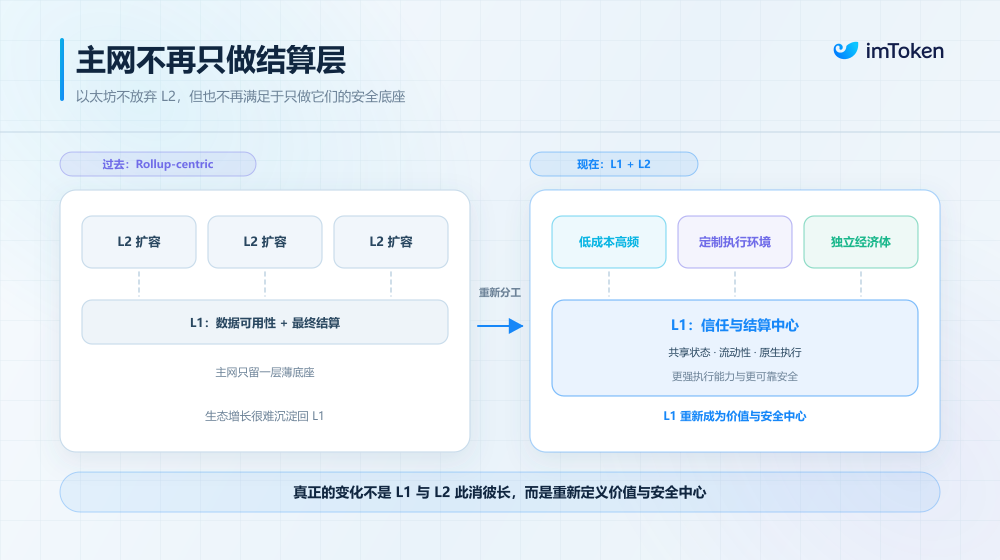
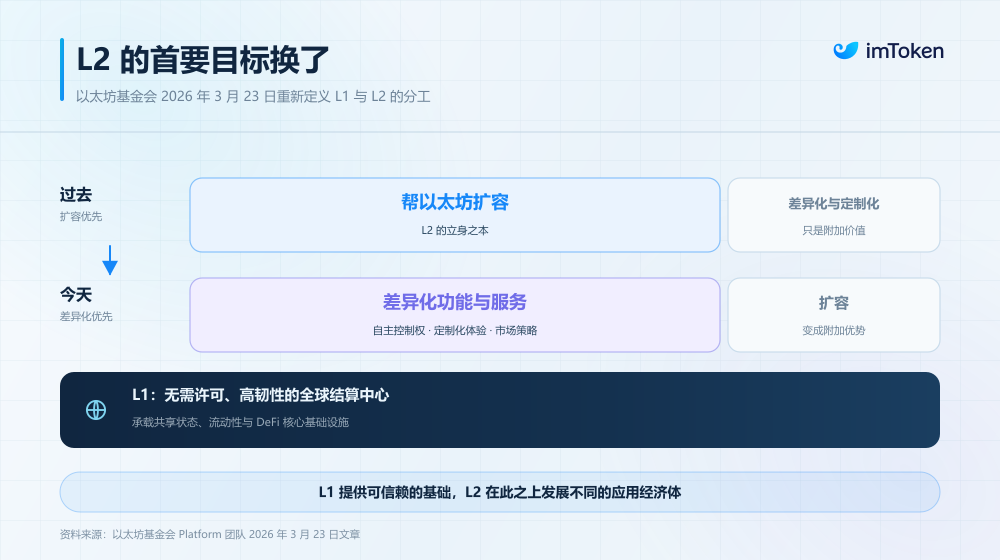
For years, Ethereum’s high mainnet transaction costs gave applications a reason to build on rollups or operate their own Layer 2 (L2) networks. The question raised by several decisions reported in 2025 and 2026 is narrower than whether L2s have failed: when does a dedicated chain still justify its operational and trust costs?
The deployment decision is changing
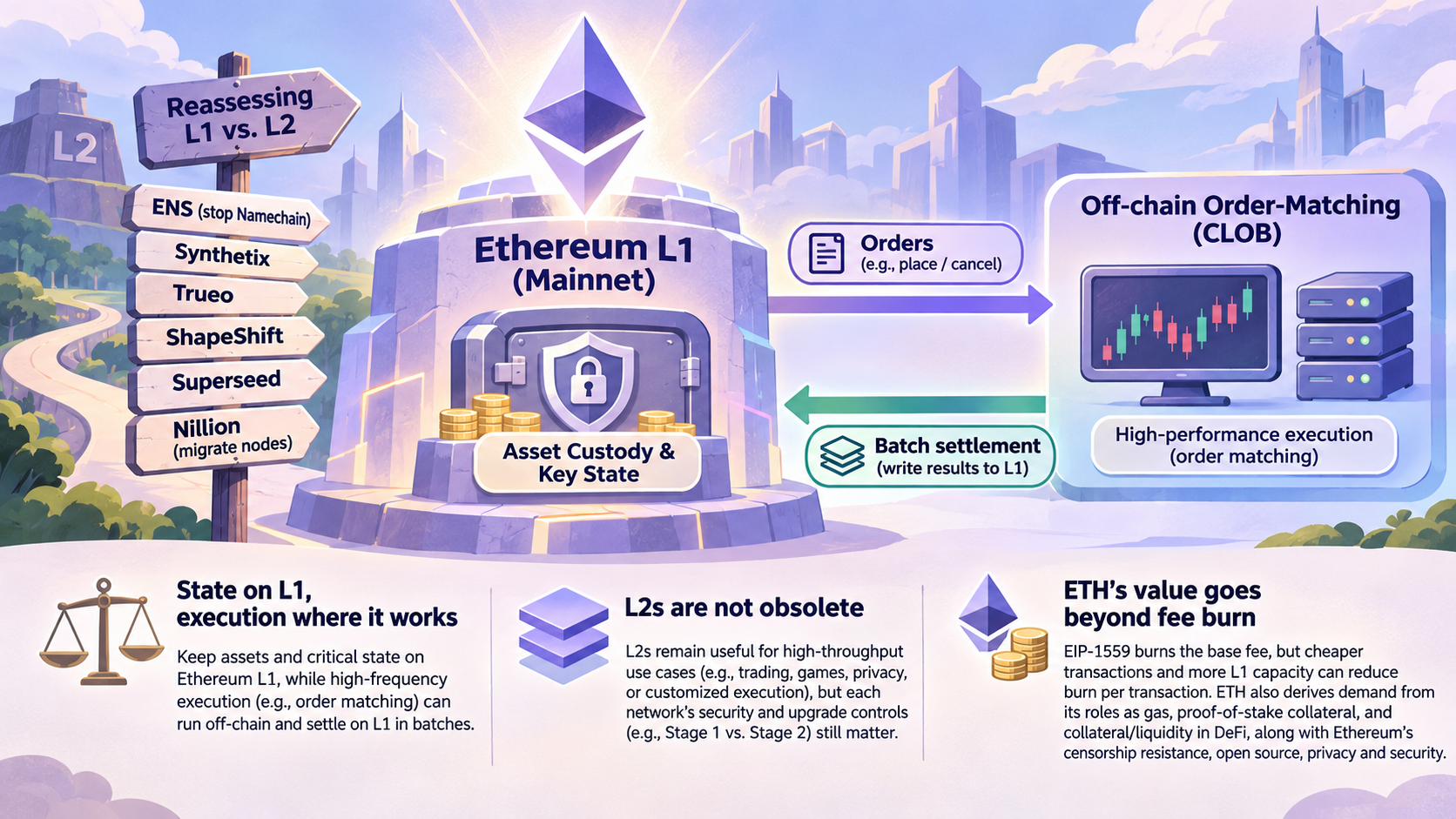
ENS Labs planned Namechain, a dedicated ZK rollup for ENSv2, in 2024. In February 2026, ENS co-founder Nick Johnson said development would stop and ENSv2 would instead deploy on Ethereum mainnet. His stated reason was that L1 scaling had advanced faster than expected. According to ENS Labs figures cited in the report, average gas costs for ENS registrations fell by about 99% over the preceding year, from nearly $5 to less than $0.05. Those are ENS registration costs, not a measure of all mainnet transactions. A separate L2 would also entail infrastructure, bridging, cross-chain resolution, audits and ongoing maintenance.
Other decisions had different motivations. Synthetix argued in June 2025 that L2 deployment had introduced liquidity fragmentation and infrastructure problems; its new perpetuals exchange launched on Ethereum mainnet that December. The report says Trueo announced in September 2026 that it would move its primary deployment from Base to L1, citing integration, network effects and neutrality. ShapeShift moved its rFOX staking program from Arbitrum to mainnet on October 1, noting that most FOX tokens were already held there. Superseed stopped its L2 in August and planned to move core products to mainnet rather than rely on chain gas revenue to support loan repayment.
Nillion’s case needs a distinction. The report says Nillion launched Blacklight L1 in October, but separately describes node operations as moving from Nillion L2 to Ethereum mainnet, with the former L2 to be phased out. It does not explain how the Blacklight L1 launch relates to that stated migration destination.
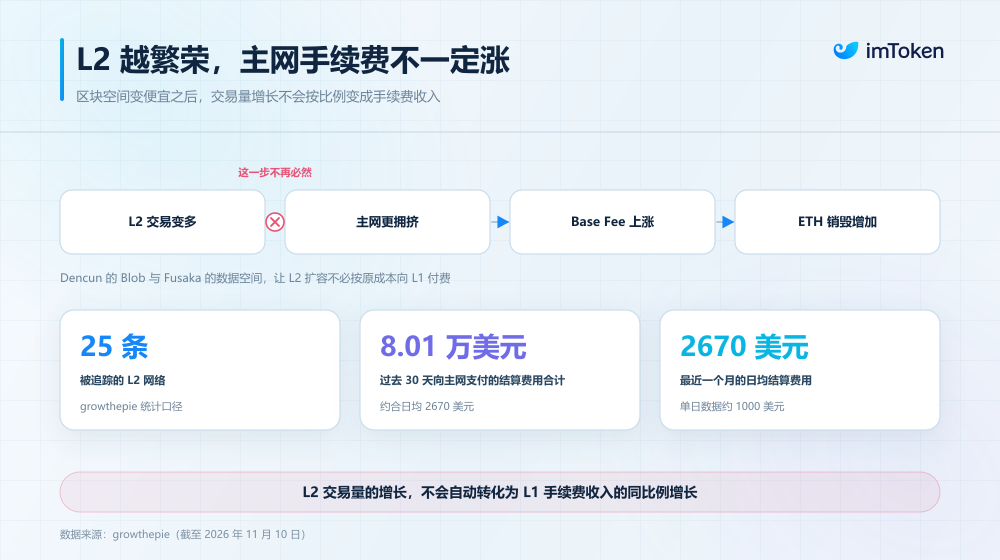
The report also describes financial pressure on standalone networks. Blast said on October 2 that operating costs exceeded its L2 revenue and that it saw no reliable route to sustainability. Abstract announced a plan to close on December 15, citing insufficient liquidity, a limited DeFi ecosystem and lack of institutional participation despite reporting more than 144 integrated apps and 400,000 users. As of the report’s November 11 publication, Abstract’s closure was a plan, not a completed event.
Keep critical state on L1; place execution where it works
A move toward mainnet need not mean executing every operation there. In the Synthetix design described by the report, Ethereum L1 contracts custody user assets, an off-chain central limit order book matches orders, and results are settled on mainnet in batches. This avoids requiring users to bridge all their assets to a separate L2 for matching speed. It does not remove every trust assumption: the report notes that parts of margin management still depend on the off-chain order book, which itself requires scrutiny.
Nor can every rollup be treated as equivalent to a fully decentralized part of Ethereum. The report says ETHBEAT, formerly L2BEAT, listed dozens of L2s as of November 2026, but only a single-digit number had reached Stage 2; major networks including Base, Arbitrum One and OP Mainnet remained at Stage 1. It offers no supporting chart or dated asset breakdown for its characterization of Stage 2 asset size. Upgrade authority and other controls therefore remain relevant to evaluating each network’s security claims. Native Rollup and Ethereum Economic Zone proposals discussed in the report aim for closer verification or interaction across execution environments, but were still research and development directions, not deployed solutions to fragmentation.
Cheaper transactions complicate a burn-based valuation
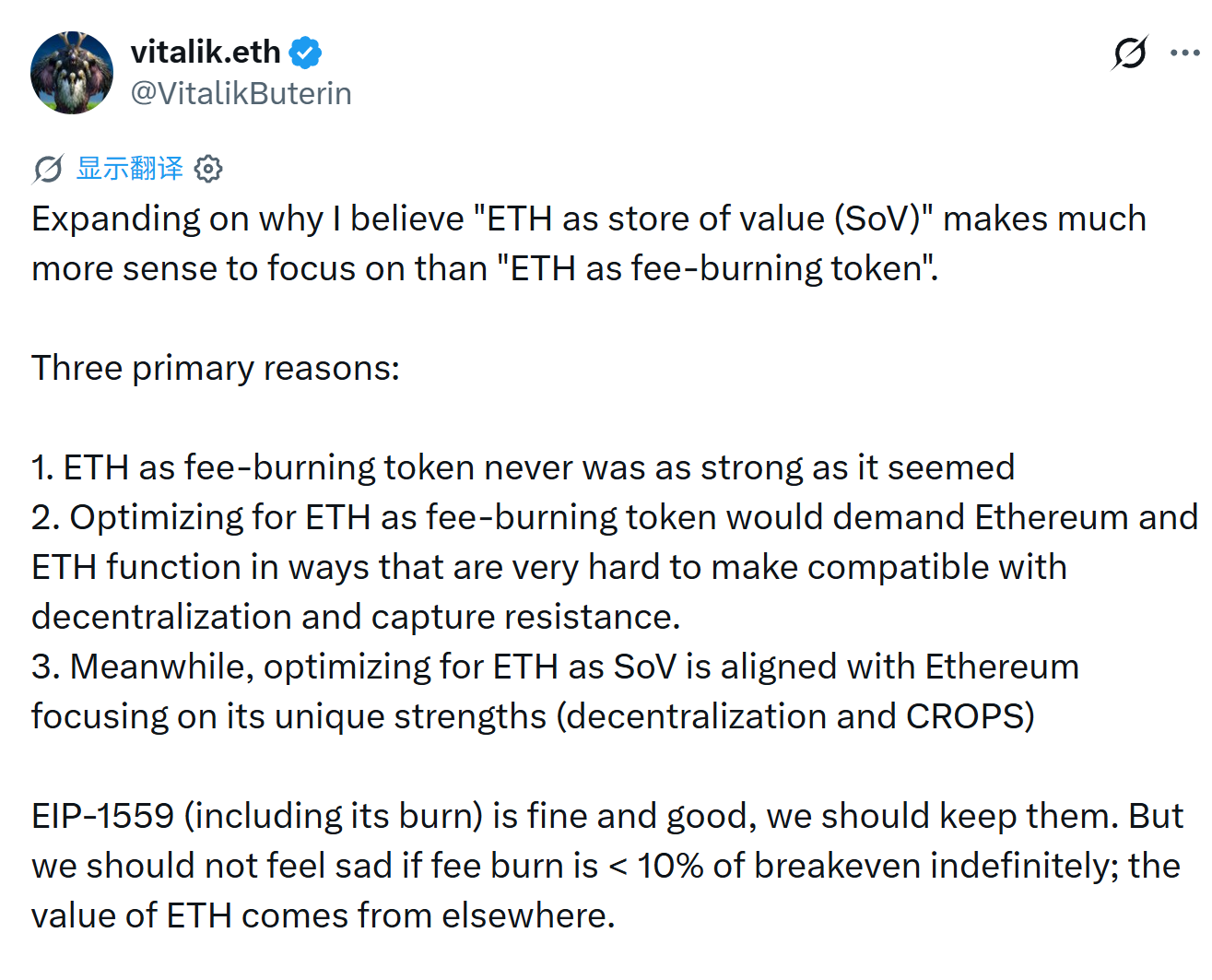
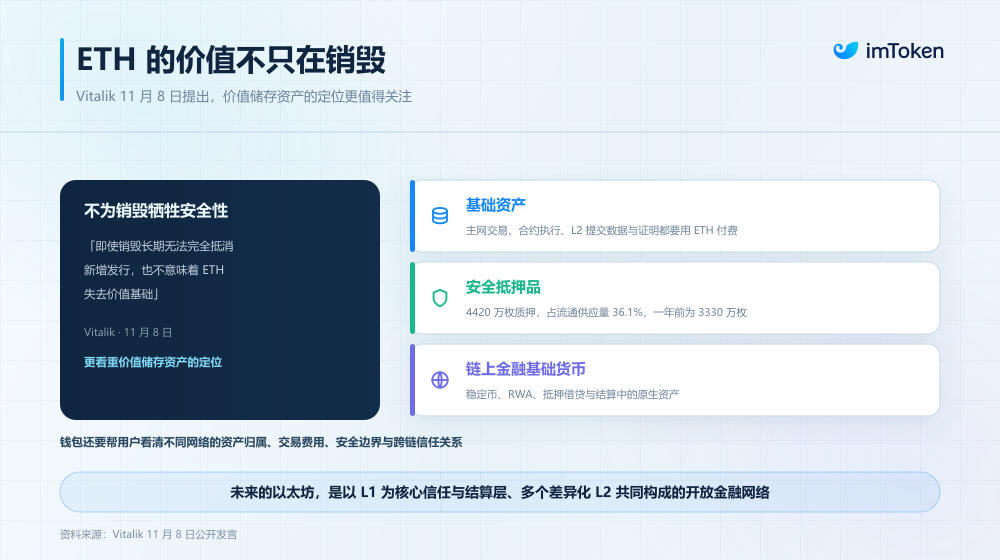
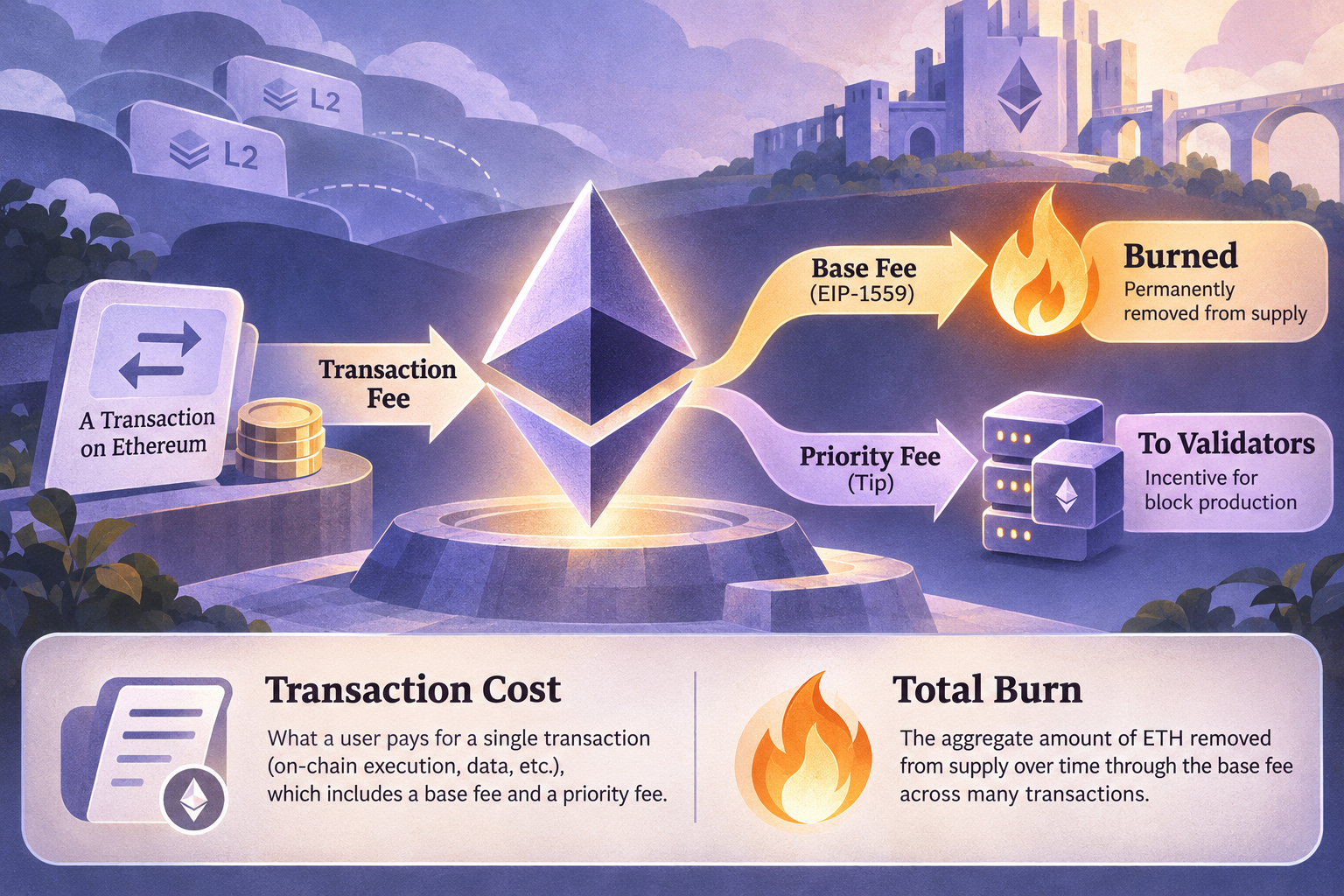
Under EIP-1559, Ethereum’s base fee is burned while priority fees go to validators. More activity does not automatically mean proportionately more ETH burned: cheaper L2 data posting and greater L1 capacity can reduce fees per transaction. The report cites Vitalik Buterin’s argument that ETH’s long-term value should not be judged chiefly by fee burn. He supported retaining EIP-1559, while arguing that holders should not necessarily be disappointed even if burning offset less than 10% of the issuance needed to break even.
The report uses the roughly $180 million in fees burned in one day during Yuga Labs’ 2022 Otherdeed mint as an example of why an exceptional speculative event is a weak basis for a durable valuation. It presents ETH’s other roles—as the network’s gas asset, proof-of-stake collateral, and collateral and liquidity within DeFi—alongside Buterin’s emphasis on censorship and capture resistance, open source, privacy and security. These are arguments about potential sources of demand and resilience, not a measured valuation model.
The evidence supports a change in how some projects weigh L1 against operating an L2, not a general conclusion that rollups are obsolete. The unresolved question for each application is which state and safeguards must remain on mainnet, and which execution costs or controls it is willing to place elsewhere.
Source: panewslab.com (originally published 2026-11-11 21:36 UTC+8)