Historical research note: This article examines an analysis by nikos (@definikos), translated by TechFlow and published on November 11, 2026, at 14:30 UTC+8. The credit desk described below is the author’s proposal, not a deployed product.
A payment fintech may be able to borrow $30 million in USDC from an on-chain market in one transaction. That does not mean a lender has promised to make $30 million available whenever the company needs it over the following year, at a price agreed in advance. Nikos identifies that distinction—between available liquidity and committed credit—as the central gap in the lending systems examined.

What existing markets do not guarantee
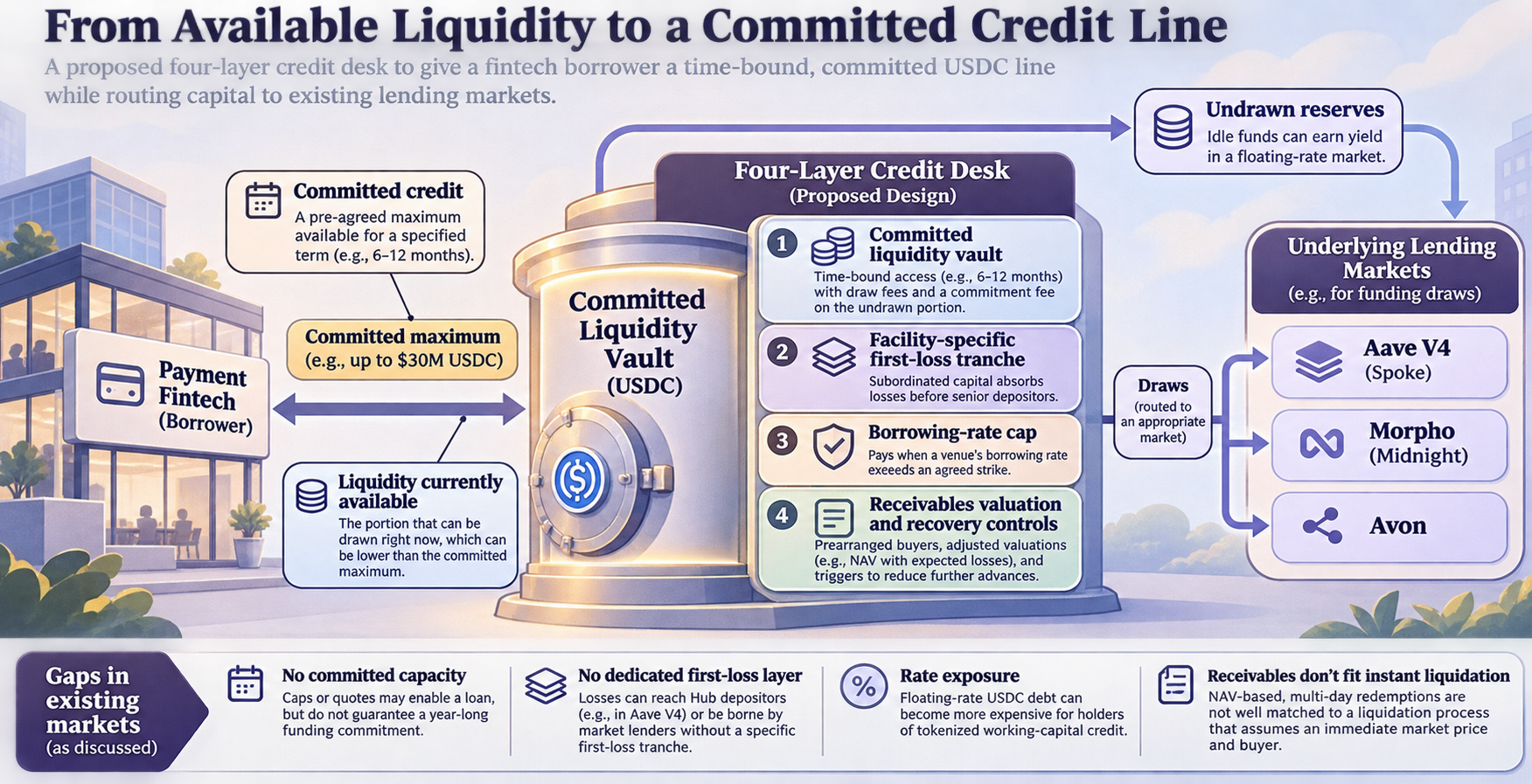
In the author’s comparison, an Aave V4 Spoke can cap a borrower’s withdrawals without guaranteeing that the Hub will have funds available to meet them. A Morpho Midnight lender can withdraw a quote before the borrower draws, while Avon routes a request to lenders quoting at that time. These mechanisms may facilitate a loan, but none, as described, makes the proposed year-long funding commitment.
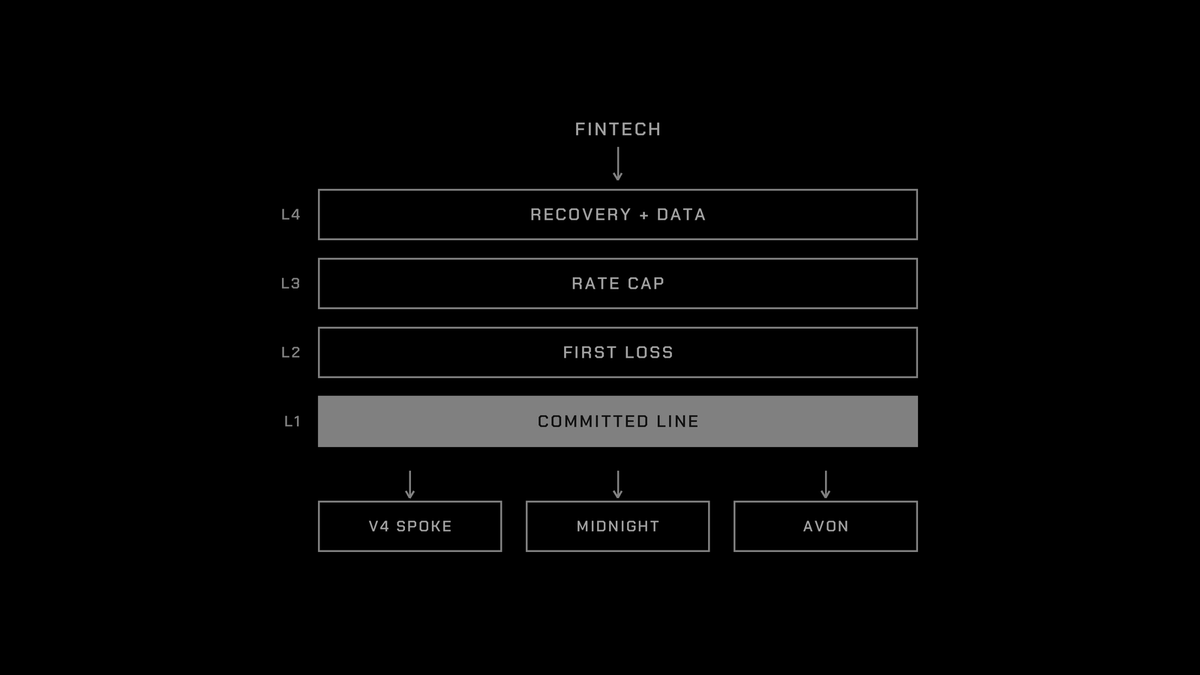
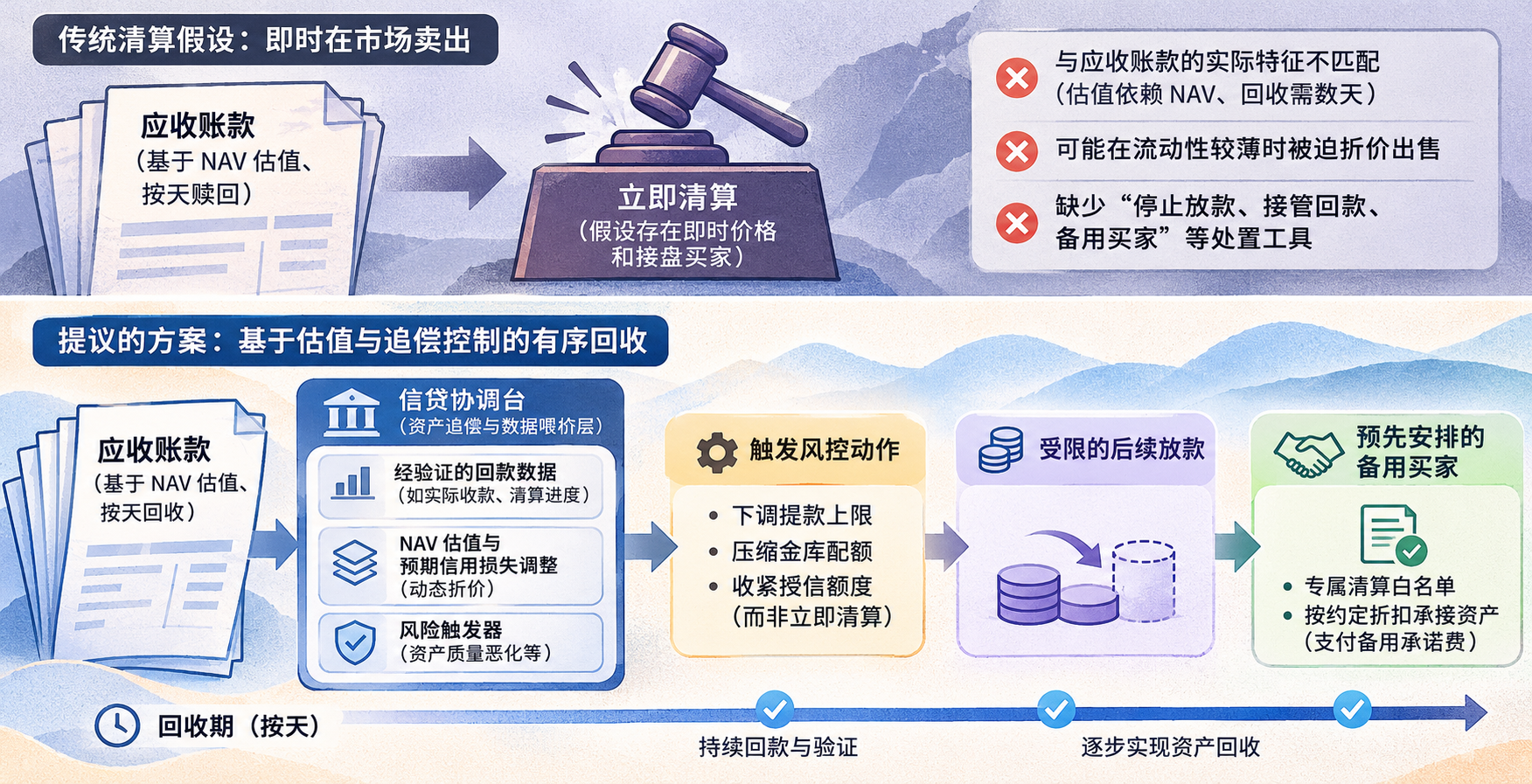
The analysis identifies three related gaps. It argues that unrecovered losses in an Aave V4 Spoke can reach depositors supplying the asset through its Hub; an isolated Midnight or Avon market contains losses within that market, but its lenders still bear them without a dedicated first-loss layer. Floating-rate USDC debt can also become more expensive for holders financing tokenized working-capital credit. Finally, receivables valued through net asset value (NAV) reports and redeemed over days do not fit a liquidation process that assumes an immediate market price and buyer. The author estimates that holders had used roughly $600 million of tokenized working-capital credit in revolving positions backed by floating-rate USDC debt; the source does not provide an independently verifiable dataset or measurement date for that figure.
The proposed four-layer credit desk
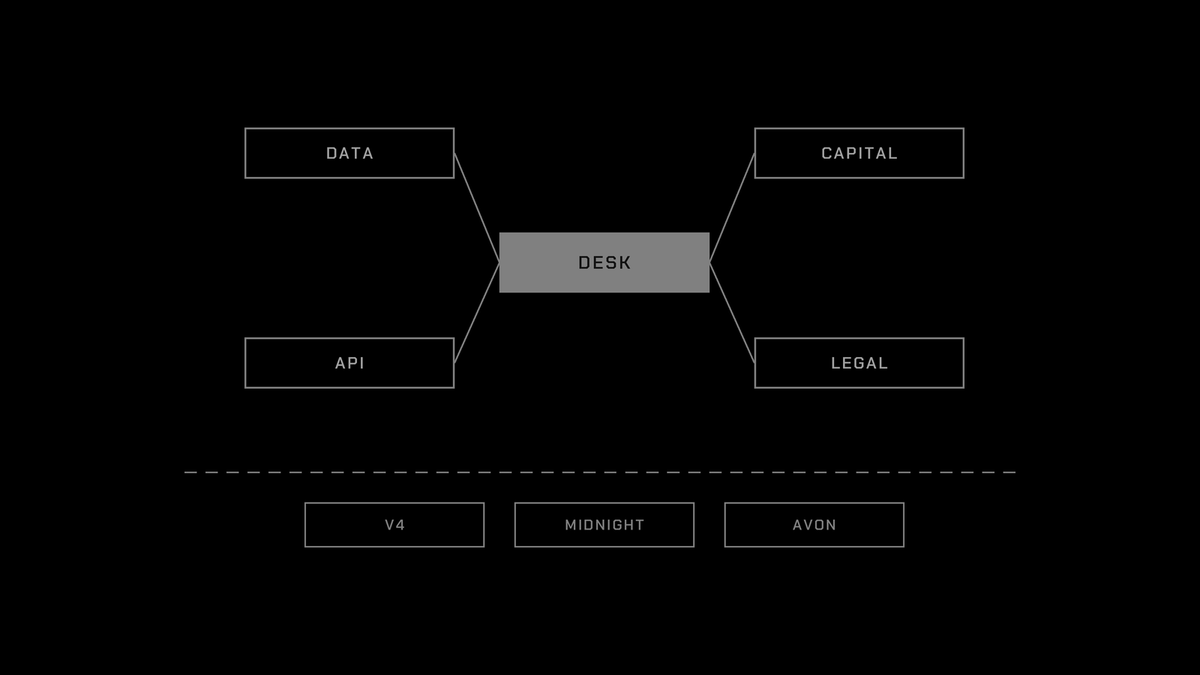
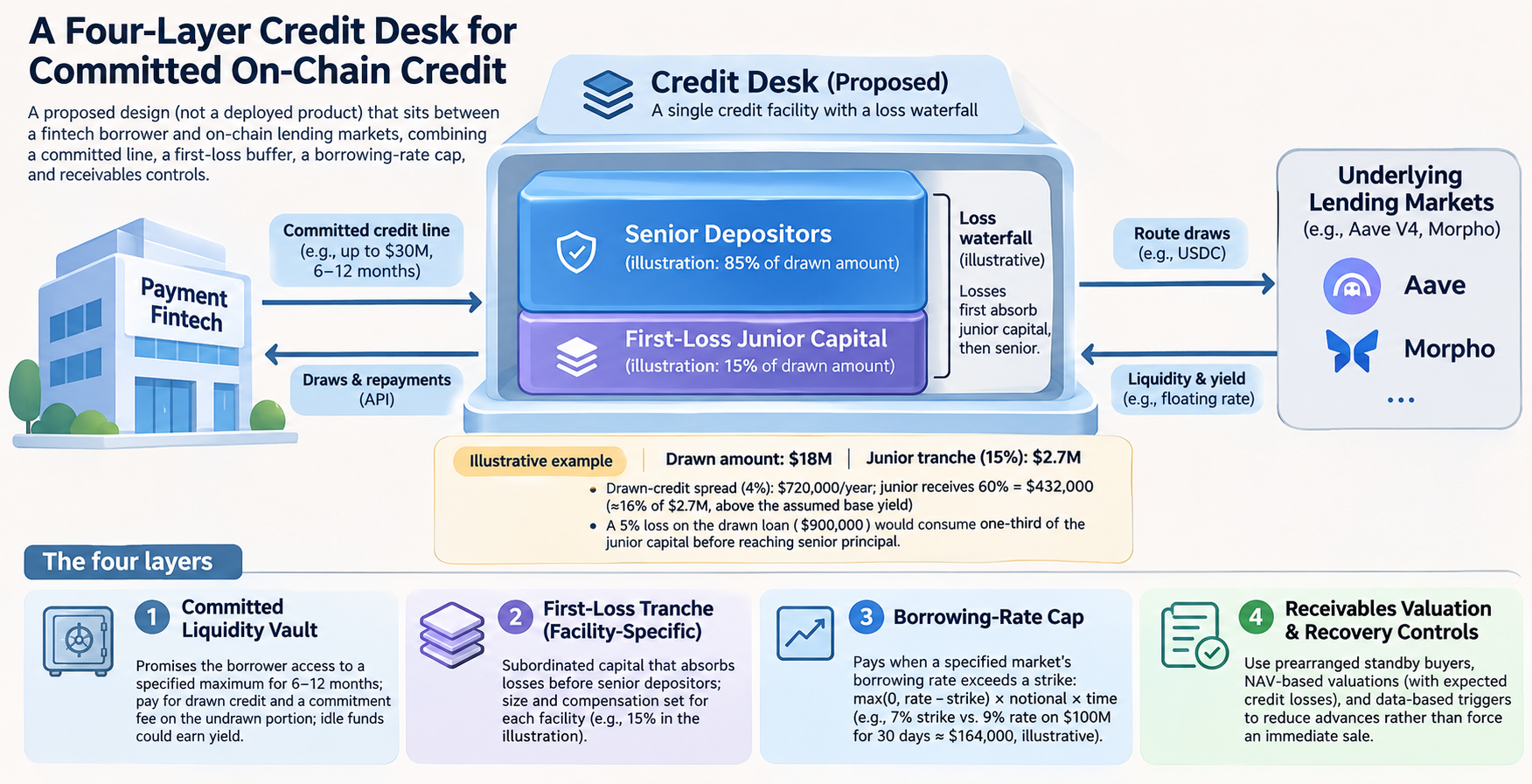
Nikos proposes an intermediary between fintech borrowers and underlying lending markets, with four components:
- A committed liquidity vault. Depositors fund a vault that promises one borrower access to a specified maximum for six to twelve months. The borrower pays for drawn credit and a commitment fee on the undrawn portion; idle funds could earn yield in a floating-rate market. Draws would be routed to an appropriate underlying market. The unresolved constraint is whether the vault can retrieve enough cash precisely when a stressed borrower draws the full line.
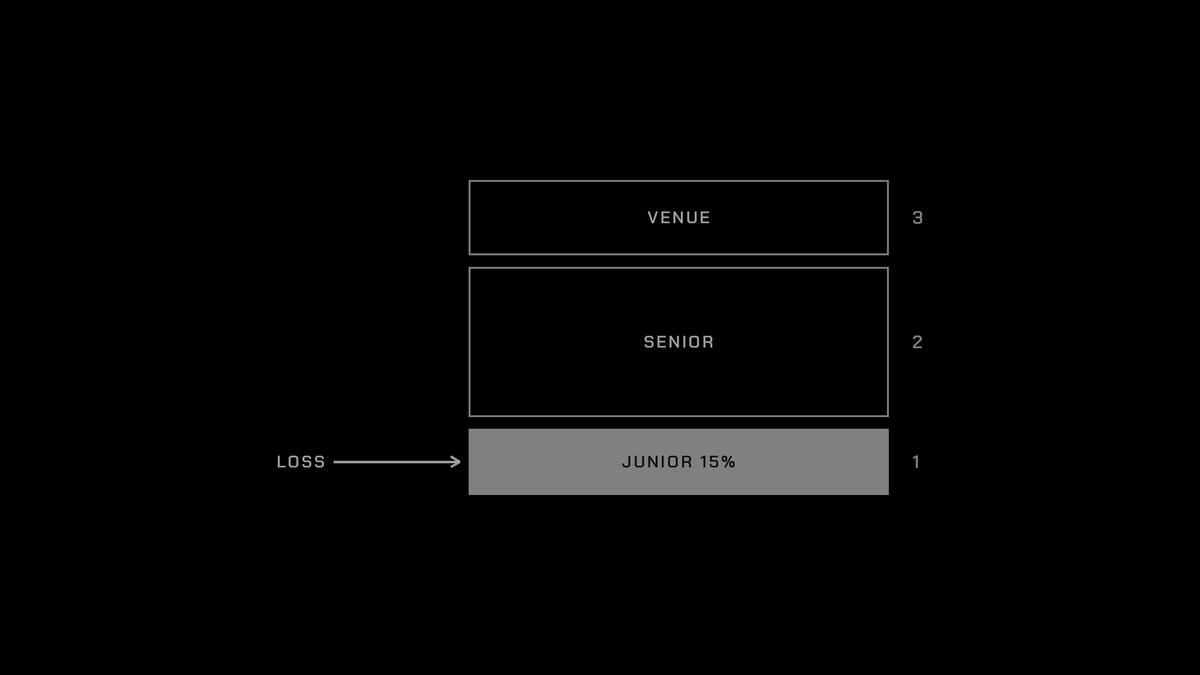
- A facility-specific first-loss tranche. Subordinated capital supplied by an originator, a credit fund or both would absorb losses before senior depositors. Its size, compensation and ability to protect the underlying market would have to be established for each facility; an allocation of losses does not remove the credit risk.
- A borrowing-rate cap. A contract tied to a specified venue’s borrowing-rate index would pay when that rate exceeds an agreed strike:
max(0, borrowing rate − strike) × notional × time. The proposal depends on a suitable index and counterparties willing to sell protection. Nikos says a standardized, liquid cap market for Aave and Morpho borrowing rates was not available at the time of writing. - Receivables valuation and recovery controls. The design calls for prearranged standby buyers, valuations adjusted for expected credit losses, and triggers based on verified receivables and repayment data. Deteriorating collateral could then reduce further advances rather than force an immediate sale into a thin market. These controls would still depend on trustworthy off-chain information and enforceable recovery rights.
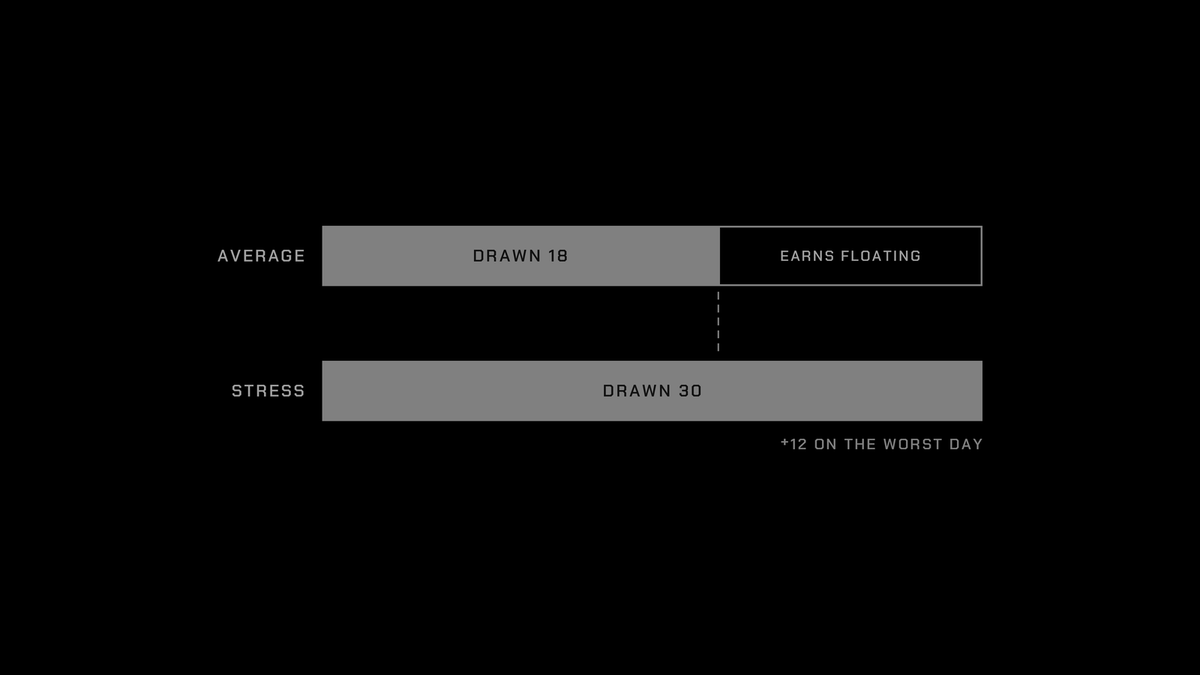
The article’s figures illustrate the design, not observed returns or loss rates. For a hypothetical $30 million line drawn 60% on average, a 4% spread on drawn funds plus a 0.5% fee on undrawn capacity yields 60% × 4% + 40% × 0.5% = 2.6%, or $780,000 annually above the assumed floating-rate base. But a move from the $18 million average draw to the full $30 million would require another $12 million in immediately available liquidity.
In a second example, a junior tranche equal to 15% of an $18 million draw holds $2.7 million. Receiving 60% of the $720,000 drawn-credit spread would give it $432,000—16% of its capital above the assumed base yield. A hypothetical 5% loss on the drawn loan, or $900,000, would consume one-third of that junior capital before reaching senior principal. For the rate cap, a 7% strike against a 9% average borrowing rate for 30 days on $100 million produces an illustrative payment of about $164,000.
What the design still has to prove
The hardest obligation is the first one: a committed line effectively gives the borrower an option to demand liquidity during stress. Commitment fees and ordinary utilization averages cannot by themselves demonstrate that the vault can honor a full draw. Receivables also introduce recovery timelines and legal costs that an on-chain loss waterfall cannot settle instantly.
Nikos argues that any durable advantage for such a desk would come less from contract code than from underwriting histories, relationships with senior and junior capital providers, borrower integrations and enforceable legal arrangements. Those are proposed sources of advantage, not demonstrated outcomes. The source cites Wildcat’s isolated-market approach and 3Jane’s senior/junior structure as partial precedents, while noting that neither establishes the complete committed-credit product described here.
Source: techflowpost.com (originally published 2026-11-11 14:30 UTC+8)