Historical-source note: This article reflects an imToken analysis published by TechFlow on November 12, 2026, at 09:19 UTC+8. Project plans and network statuses below are reported as they stood at that time.
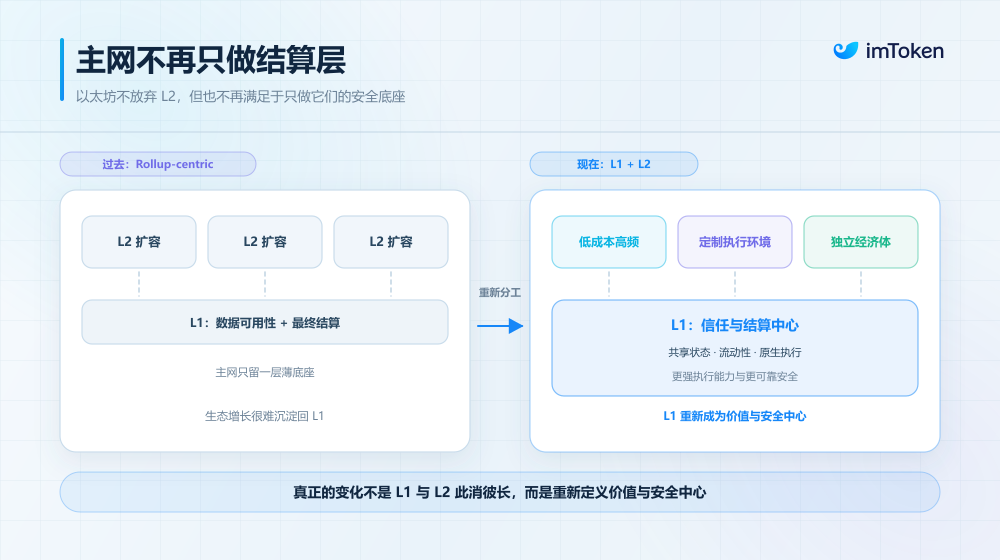
Ethereum’s scaling debate is no longer simply about moving execution away from the mainnet. In its November 2026 analysis, imToken examined why several projects had chosen—or planned—to put more activity on Ethereum L1, and what that shift might mean for L2 design and ETH’s value. The cases show projects reassessing costs and trust assumptions, not a wholesale retreat from L2s.
When does a separate L2 stop making sense?
ENS is the clearest example in the report. ENS Labs had planned Namechain, a dedicated ZK rollup for ENSv2, in 2024. In February 2026, ENS co-founder Nick Johnson said development would stop and ENSv2 would instead deploy on Ethereum mainnet, citing faster-than-expected L1 scaling. According to figures disclosed by ENS Labs, average gas costs for ENS name registration had fallen about 99% over the preceding year, from nearly $5 to less than $0.05. Those figures concern ENS registration; they are not a measure of costs for every mainnet application.
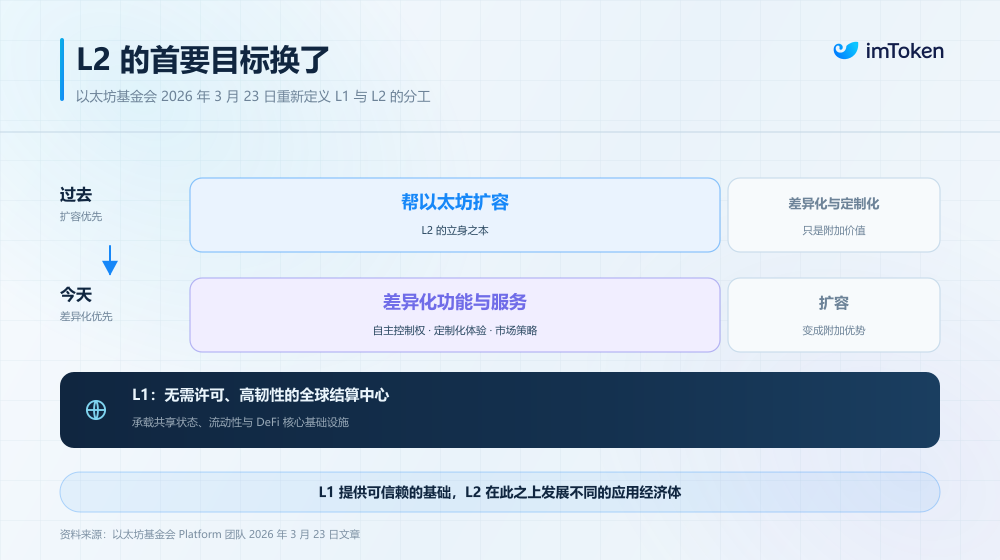
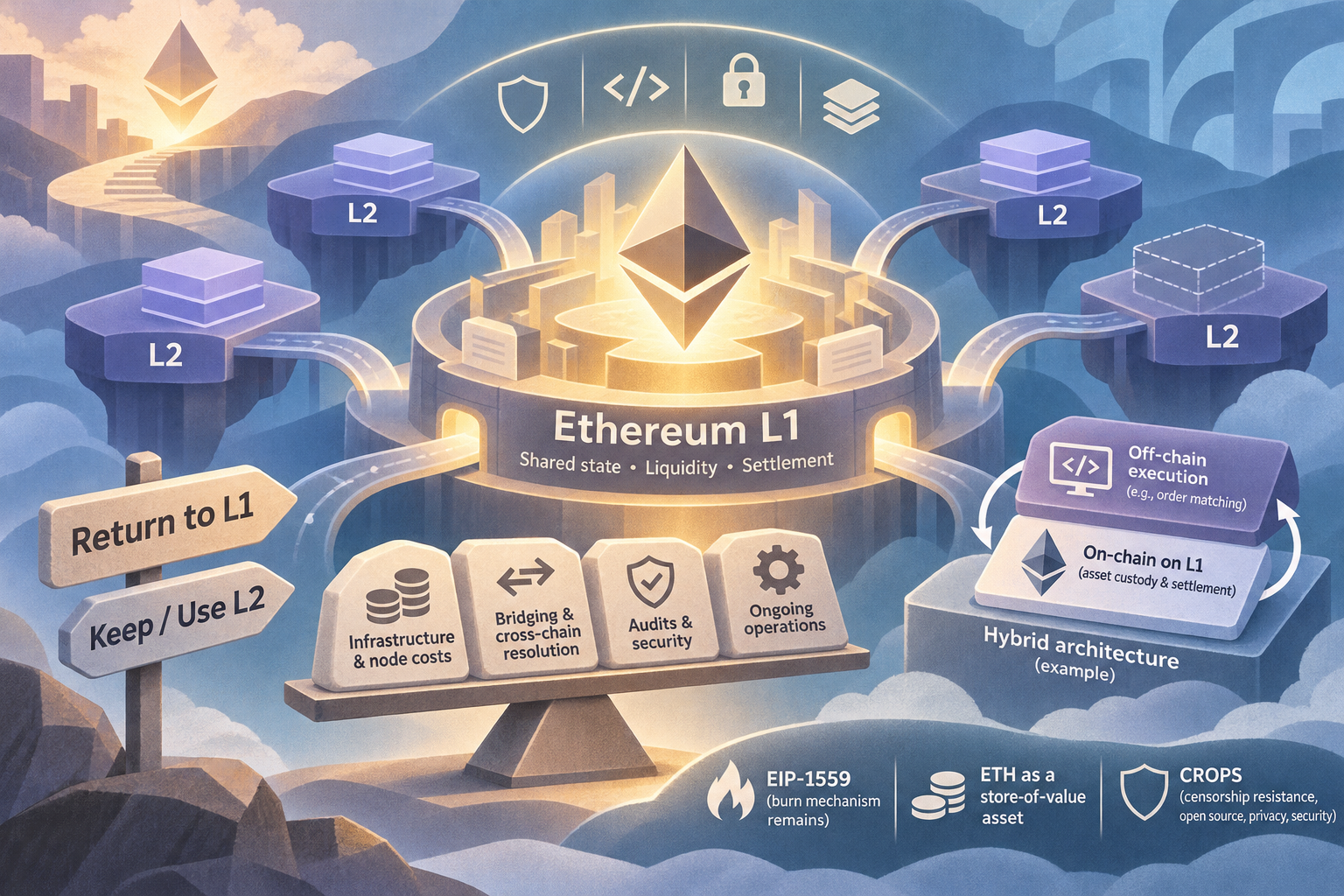
A separate rollup can also bring node and infrastructure expenses, bridging and cross-chain resolution requirements, audits, and ongoing operations. Other decisions described in the report reflected different needs: ShapeShift moved its rFOX staking program from Arbitrum to Ethereum on October 1, 2026, because most FOX tokens were already held on mainnet; Trueo announced in September that it would move its primary deployment from Base to L1, citing integration, network effects and neutrality. Superseed stopped its L2 in August and planned to move core products to mainnet, while Nillion began moving node operations from its L2 to Ethereum in October as part of its Blacklight L1 plans.
The report also described pressure on standalone networks. It said Blast announced on October 2 that it would wind down because network maintenance costs exceeded L2 revenue, despite having previously held more than $2 billion in total value locked. Abstract, it reported, planned to close its network on December 15. Its cited figures—more than 144 applications and 400,000 users—had not, in the report’s account, resolved limited liquidity, a small DeFi ecosystem and insufficient institutional participation. The December closure was a plan as of the publication date, not a completed event.
Keeping assets on L1 while moving computation elsewhere
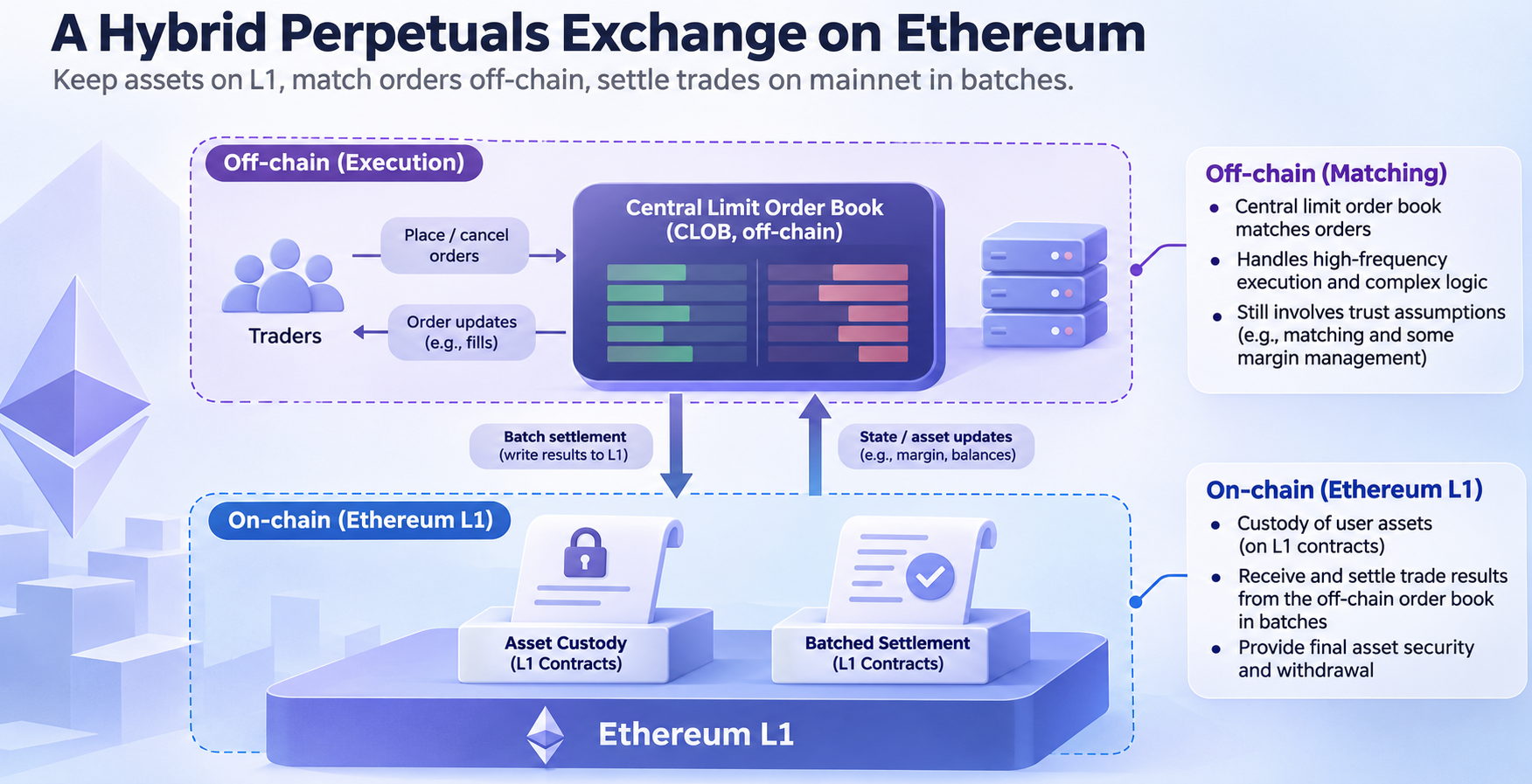
The choice need not be between doing everything on mainnet and operating an independent rollup. Synthetix, which published L2s are Dead, Long Live Ethereum in June 2025 and launched a new perpetuals exchange on mainnet that December, offers a hybrid example. As described by imToken, Ethereum L1 contracts custody user assets, an off-chain central limit order book matches orders, and trades are settled back to mainnet in batches.
That arrangement changes rather than eliminates trust assumptions. The report notes that some margin management still depends on the off-chain order book and that the matching system warrants scrutiny. Its architectural question is which functions require L1-enforced rules—and which can run elsewhere without requiring users to bridge all their assets to a separate chain.
Decentralization also matters to that comparison. Citing ETHBEAT data as of November 2026, imToken said only a single-digit number of the dozens of L2s it tracked had reached Stage 2, with negligible assets on those networks; Base, Arbitrum One and OP Mainnet remained at Stage 1. The report raises the possibility that some networks may retain administrative or upgrade controls for regulatory or commercial reasons. It does not establish that every L2 will, or should, follow the same path. Native Rollup verification and Ethereum Economic Zone proposals are discussed as research directions, not deployed solutions to interoperability or synchronous composability.
Does cheaper blockspace weaken ETH’s case?
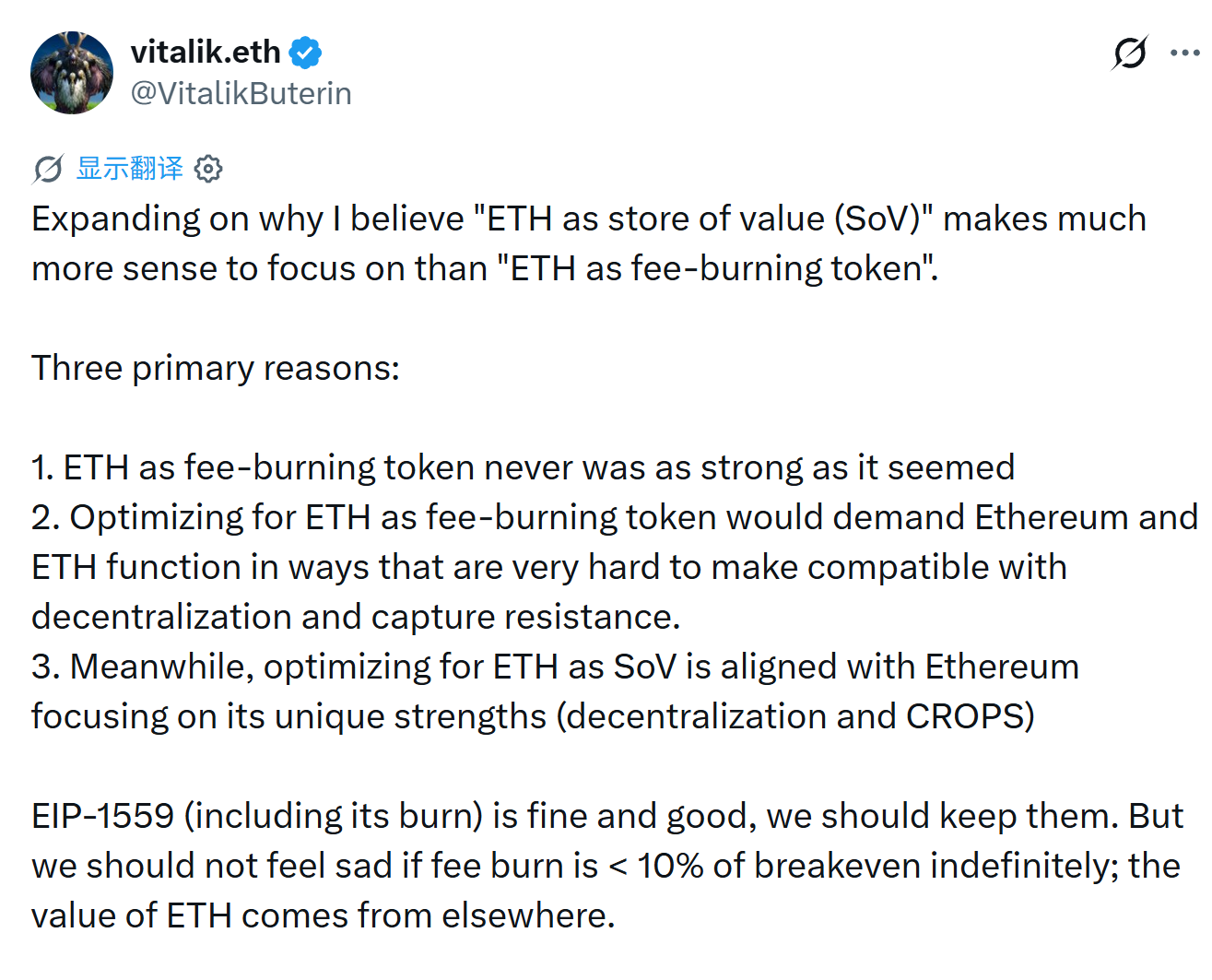
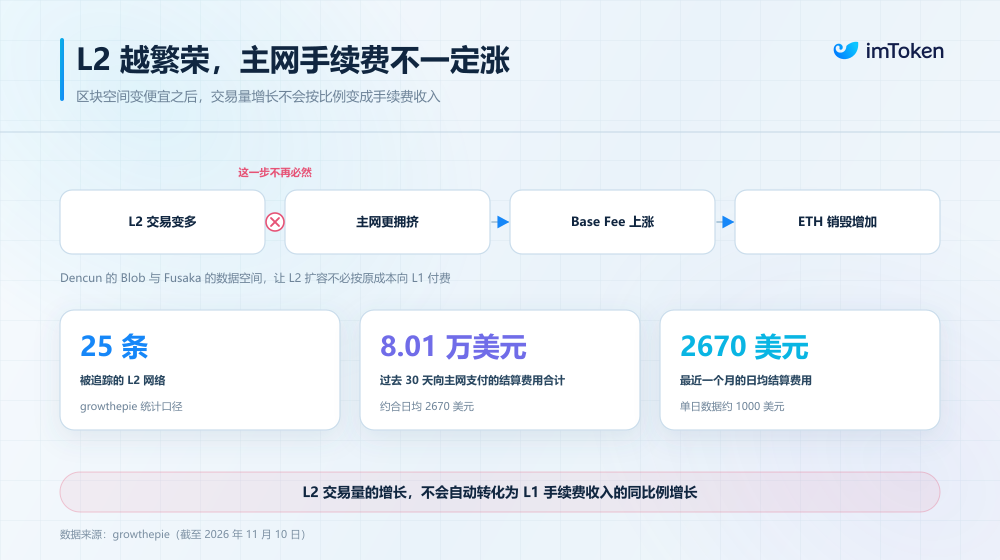
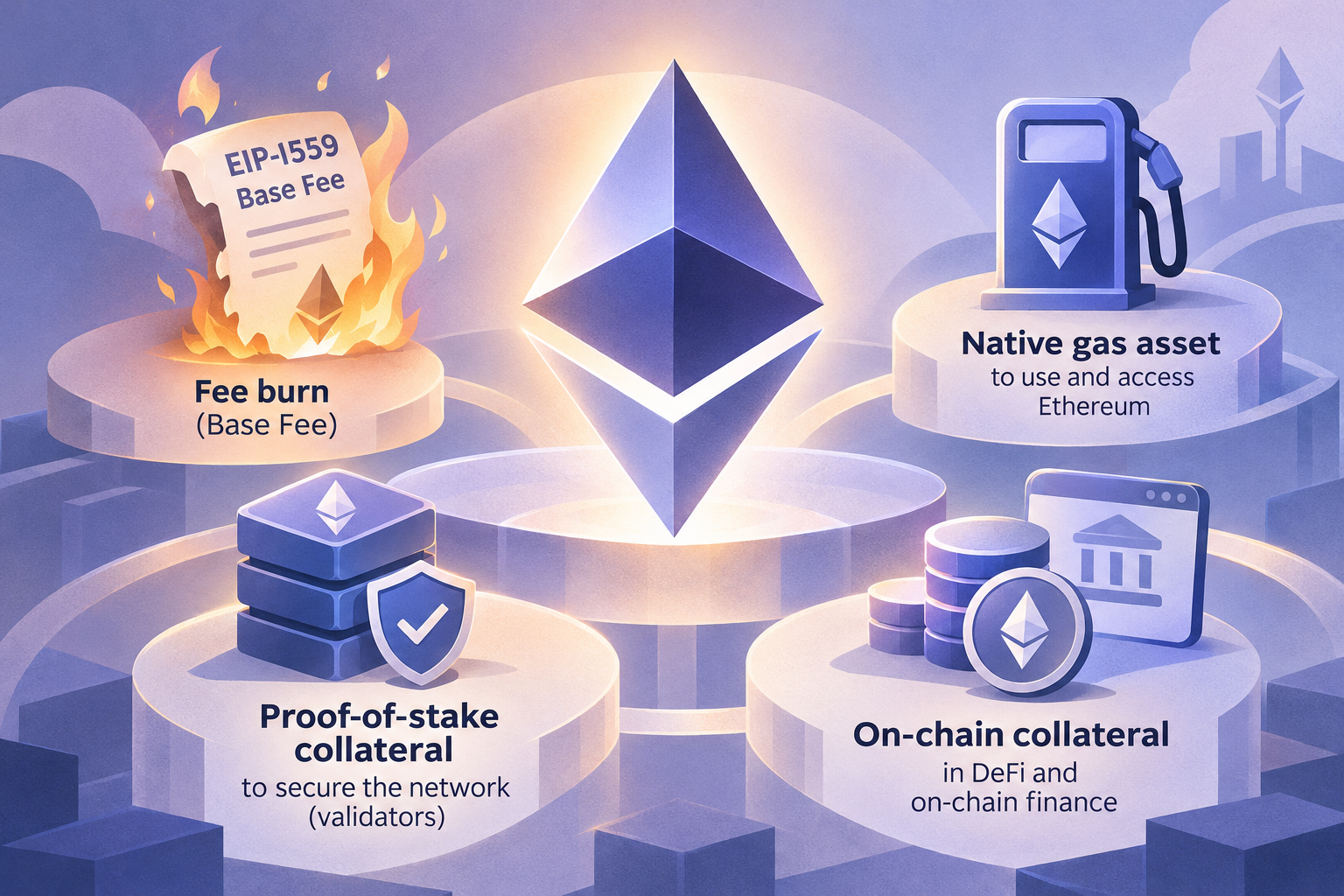
Under EIP-1559, Ethereum burns the base fee while validators receive the priority fee. Lower transaction costs therefore need not produce more ETH burned, even if usage grows. imToken argues that extrapolating ETH’s value from historical fee burns is especially uncertain when some peaks came from speculative activity: it cites roughly $180 million burned in a day during the 2022 Otherdeed NFT mint.
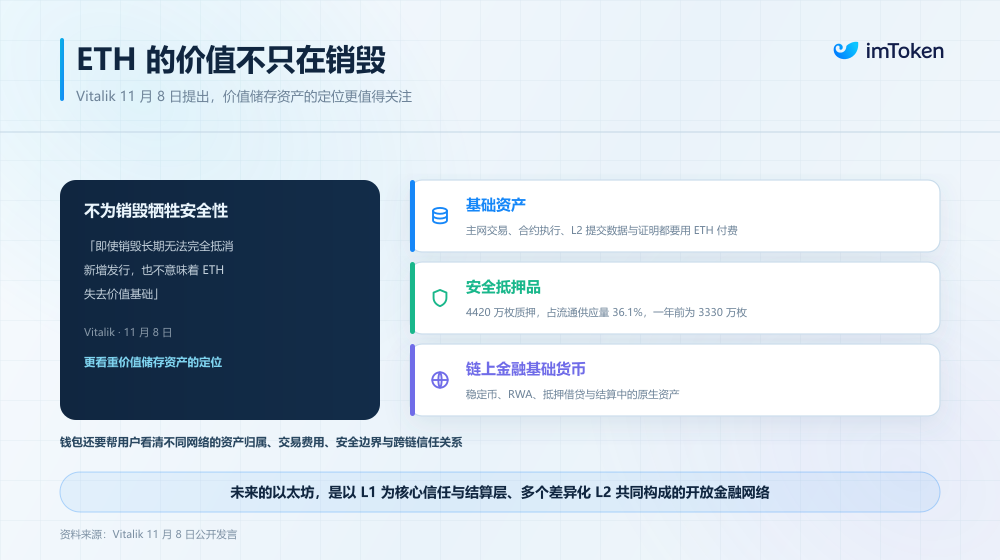
The report attributes a different emphasis to Vitalik Buterin: keep the burn mechanism, but do not treat it as ETH’s sole source of value. His cited argument places greater weight on ETH as a store-of-value asset and on Ethereum’s censorship and capture resistance, open-source character, privacy and security—properties he groups as CROPS. That is a proposed way to think about long-term value, not a valuation model or evidence that mainnet migrations will raise ETH’s price.
The narrower conclusion supported by these cases is architectural. Falling L1 costs can change the trade-off between shared mainnet state and a separately operated execution environment. L2s may still serve applications that need high-frequency execution, privacy or greater control; each design must be assessed against its own operating costs, liquidity and security assumptions.
Source: techflowpost.com (originally published 2026-11-12 09:19 UTC+8)