Historical research note: This article reflects reporting published on November 11, 2026, at 13:53 UTC+8. The figures below are attributed to Sparsity Research, as translated by Foresight News; they are not independently reproduced here.
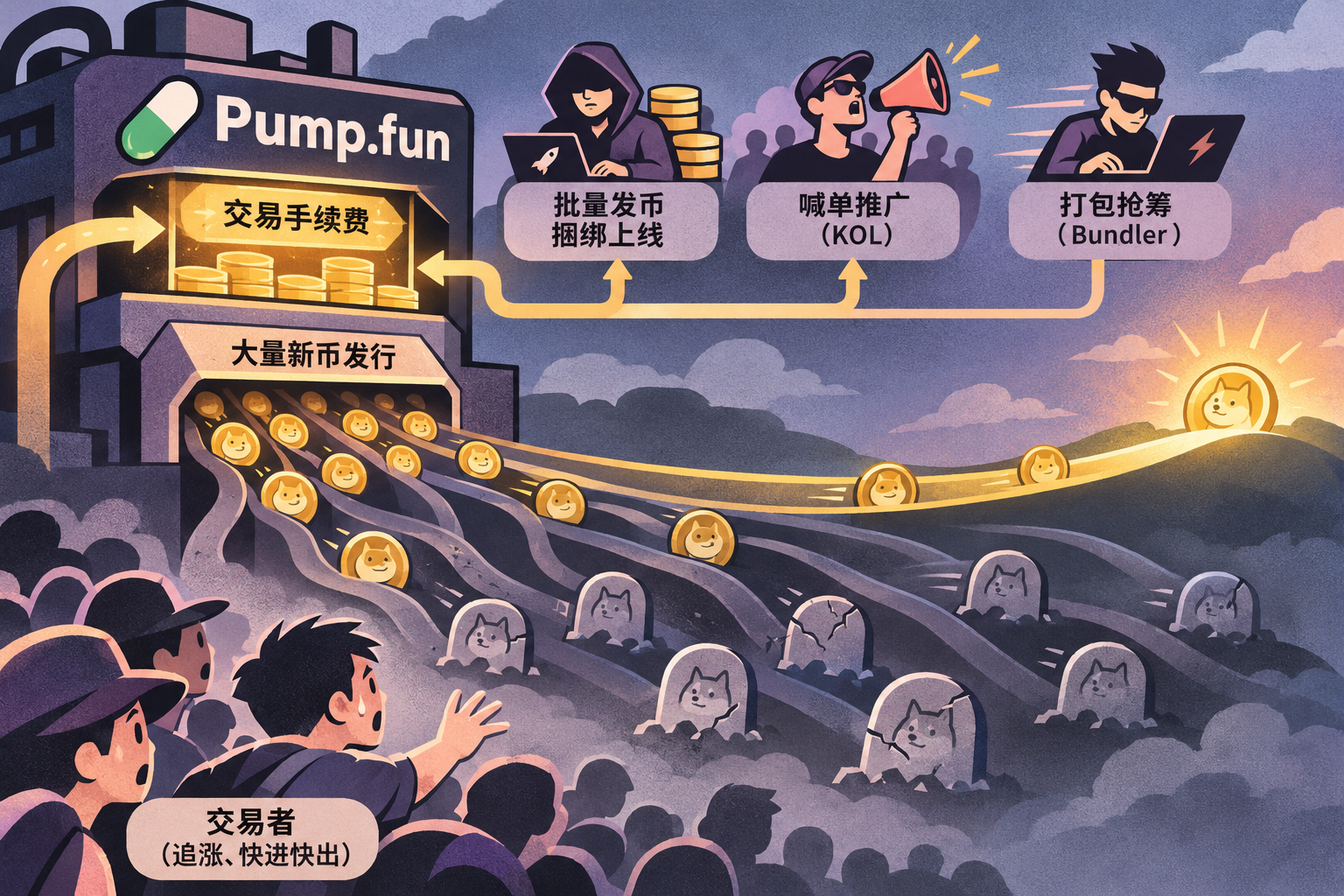
Pump.fun earns fees when tokens trade, regardless of whether those tokens retain value. Sparsity Research argues that this creates a mismatch: the platform and token creators can benefit from rapid issuance and early turnover, while buyers depend on a much smaller number of tokens sustaining demand. Its analysis links that fee structure to bulk issuance, bundled launches and paid token promotion.
Where the fees accrue
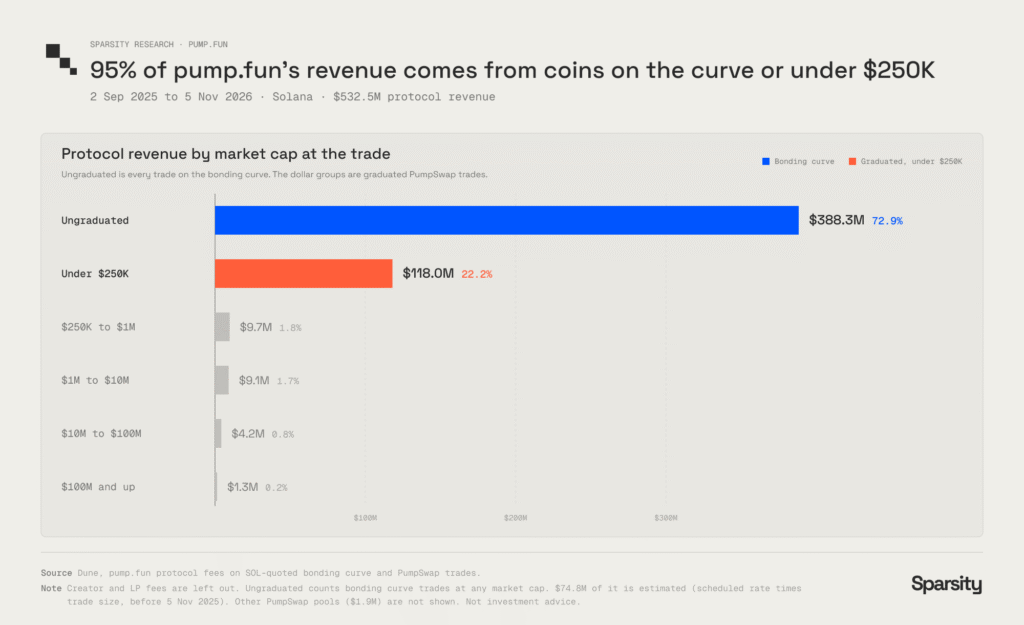
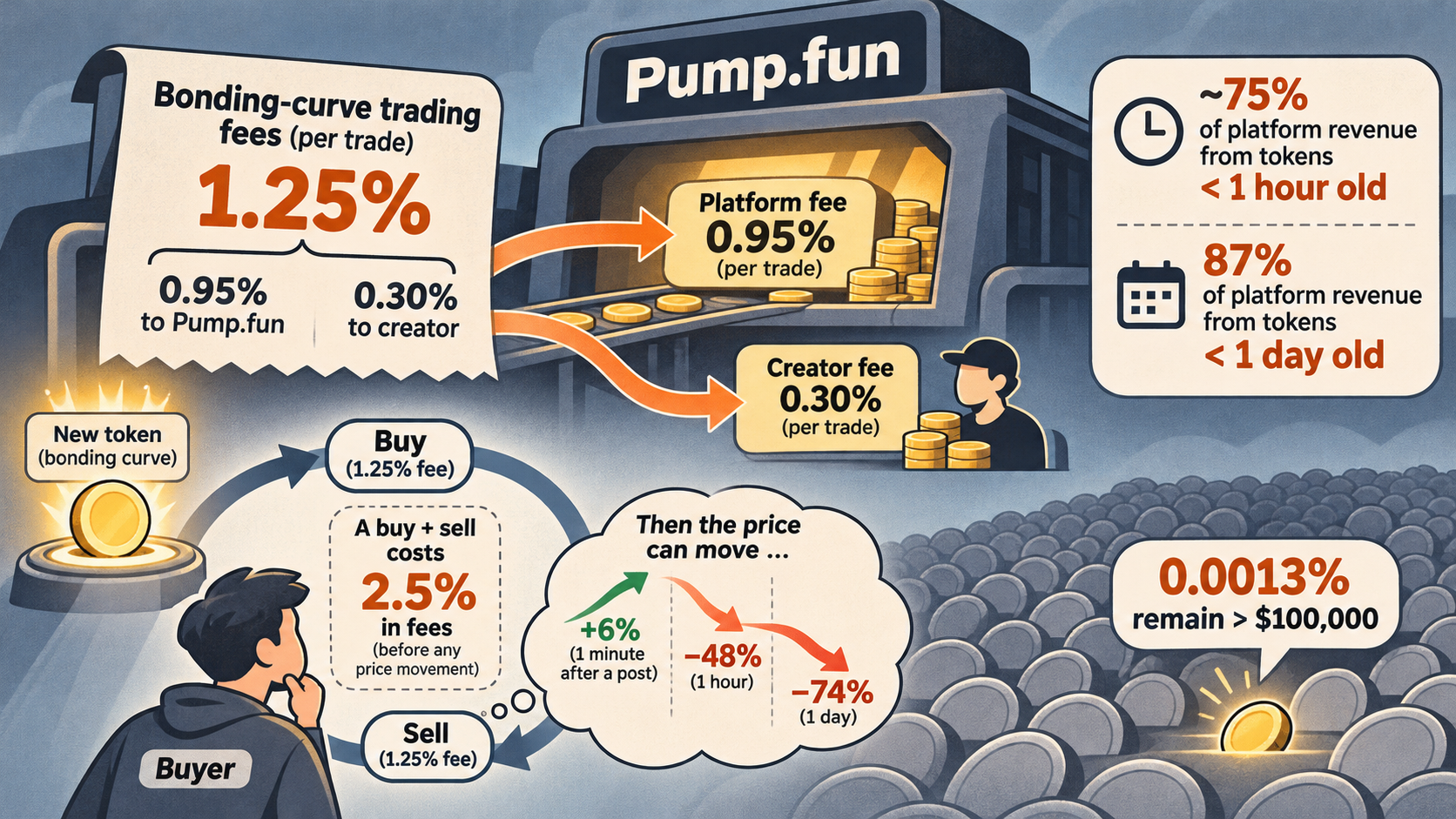
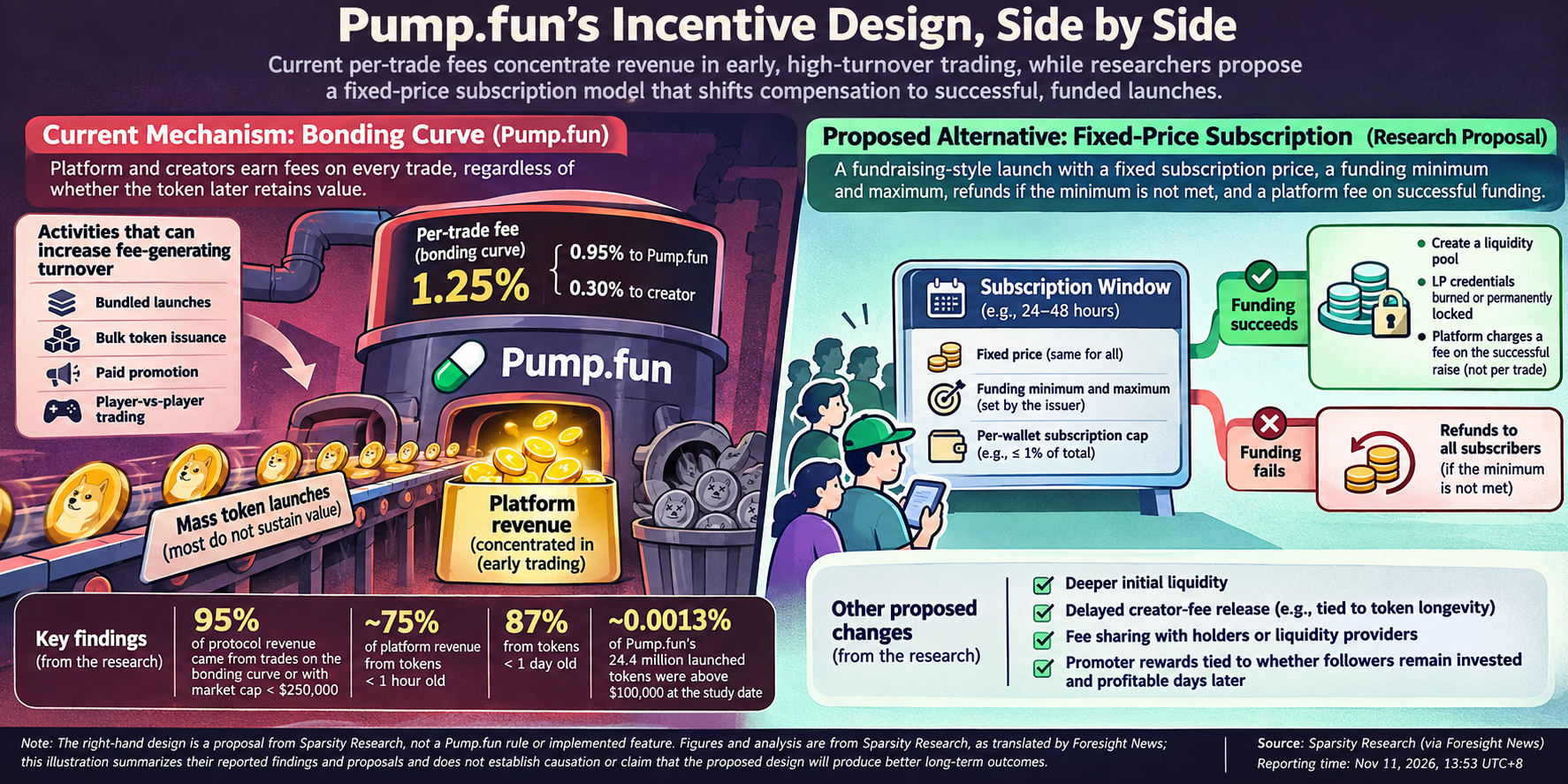
In the 30-day period examined by the researchers, Pump.fun accounted for 92% of token launches and 84% of trading volume across the meme-coin launch platforms they assessed. They report that 95% of its protocol revenue from September 2, 2025, through November 5, 2026, came from trades while tokens were on the bonding curve or below a $250,000 market capitalization. In the bonding-curve phase, each buy or sell incurred a 1.25% fee: 0.95% for Pump.fun and 0.30% for the creator. A buy followed by a sell therefore cost 2.5% in fees before any price movement.
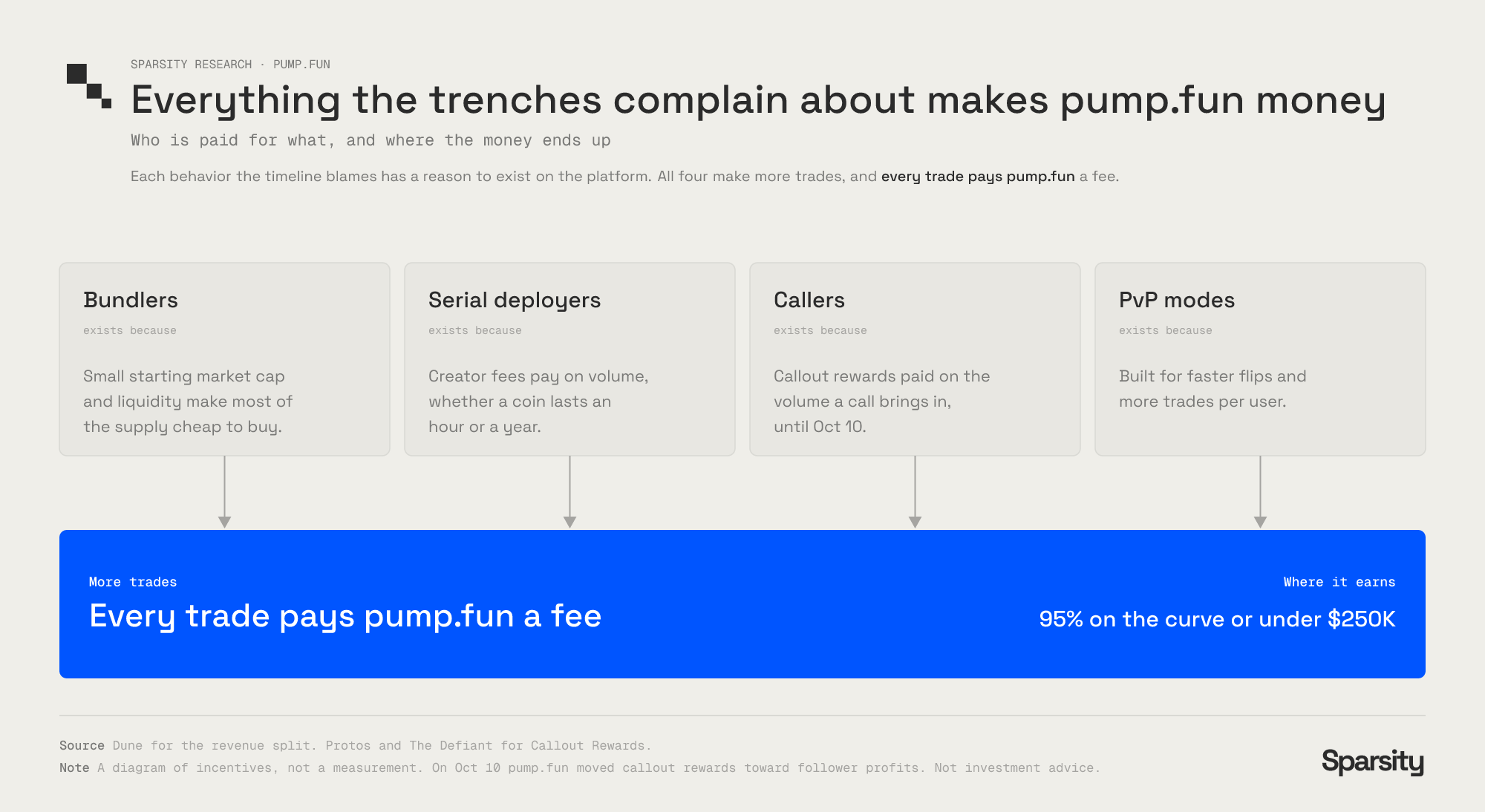
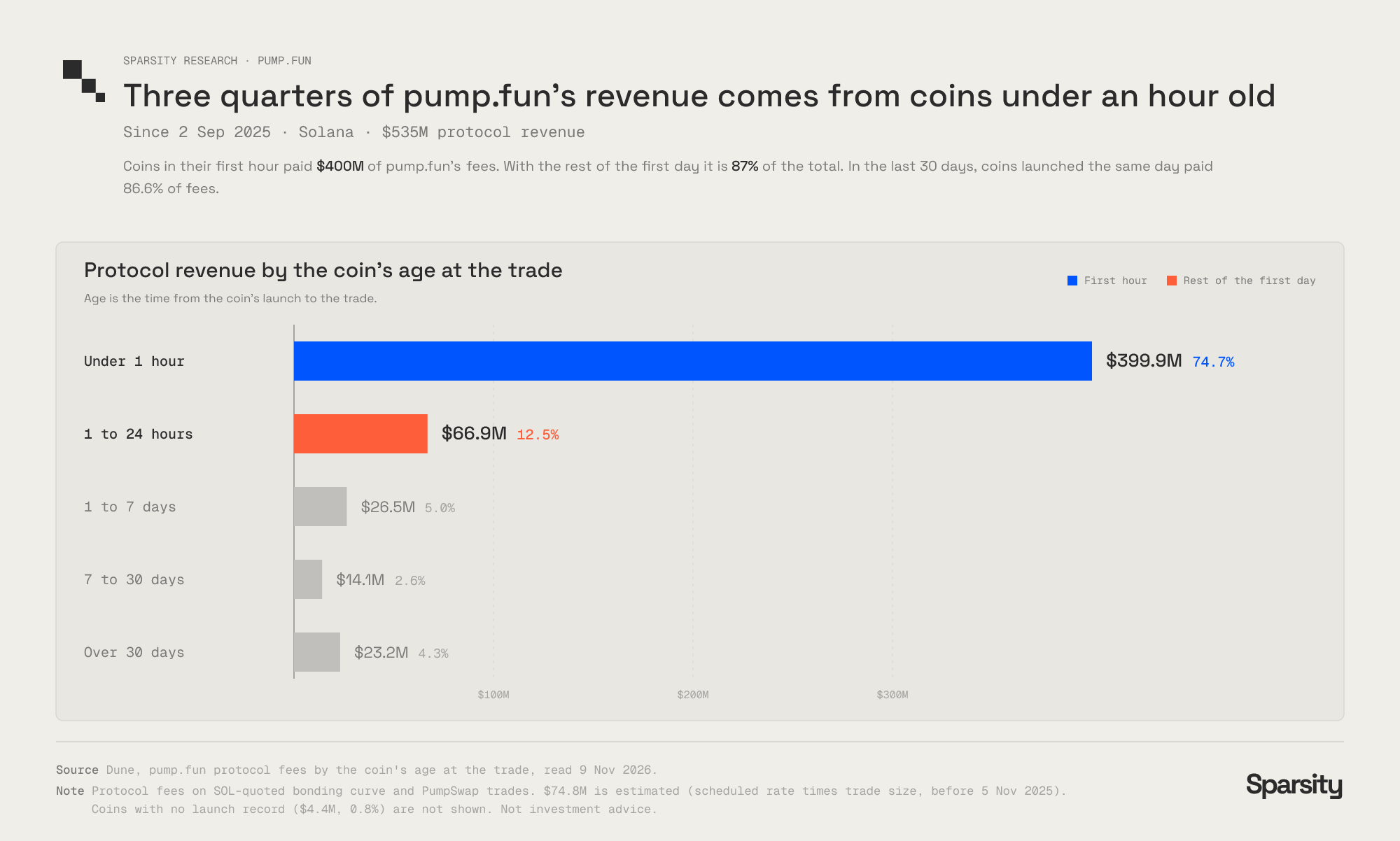
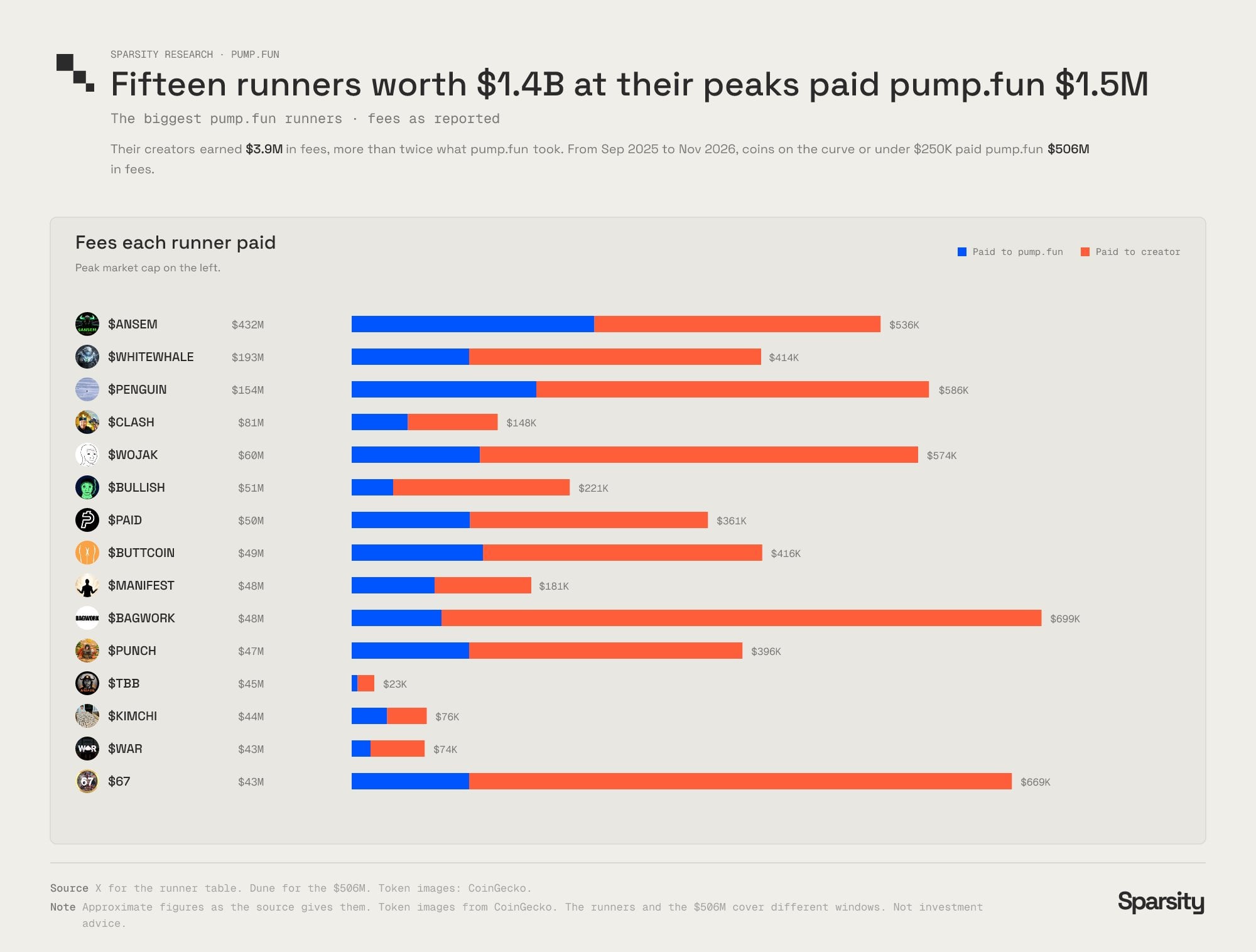
The revenue window was short. According to the research, roughly three-quarters of platform revenue came from tokens less than an hour old, and 87% from tokens less than a day old. Fifteen tokens with a combined peak market capitalization of $1.4 billion generated about $1.5 million in fees for Pump.fun, compared with $506 million attributed to bonding-curve tokens or those below $250,000 in market capitalization. Those comparisons support the researchers’ central argument: the platform’s measured revenue was concentrated in early trading, not in the later success of its largest tokens.
Issuance and promotion incentives
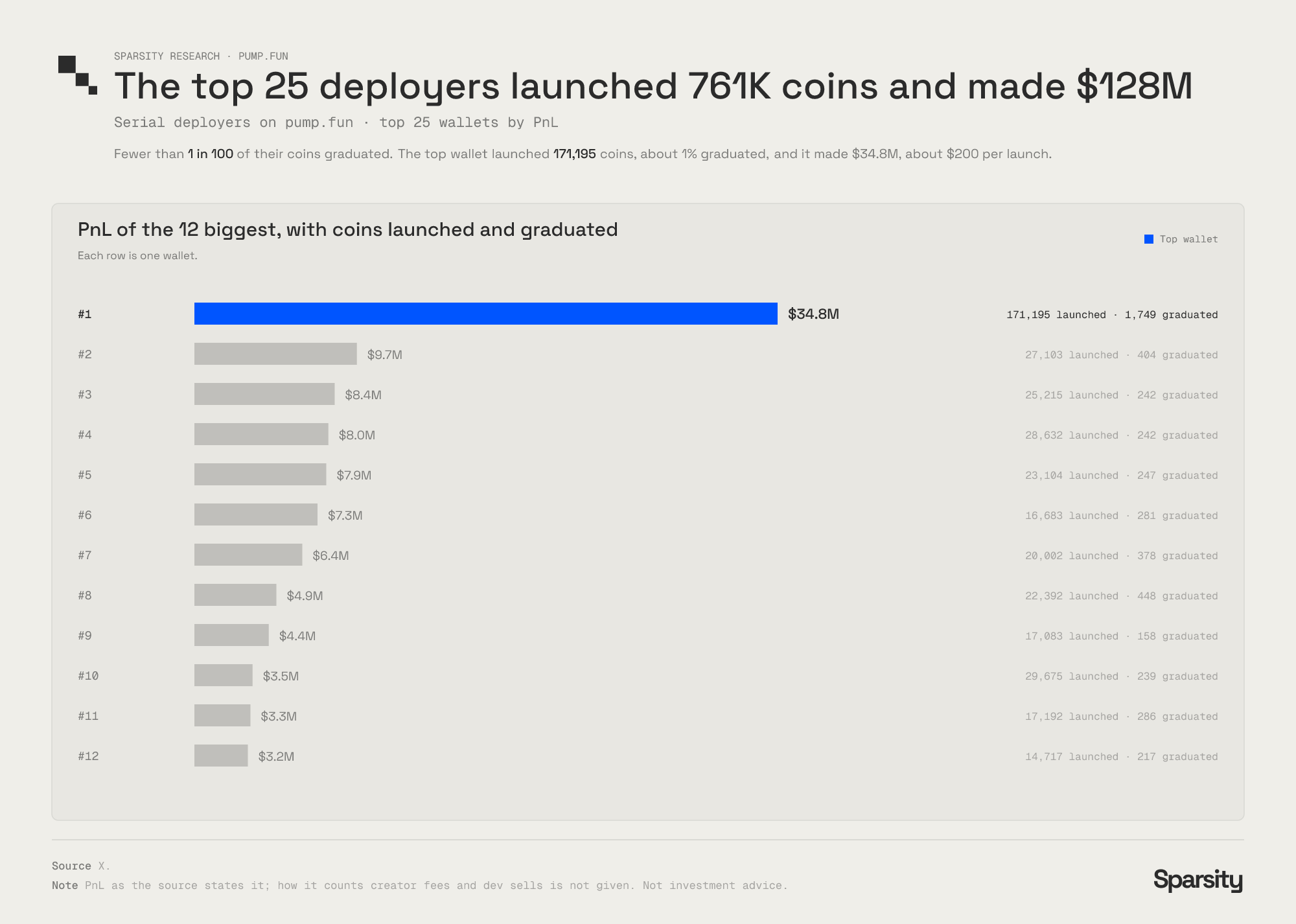
The report describes four activities that can increase fee-generating turnover: bundled launches, bulk token issuance, paid promotion and player-versus-player trading modes. It attributes bundled buyers’ early accumulation advantage partly to low initial capitalization and liquidity settings. For creators, the 0.30% share of each bonding-curve trade pays on volume rather than token longevity. The 25 highest-volume issuing addresses in the study launched a combined 761,000 tokens; fewer than 1% graduated from the bonding curve, while those addresses accrued $128 million in reported proceeds. An address-level tally does not, by itself, establish who controlled each wallet or their net profit after all costs.
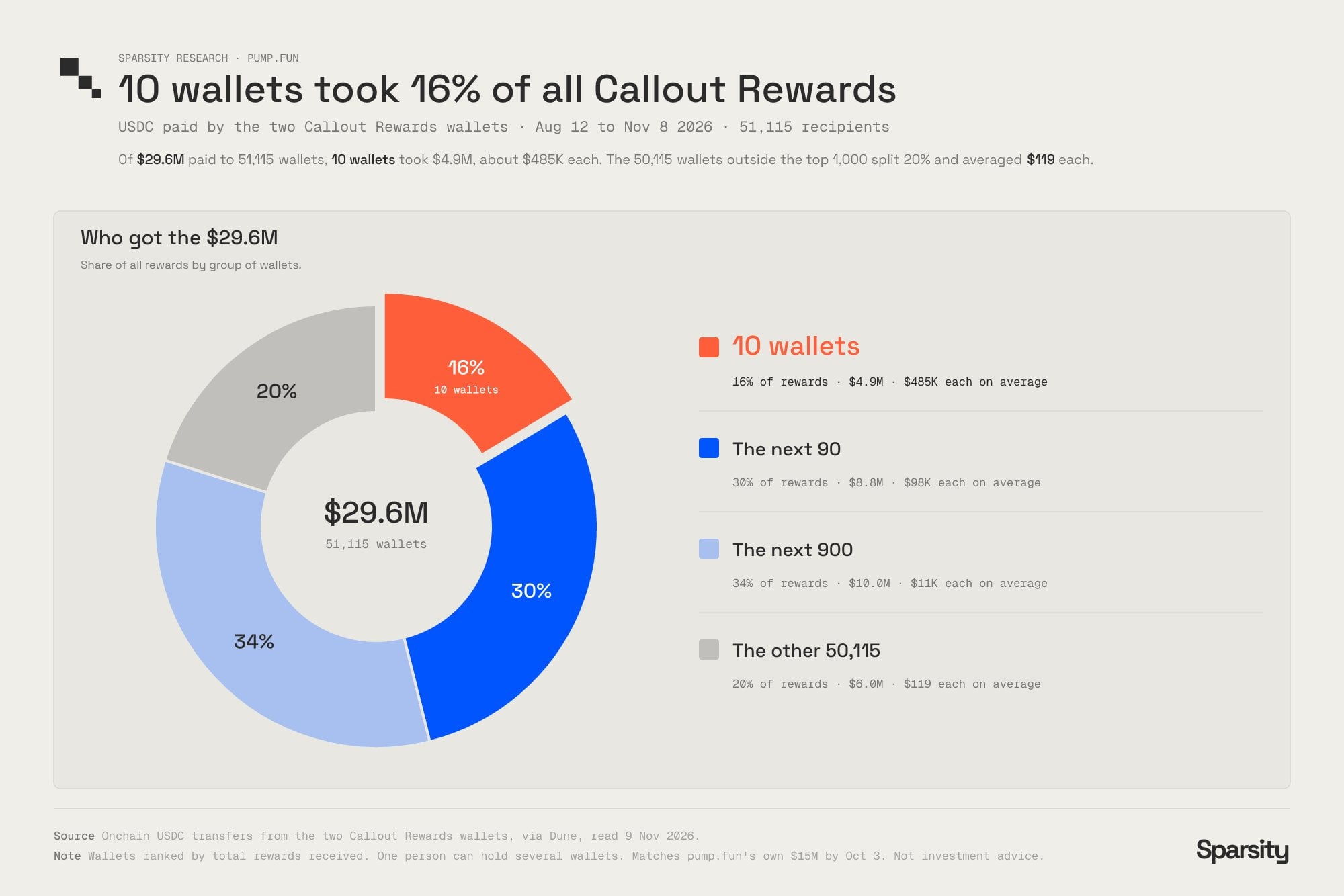
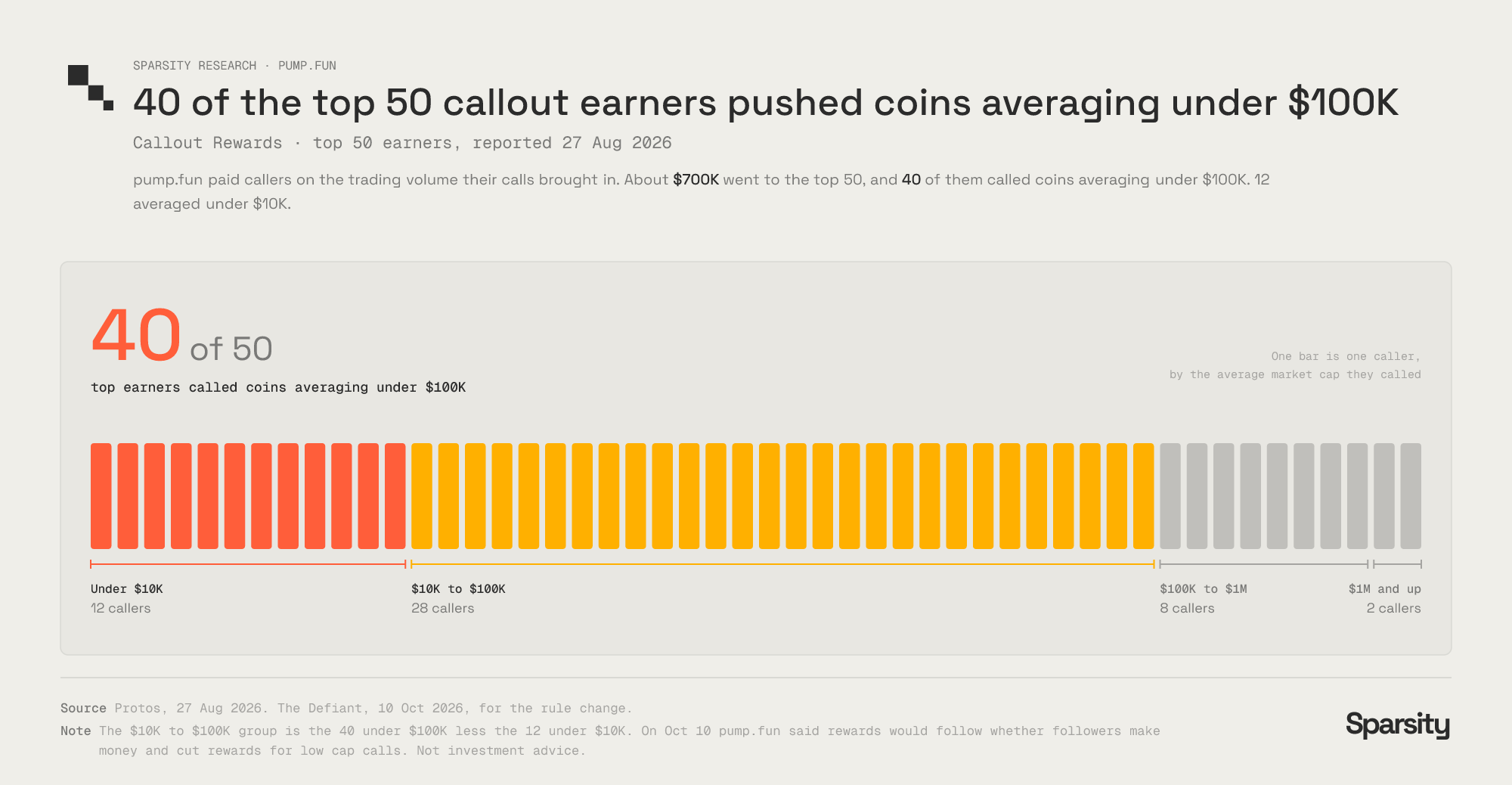
Promotion rewards show a similar concentration. From August 12 to November 8, 2026, Pump.fun paid a reported $29.6 million to 51,115 wallets; ten wallets received 16% of the total, while the median recipient received $13. Pump.fun said on October 10 that future incentives would account for followers’ gains and losses and reduce rewards for promoting small-cap tokens. Yet the research says that, over the following three weeks, the share of rewards to the top 20 promoters associated with tokens whose median capitalization was below $100,000 rose from 68% to 94%. That observation does not establish precisely how the announced change was implemented.
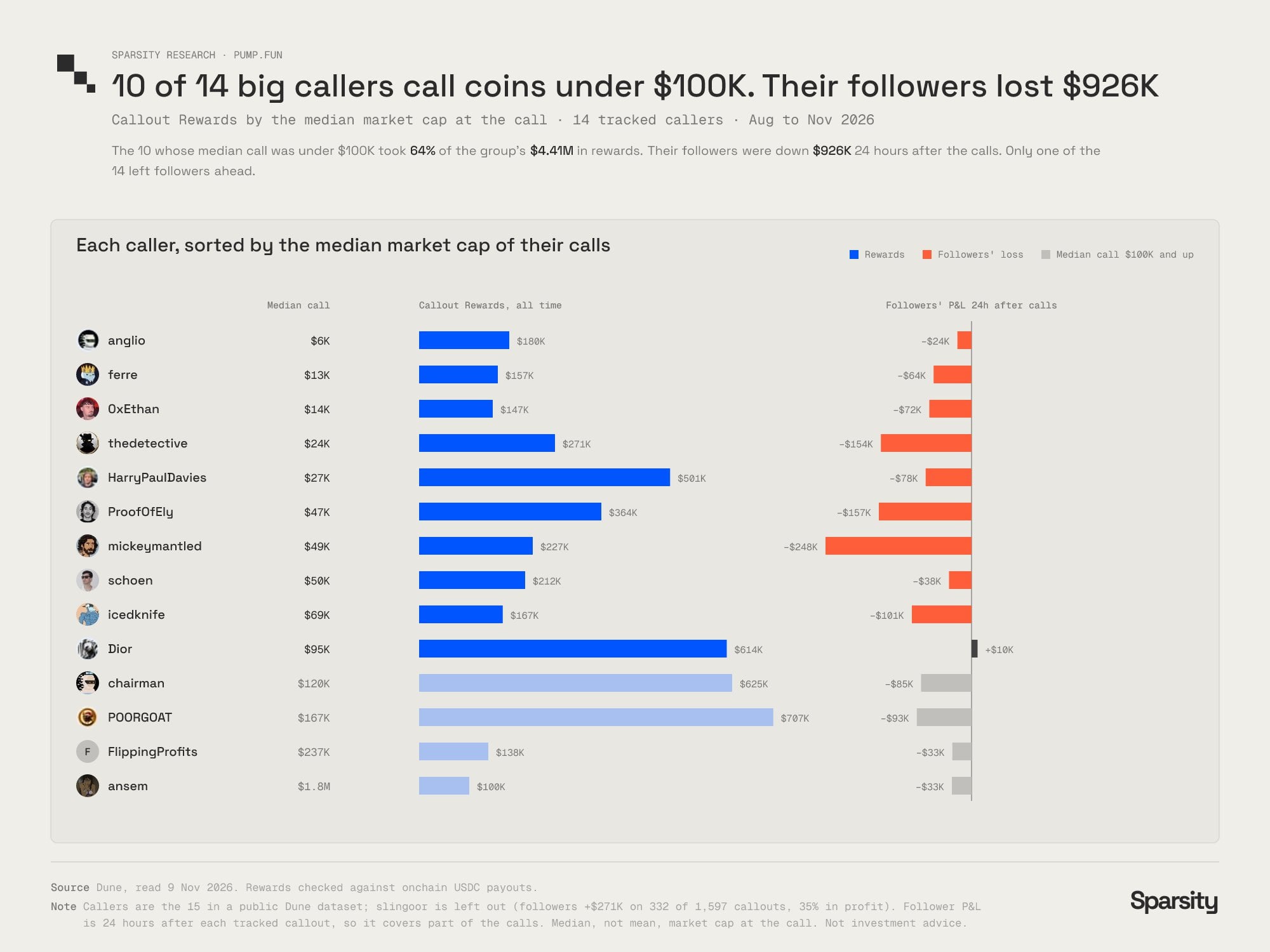
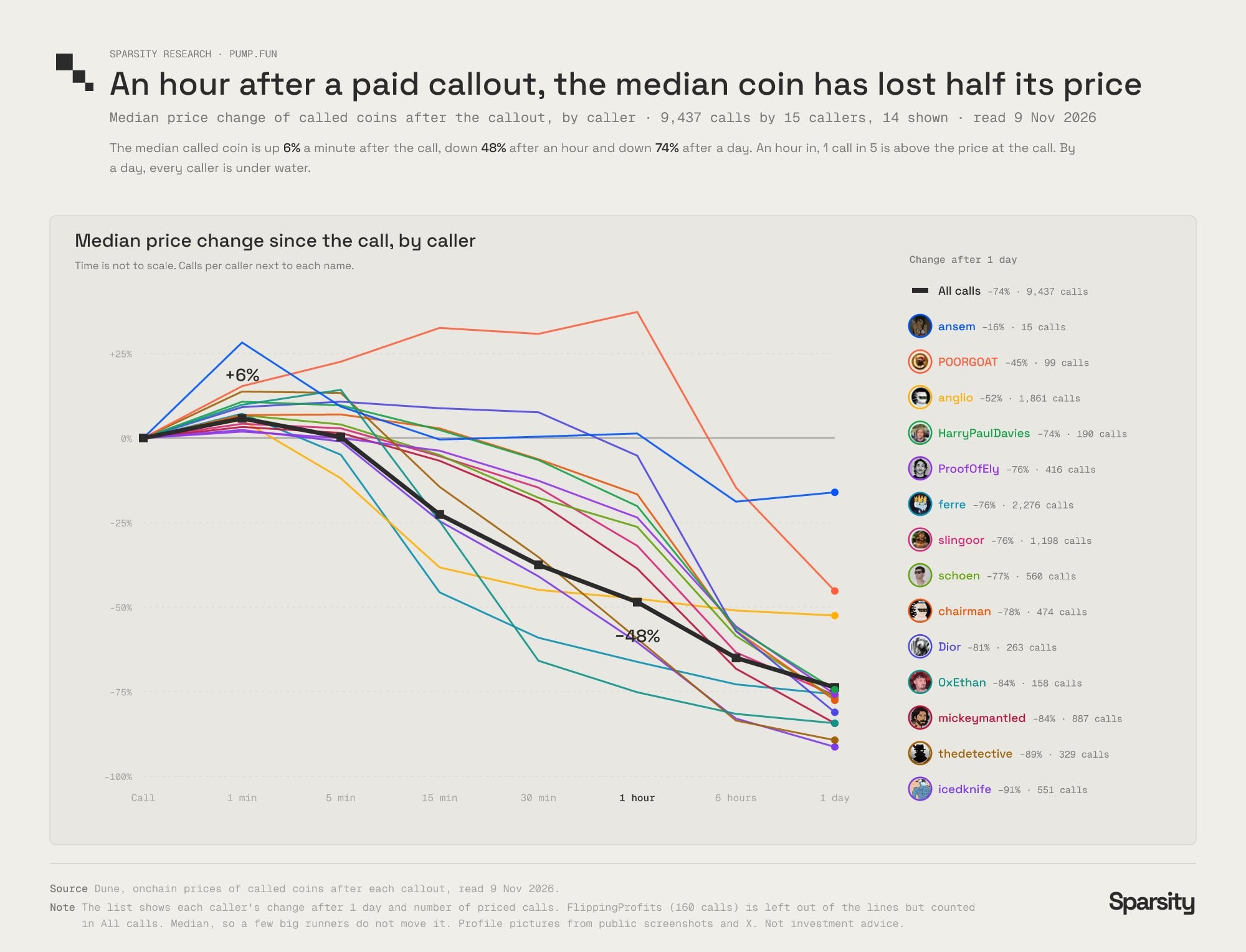
In a separate sample of 14 promoters, the researchers found that followers of ten who primarily promoted tokens with median capitalization below $100,000 lost a combined $926,000 by the next day. Across the promoted tokens, the reported median price was up 6% one minute after a post, then down 48% after an hour and 74% after a day. These are results for the studied sample, not a measured return for every follower or every promoted token.
More launches, fewer reported standouts
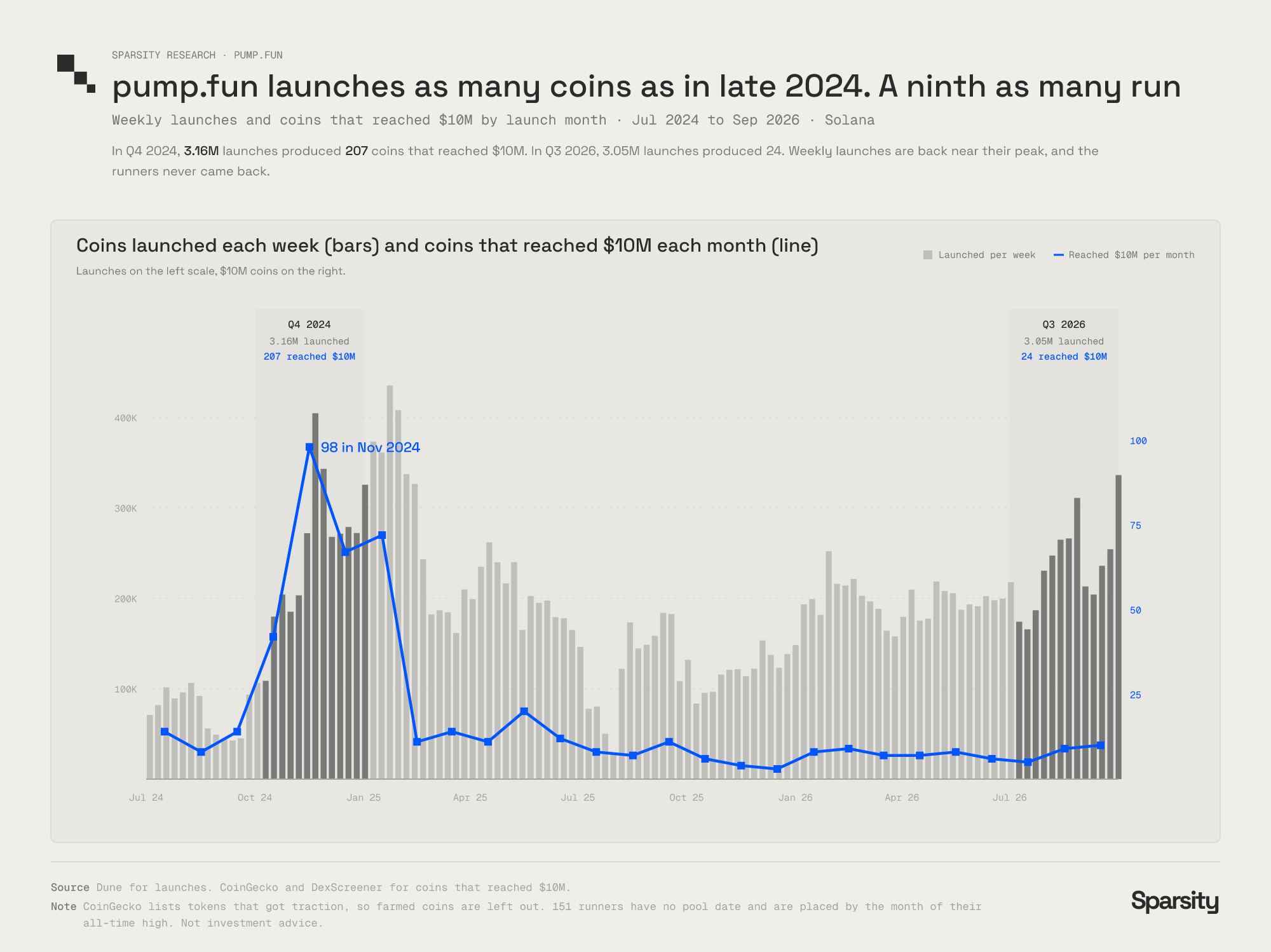
Pump.fun recorded 3.16 million launches in the fourth quarter of 2024, producing 207 tokens that exceeded a $10 million market capitalization, according to the report. In the third quarter of 2026, 3.05 million launches produced 24. The researchers also report that combined bonding-curve and PumpSwap monthly trading volume fell from $25 billion–$30 billion in the first quarter of 2026 to $13.8 billion in October, even though bonding-curve volume alone had risen since June.
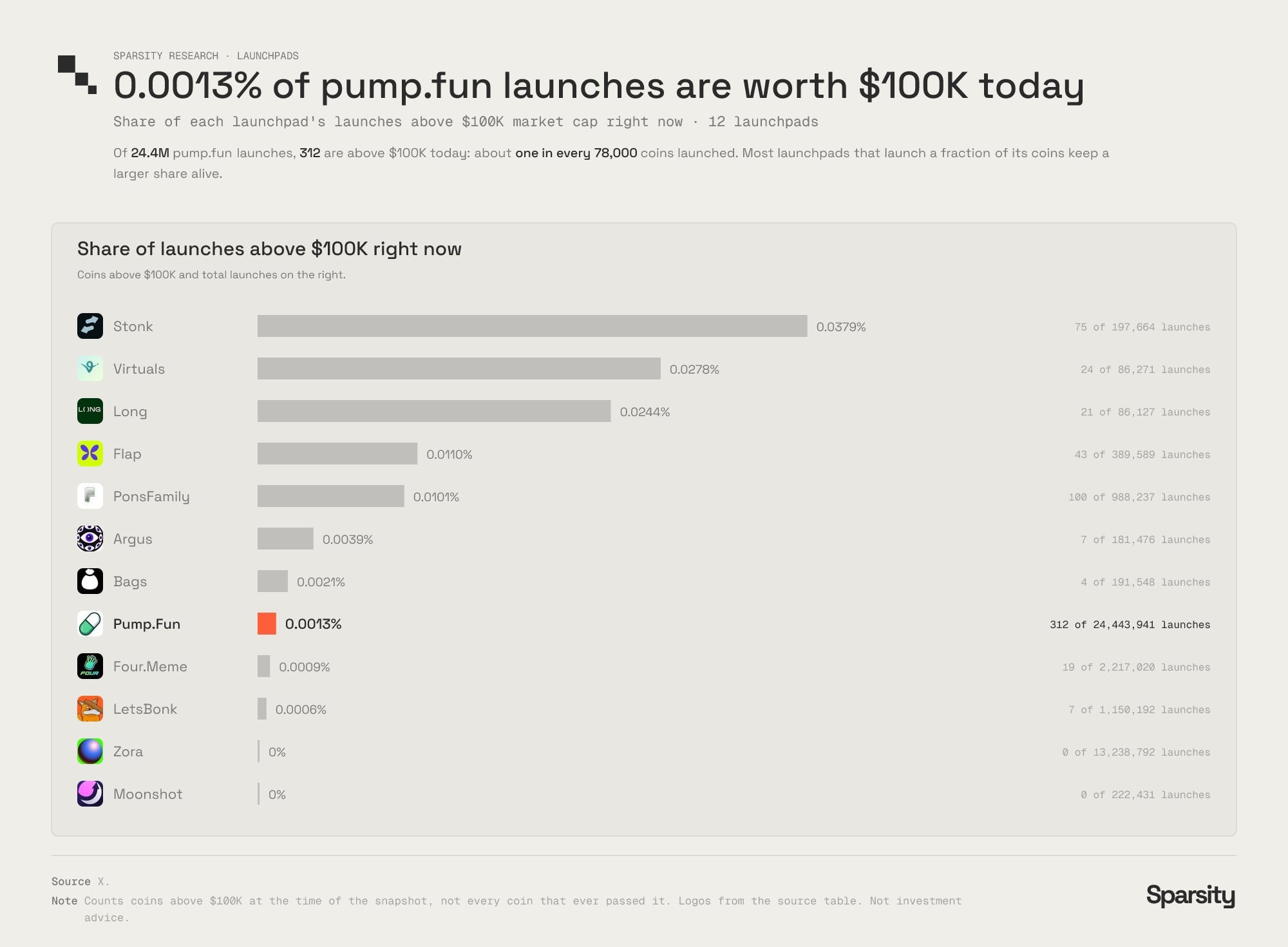
At the study’s measurement date, 312 of Pump.fun’s cumulative 24.4 million launched tokens remained above a $100,000 market capitalization—about 0.0013%. This is a point-in-time survival measure, not the probability that a newly launched token will reach that threshold.
What a different mechanism would change
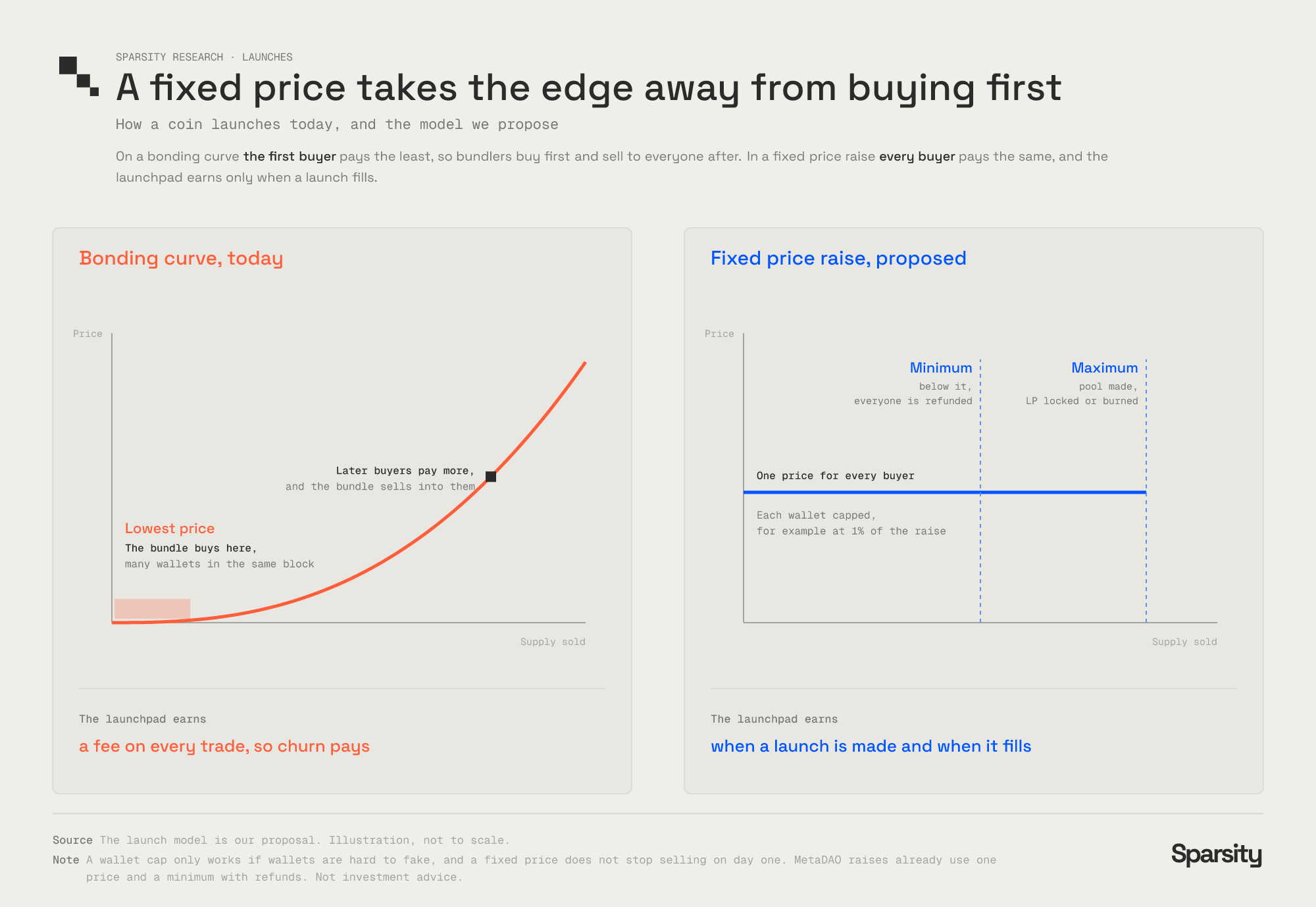
Sparsity Research proposes moving compensation away from immediate trading: deeper initial liquidity, delayed creator-fee release, fee sharing with holders or liquidity providers, and promoter rewards tied to whether followers remain invested and profitable days later. These are proposals, not Pump.fun rules.
Its more substantial alternative would replace the bonding curve with a fixed-price subscription window, a funding minimum and maximum, and refunds if the minimum were missed. Successful funding would create a liquidity pool, with liquidity-provider credentials burned or permanently locked; the platform would charge for successful raises rather than individual trades. A per-wallet subscription cap is also proposed. The researchers acknowledge two limits: participants could evade wallet caps using multiple wallets, and equal subscription prices would not prevent selling immediately after launch. The design has not been shown here to produce better long-term outcomes.
The evidence identifies where fees and rewards accrued in the periods studied. The claim that those incentives caused the broader decline in sustained meme-coin demand remains the researchers’ interpretation, rather than a result isolated from other possible market conditions.
Source: techflowpost.com (originally published 2026-11-11 13:53 UTC+8)