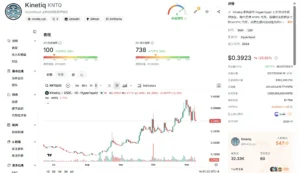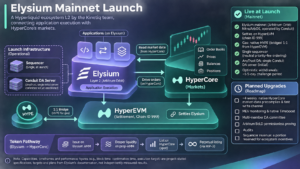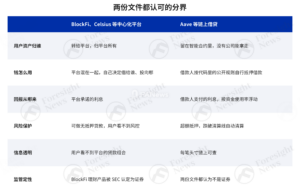
In an account published on November 16, 2026, trader 3 described how they and a partner monitored Wintermute’s on-chain activity and BitGo’s public updates while building positions in cashcat and, later, PONS. They reported combined profits of more than $4 million on cashcat and $2 million on PONS. Those results, and the links they drew between infrastructure activity and Robinhood’s plans, are the trader’s claims—not independently established findings in the account.
Building a signal chain for cashcat
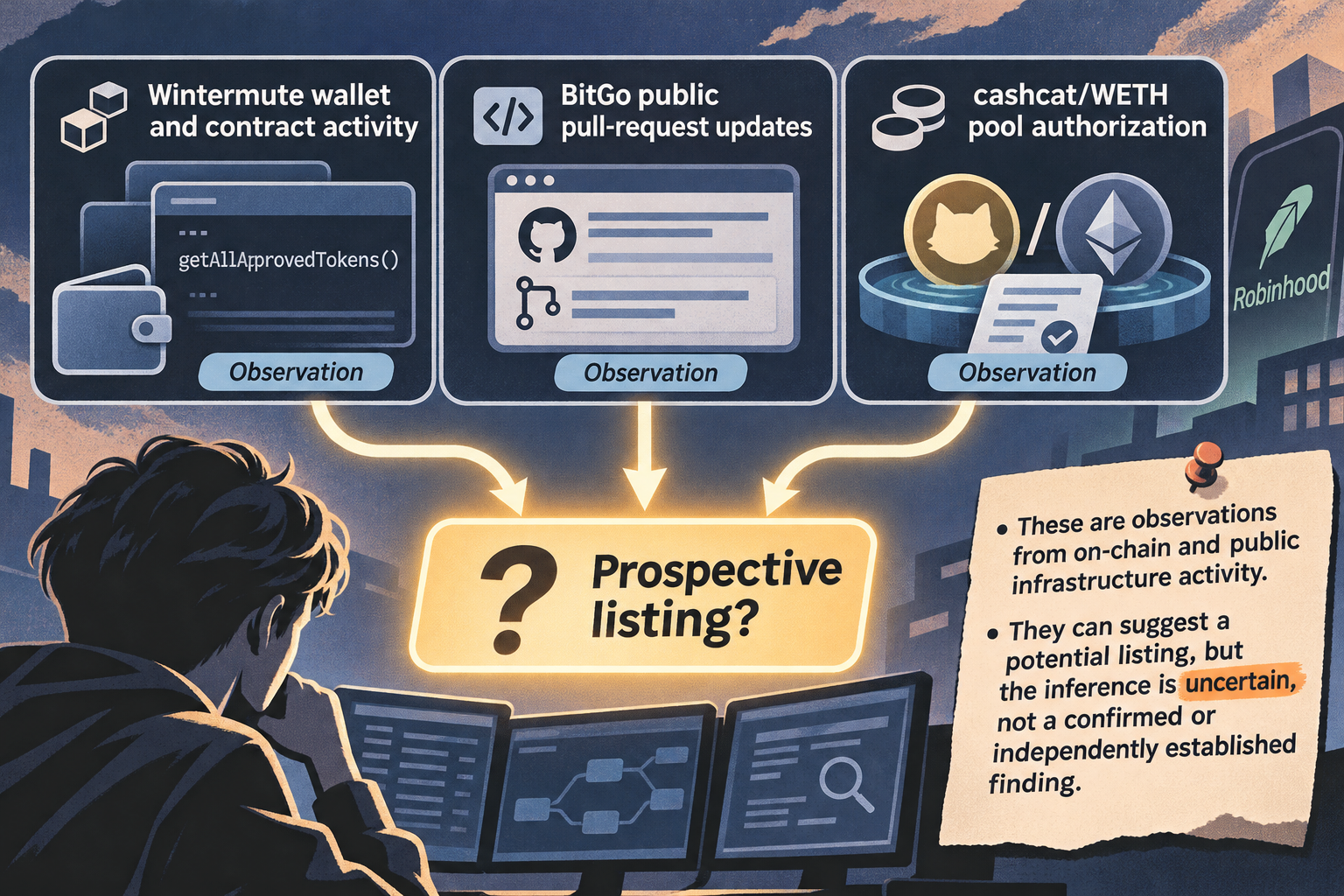
The trader said they had previously noticed Wintermute transfer tokens to a Robinhood hot wallet roughly an hour before a listing announcement, then found a similar pattern in earlier listings. That observation prompted them to monitor Wintermute wallets on Robinhood Chain, where they considered the firm’s activity more informative than its activity across Ethereum clients. They also tracked BitGo, which they identified as a Robinhood Chain custody partner, including its GitHub updates.
Their wallet review identified a newly funded Wintermute wallet and four trading contracts controlled by the same Wintermute multisignature wallet. Three contracts exposed a function named getAllApprovedTokens(). According to the trader, their approved-token lists were initially empty; days later, WETH and USDG appeared, and trading in that pair began the following day. These observations helped establish what the contracts did, but did not by themselves identify cashcat as a prospective listing.
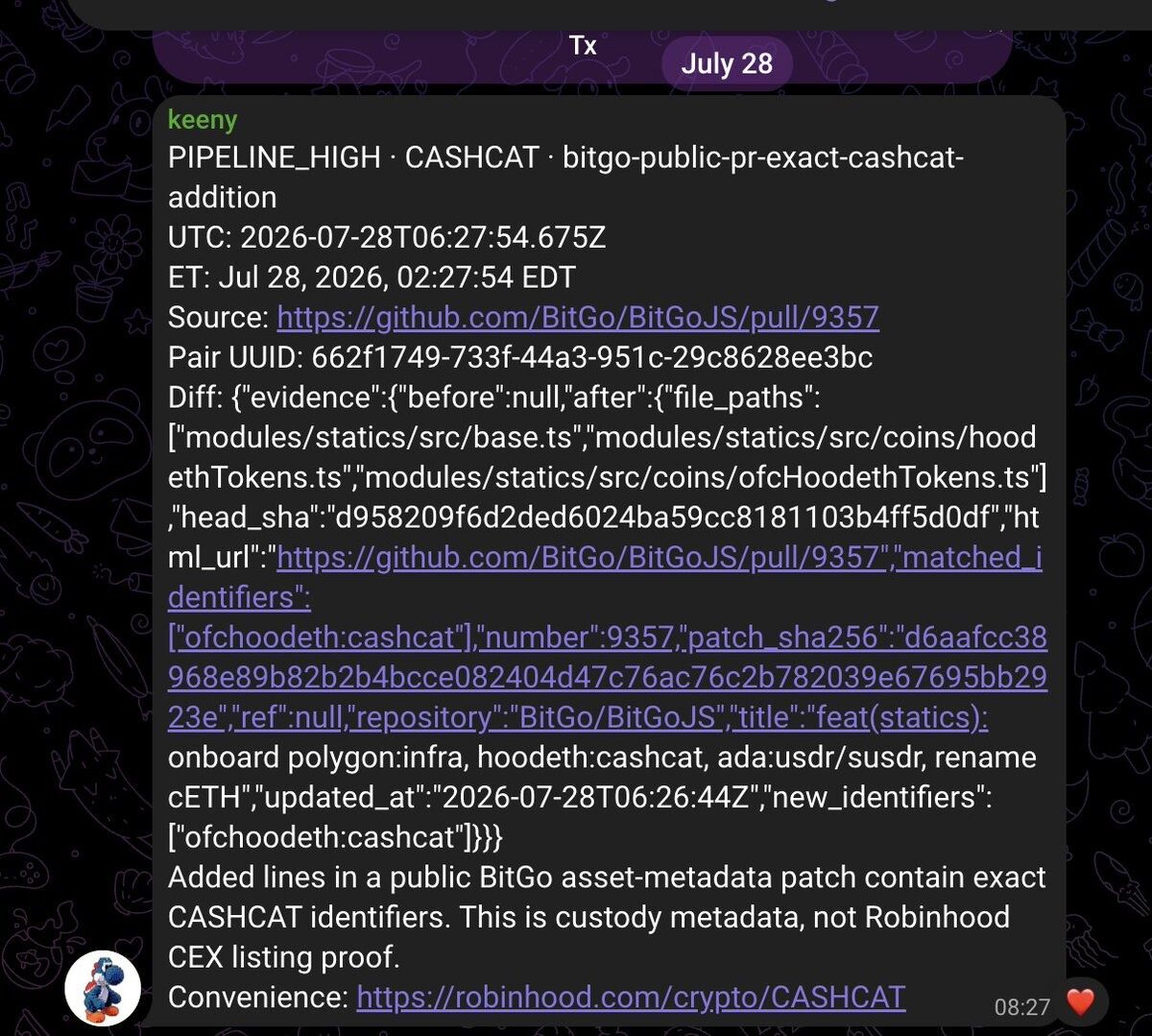
On July 27, the trader’s BitGo monitor detected hoodeth:cashcat five seconds after it appeared in a public pull request. They said BitGo’s many other clients made that clue insufficient on its own to justify a much larger position. BitGo updated the pull request on July 28 and published an update including cashcat and 99 Robinhood Chain stock tokens on July 29. The trader interpreted their appearance together as evidence of a Robinhood-related request; the account does not establish who requested the update.
By July 29, the trader said they and their partner held 1.5% of cashcat’s total supply. At 17:48 UTC on August 3, their monitor detected a Wintermute authorization involving a cashcat/WETH liquidity pool. They treated it as the stronger signal they had been waiting for and began buying more.
At 18:19, a wallet they suspected belonged to a Robinhood insider placed an unfilled cashcat limit buy order worth $11,000. Its owner was not confirmed. Concerned that others tracking the address would buy first, the pair abandoned gradual purchases and bought more than $1 million of cashcat, the trader said. They reported holding over 4% of supply after completing their purchases. Robinhood listed cashcat three days later, according to the account; the trader said the pair’s combined profit exceeded $4 million.
PONS and the limits of the method
The trader said they began buying PONS on August 28 using additional signals they did not disclose. Three days later, BitGo added PONS to a support list, and Wintermute subsequently began making markets for it, according to their account. The trader described a September 2 event as a purported PONS “listing” and speculated that it might have been a Robinhood lure to identify people with advance information. That motive is speculation, not an established fact. They reported that they and friends made a combined $2 million on PONS.
The case illustrates a research method rather than a reproducible listing indicator: connect wallet activity, contract permissions and public infrastructure changes, then test whether the signals point to the same asset. Its central limitation is attribution. A market maker can serve multiple clients, a custody provider can support multiple institutions, and an observed wallet’s owner may be unknown. The trader also withheld the signals behind the earlier PONS purchases, leaving that part of the account impossible to assess from the details provided.