As reported on November 7, 2026, objections from listed companies had narrowed the proposed launch universe for OKXICE’s tokenized U.S. stock market. OKXICE’s November 4 public filings listed 62 objecting companies, with Boeing, ServiceNow and Nebius Group among the latest additions; Apple, Home Depot and GE Vernova appeared on the November 3 list. By November 6, CoinDesk counted 67 objecting companies in updated OKXICE notices. Of those, 56 were among the 62 issuers whose stocks the platform initially planned to include—roughly nine in ten of the original group.
The objections concern particular third-party tokenized stocks trading on OKXICE, not necessarily blockchain technology or every form of stock tokenization. Public documents do not disclose each company’s reason for objecting.
Why issuer consent matters
The report describes a September 17, 2026, U.S. Securities and Exchange Commission “Innovation Exemption” that offers qualifying tokenized-securities venues conditional relief for up to five years. It distinguishes tokens issued or authorized by a stock’s issuer from tokens created by an unaffiliated third party. Under the reported arrangement, a venue pursuing the latter model must give the issuer written notice. If the issuer makes a valid objection within 30 calendar days, the token cannot be listed on that venue under the exemption.
That is a limit on this regulatory route, not a finding that the companies have permanently rejected tokenization. It also means a venue’s ability to represent a stock on-chain depends on more than its technical capacity to do so.
The proposed trading mechanism
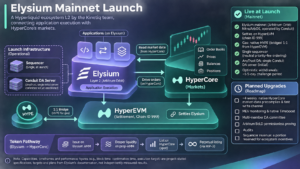
OKXICE was established in June 2026 by crypto platform OKX and Intercontinental Exchange, the parent of the New York Stock Exchange. Each holds a 50% interest. According to the platform documents described in the report, the proposed venue would run on OKX’s X Layer blockchain and use Uniswap v4 liquidity pools as its automated market maker (AMM), with custom smart-contract extensions for trading permissions. Eligible participants would need identity, anti-money-laundering and sanctions checks before receiving a non-transferable credential to trade or provide liquidity.
The design calls for a third-party tokenization provider to hold underlying shares through a qualified securities broker, backing tokens one for one. Platform documents also address dividends and voting rights. Those design features leave an important implementation question: when tokens move but the shares remain with an intermediary, how will beneficial ownership and the associated rights be recorded and enforced?
Trades would use stablecoins including USDC and USDG rather than a conventional stock-exchange order book. A pool could allow trading outside ordinary stock-market hours, but its price would depend on available liquidity and could diverge from the underlying share price—particularly while the primary market is closed. OKXICE’s own documents warn that pool and share prices may differ. Longer trading hours, therefore, do not by themselves establish better price discovery.
The issuer objections may substantially reduce OKXICE’s initial stock selection. The documents do not establish whether companies objected because of shareholder-rights administration, legal exposure, market structure, internal policy or other concerns. What the reported counts do establish is a constraint on this specific third-party model: securing a regulatory pathway and designing an on-chain market do not guarantee that the intended stocks can be offered through it.