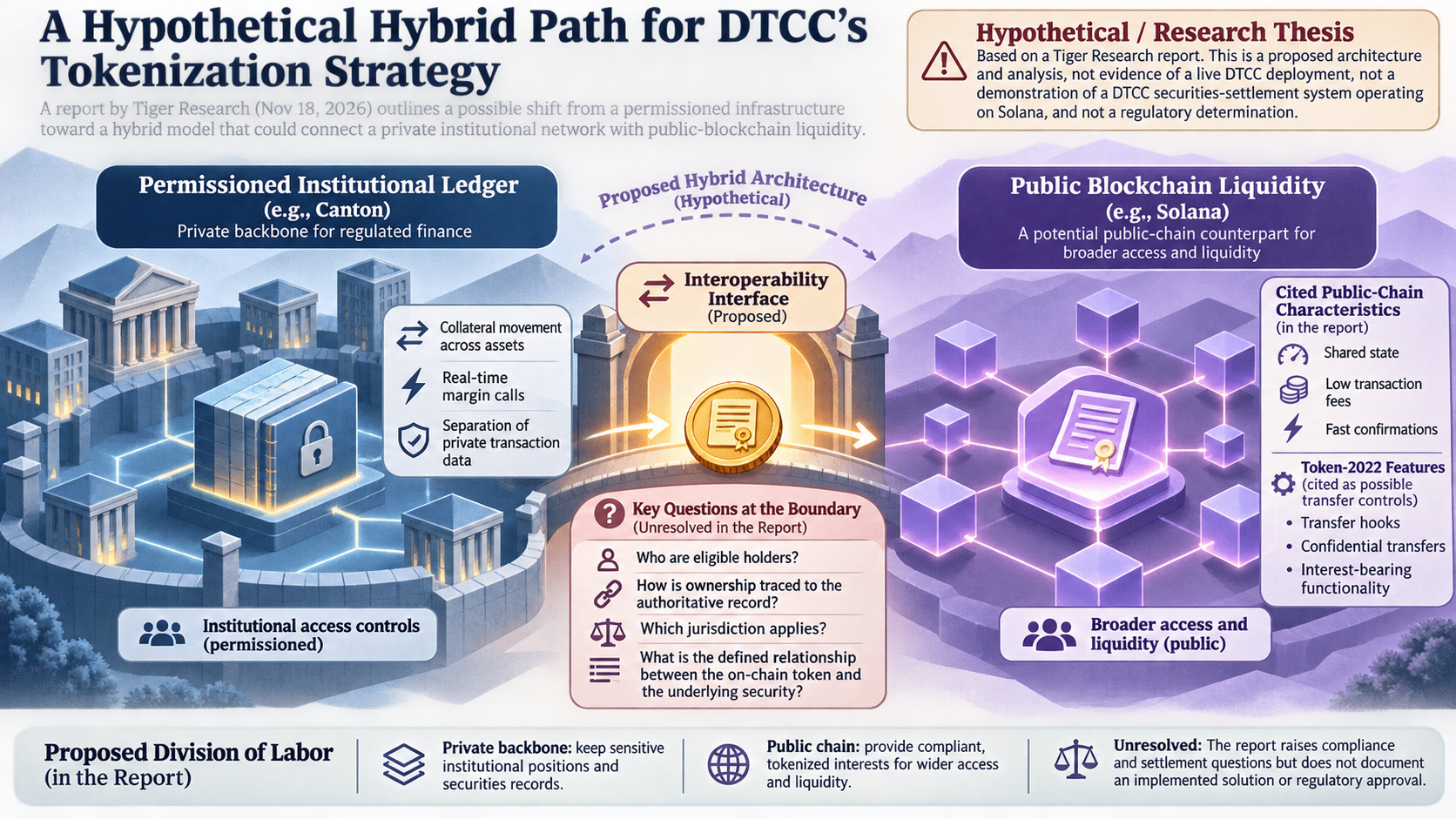
Tiger Research’s account of DTCC’s tokenization strategy, published on November 18, 2026, describes a possible shift from permissioned infrastructure toward a hybrid model with access to public-blockchain liquidity. The distinction is between an architecture the report envisions and a DTCC securities-settlement system shown to be operating on Solana. The account does not establish the latter.
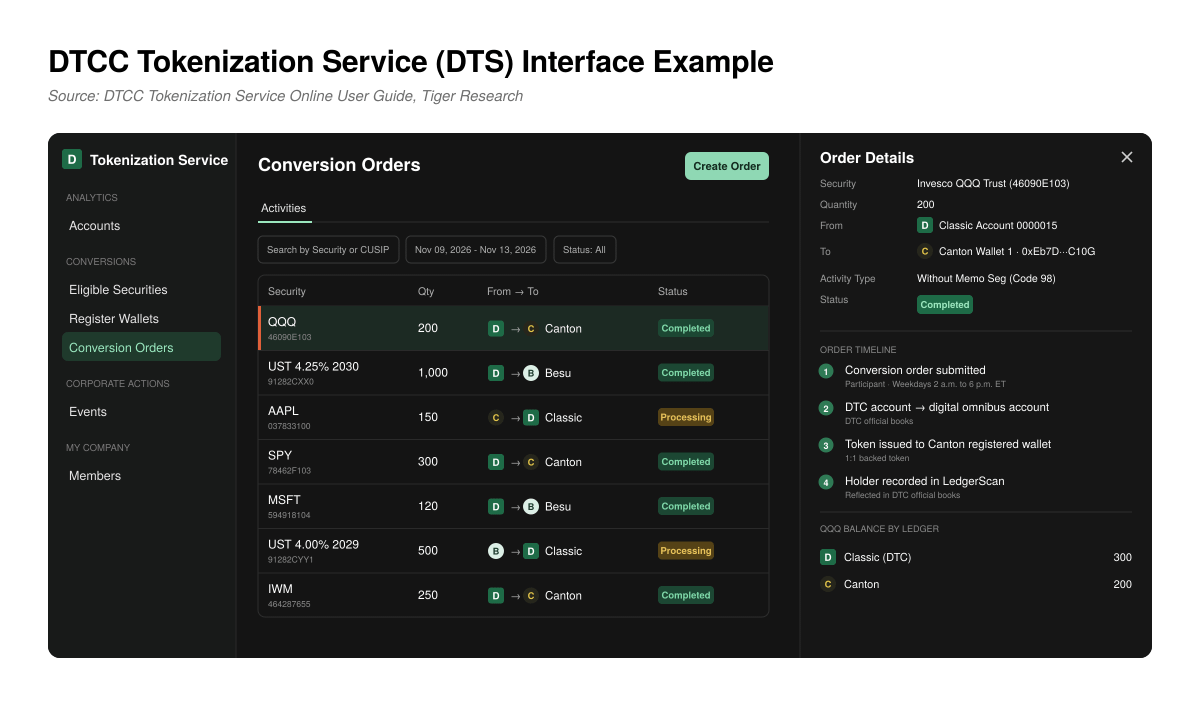
What the two networks would do
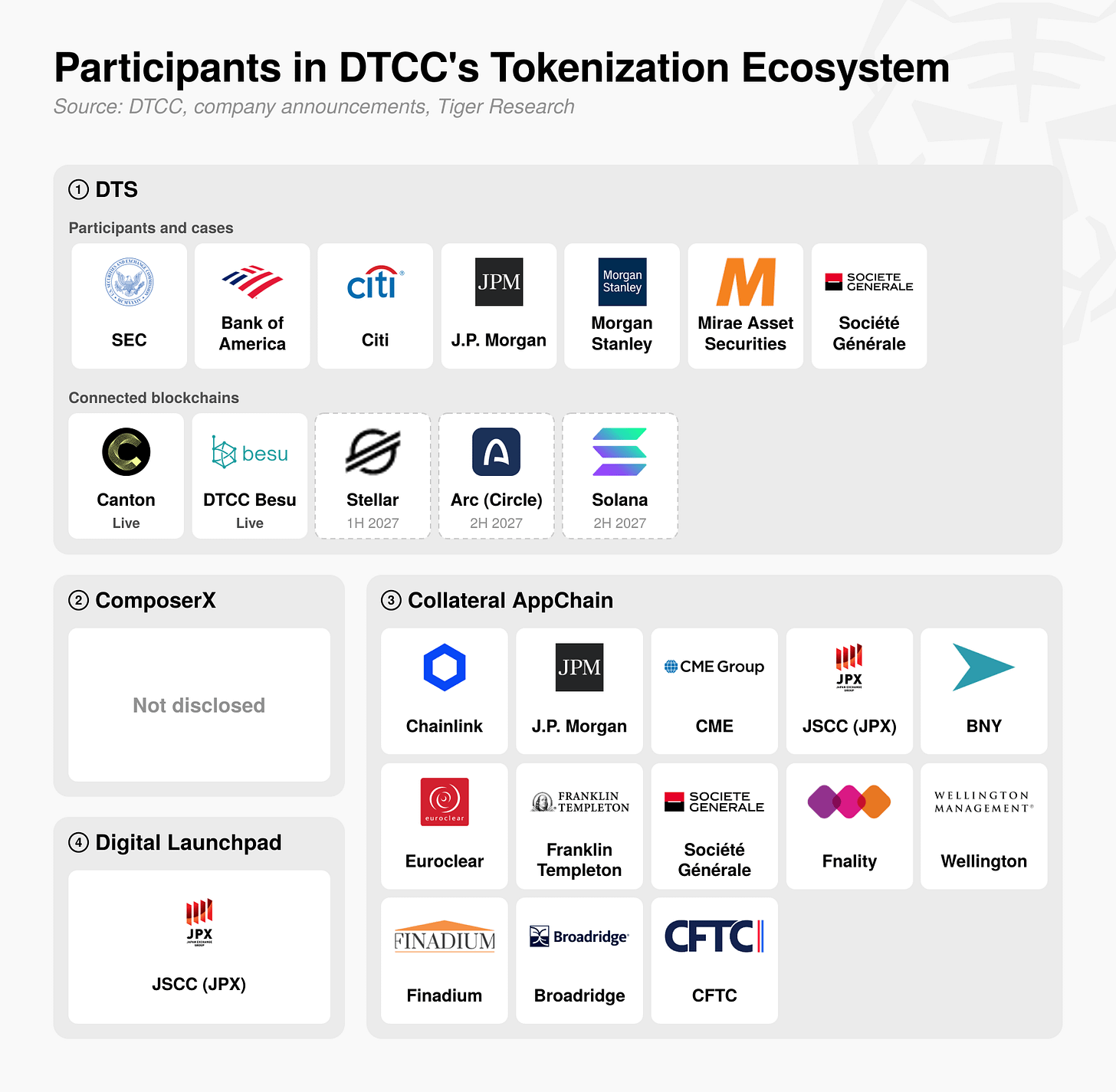
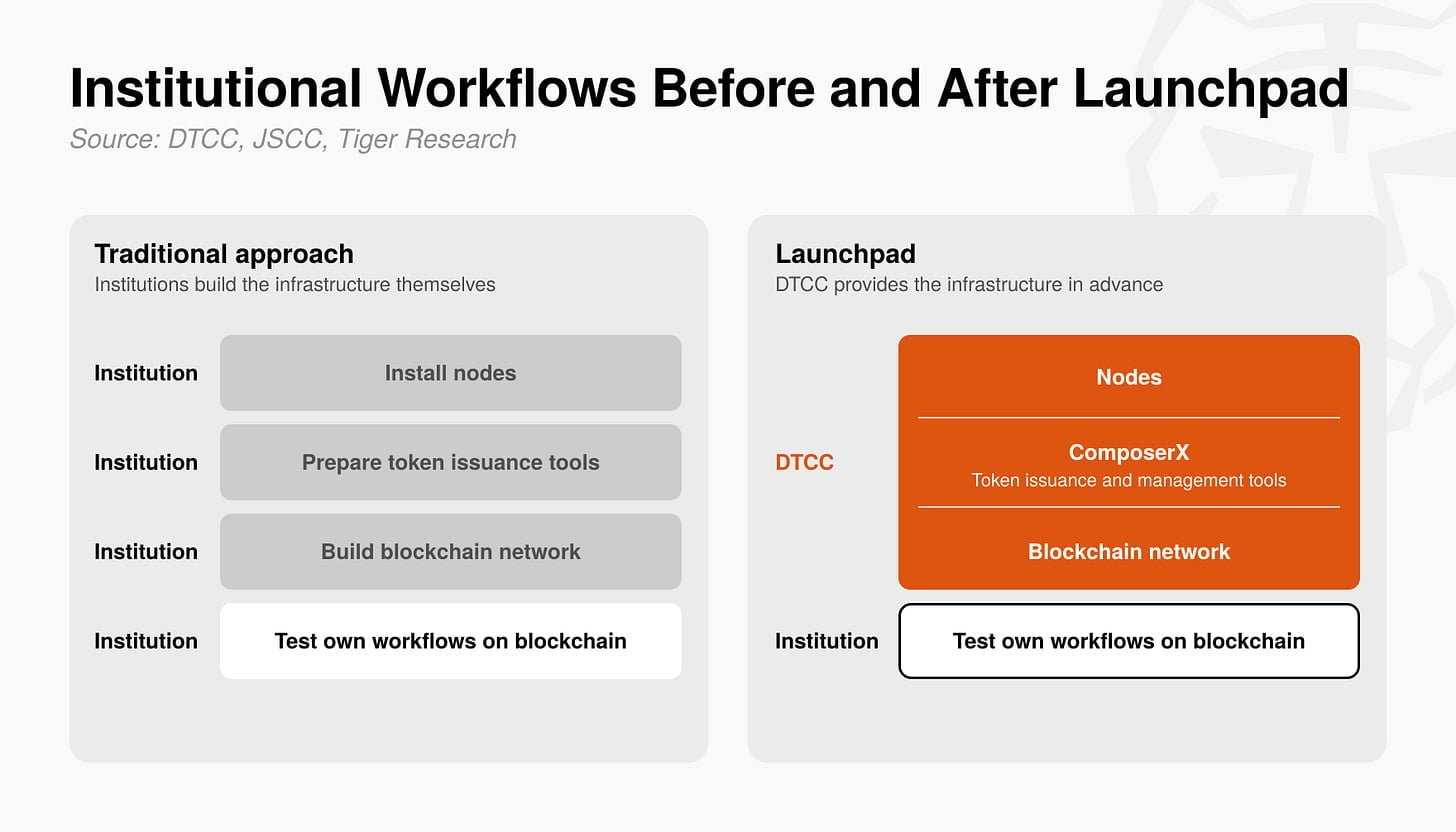
The report describes DTCC’s earlier work with institutions including JPMorgan and Goldman Sachs on Canton, a privacy-oriented network for regulated finance. It says that work explored collateral movement across assets, real-time margin calls and separation of private transaction data. Permissioned access could help institutions control who participates and what information they disclose, but it would also limit direct access to users and liquidity outside the network.
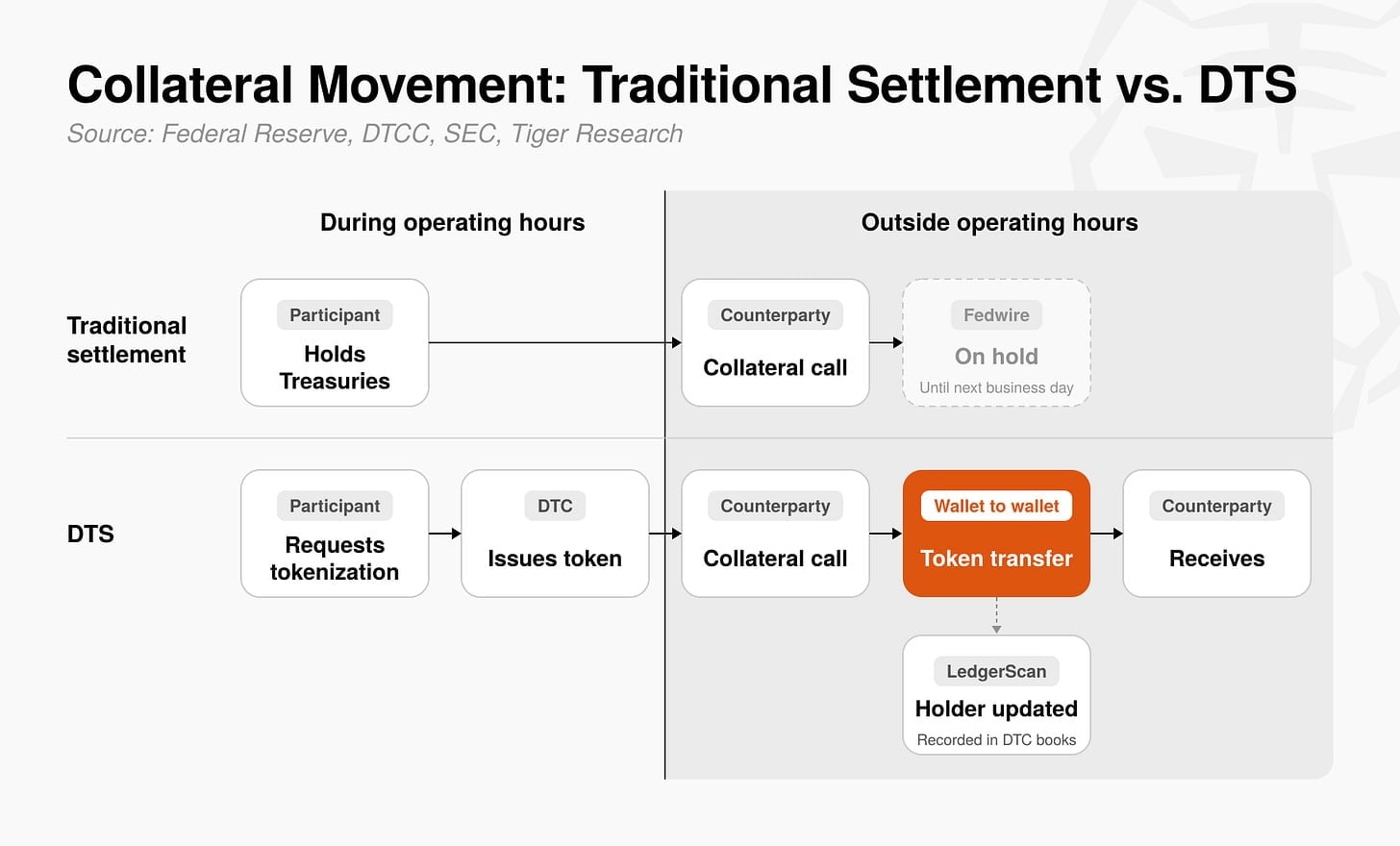
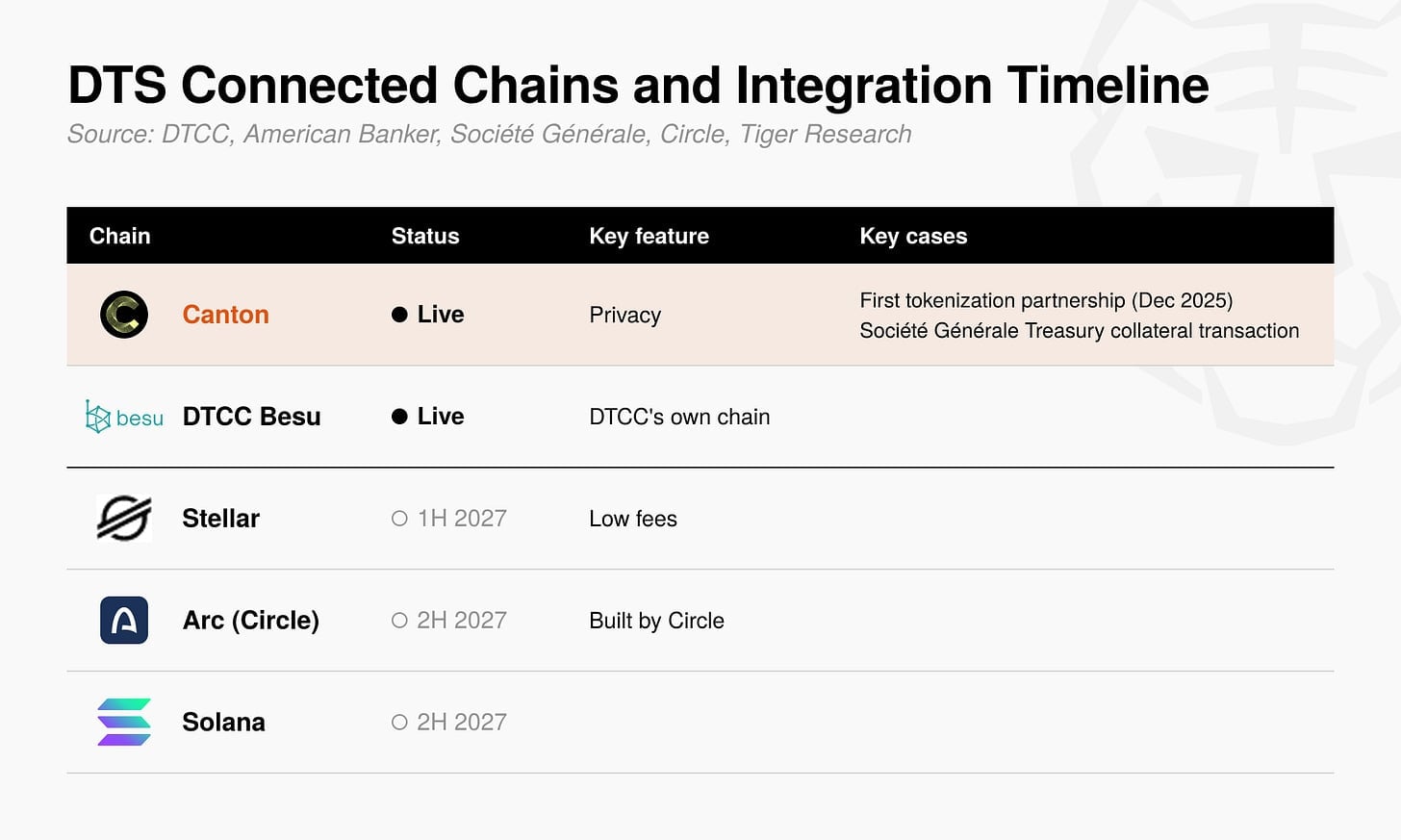
Tiger Research presents Solana as a potential public-chain counterpart, citing its shared state, low transaction fees and fast confirmations. It contrasts those characteristics with Ethereum mainnet costs and the added coordination it associates with settlement across Layer 2 networks. The supplied account gives no measured workload, fee dataset or settlement benchmark with which to test those comparisons for DTCC’s use case.
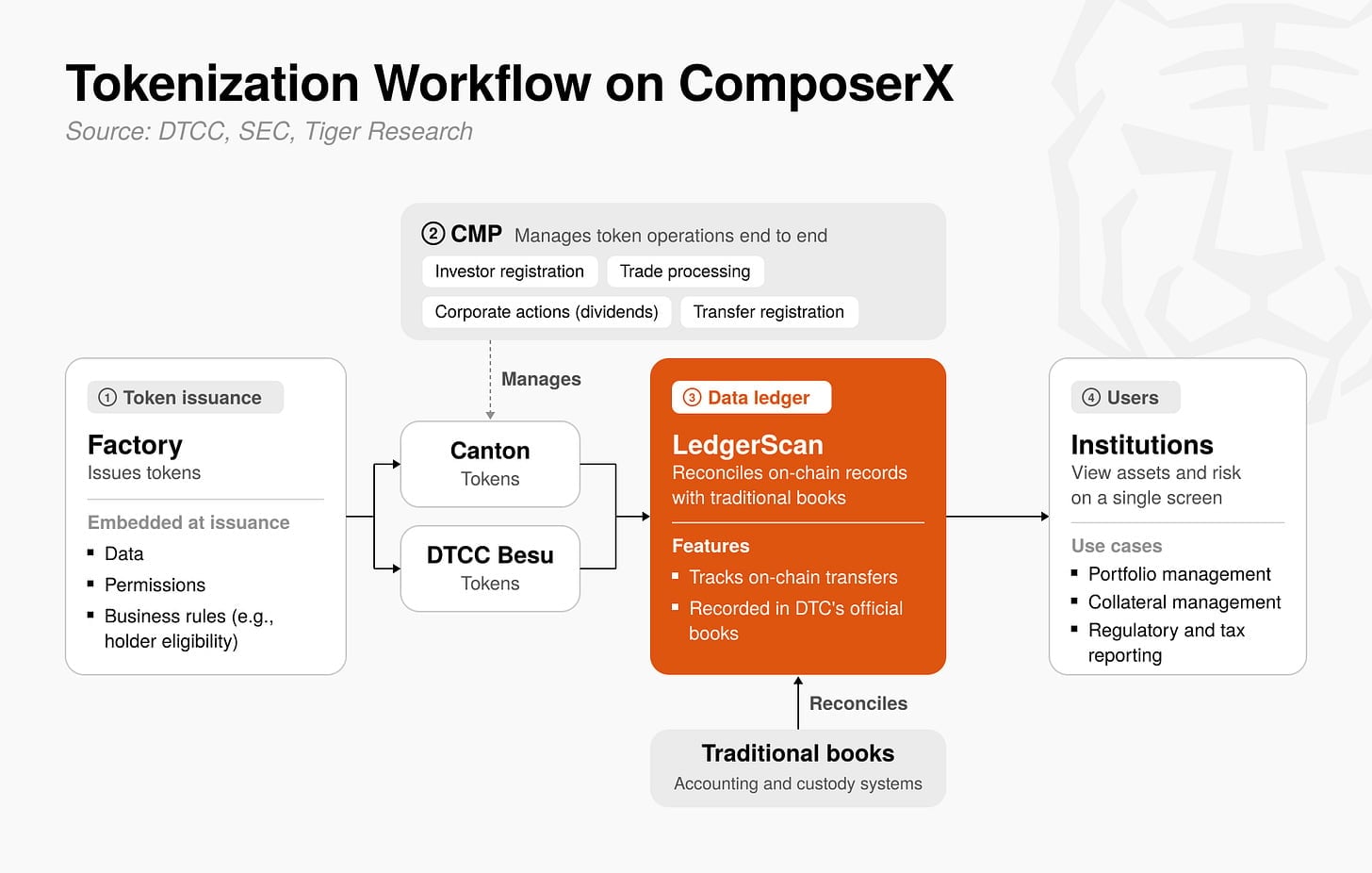
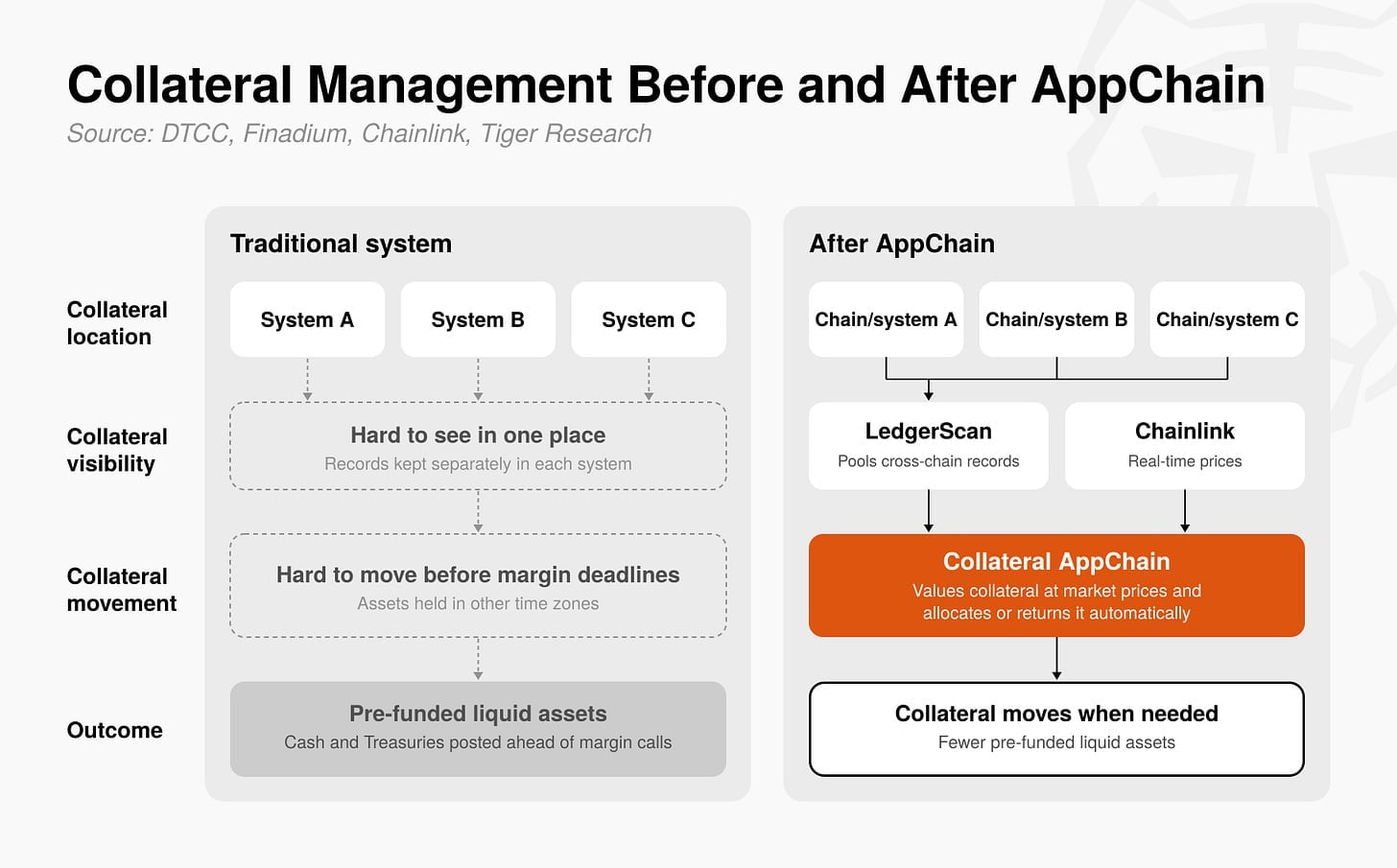
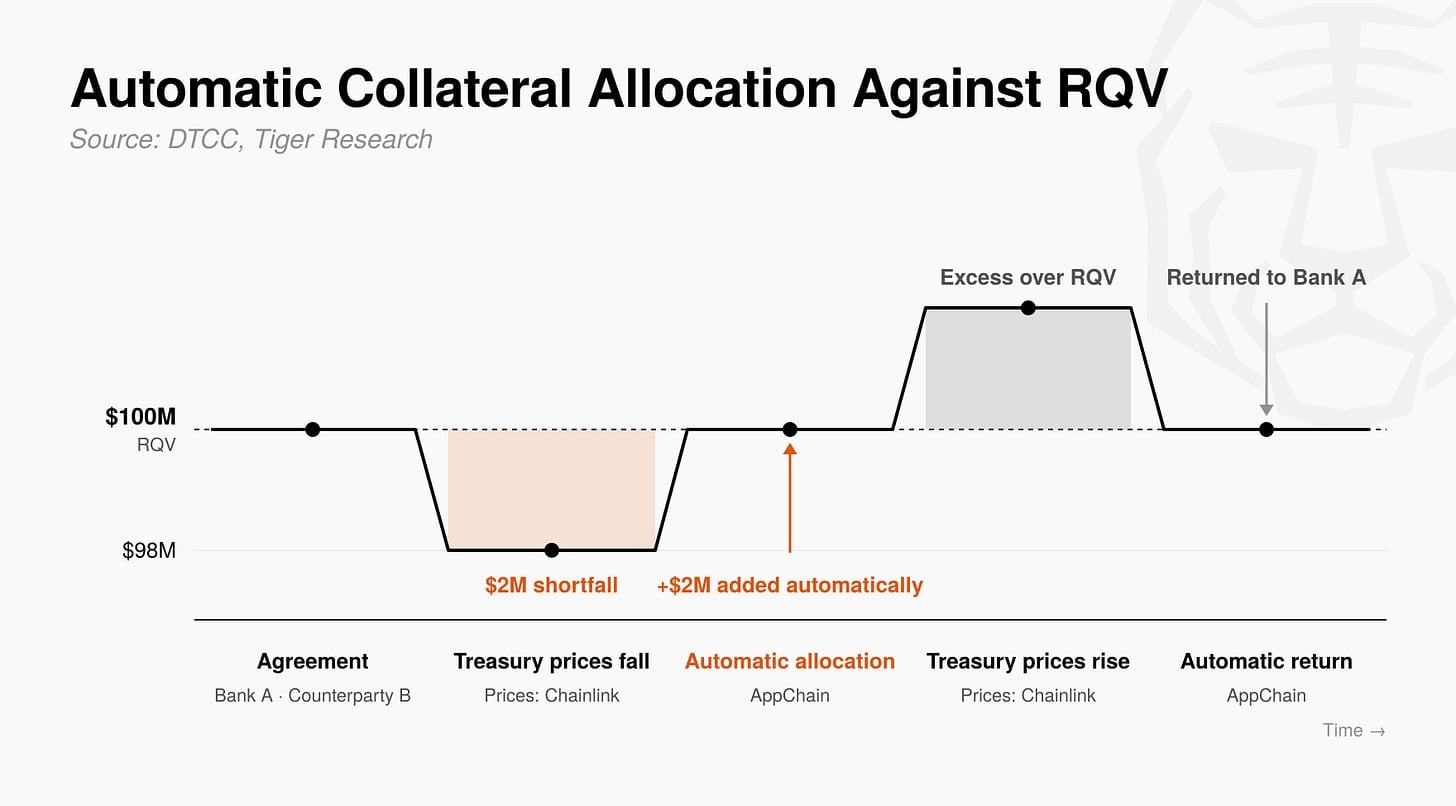
The proposed division of labor is a private backbone for sensitive institutional positions and securities records, with compliant tokenized interests made available through an interoperability interface to a public chain. The report also points to Solana’s Token-2022 features, including transfer hooks, confidential transfers and interest-bearing functionality, as possible components of transfer controls. It does not document a production DTCC deployment of that design or show that those features, by themselves, satisfy securities compliance requirements.
The unresolved settlement question
A token circulating on a public chain would still need a defined relationship to the underlying security and its authoritative ownership record. The report raises questions about eligible holders, ownership tracing and jurisdiction, but supplies no implemented mechanism or regulatory determination resolving them. Its hybrid architecture is therefore best read as a research thesis about how privacy and wider liquidity might be combined—not evidence that regulated securities can already move freely between Canton, Solana and decentralized liquidity pools.